Microgreens for Immunity: India's Evidence Guide
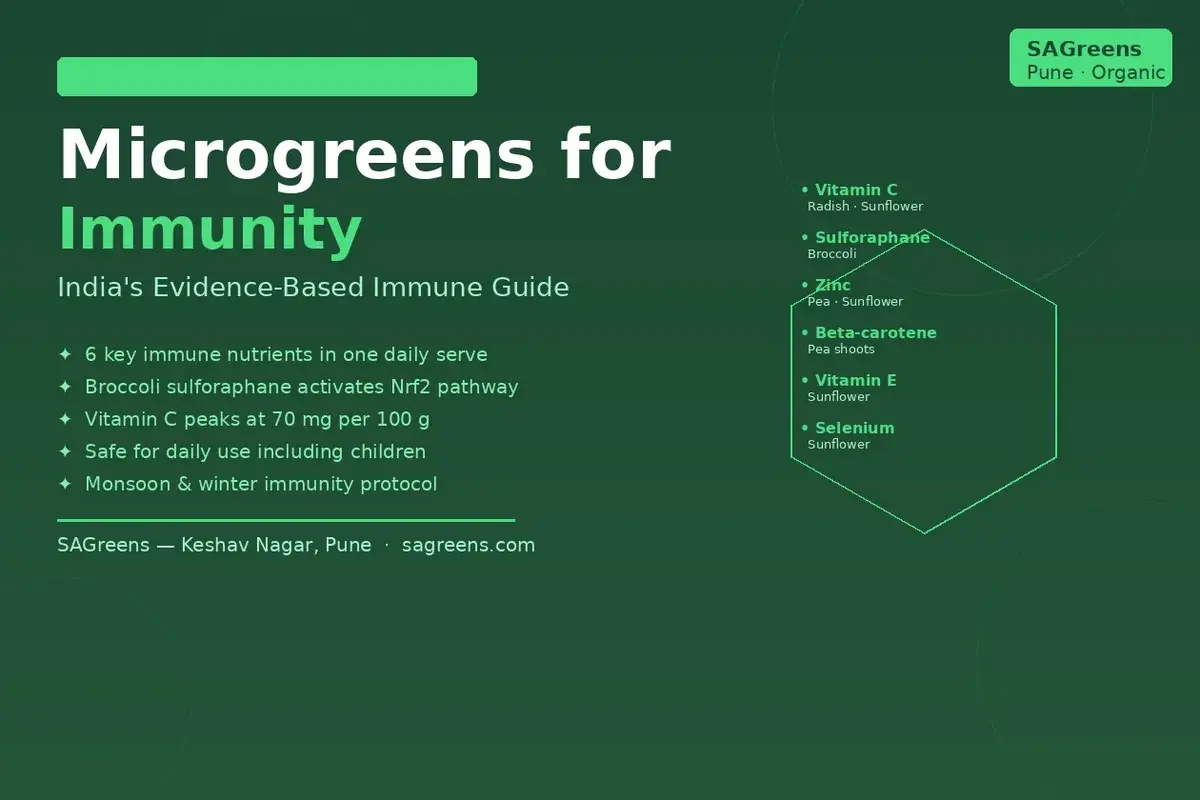
Key Takeaways: Broccoli microgreens (sulforaphane, vitamin C), sunflower microgreens (vitamin E, zinc, selenium), radish microgreens (vitamin C, glucosinolates), and pea shoots (beta-carotene, folate) each target distinct arms of the immune system. A daily 50-80 g mixed serve covers the key immune nutrients that Indian diets commonly lack. The best time to increase intake is 2-4 weeks before the monsoon season and again before winter — when respiratory infections peak across India.
India's disease burden is dominated by infectious disease. Respiratory infections, seasonal flu, waterborne illnesses, and enteric infections account for a disproportionately high share of hospital visits across all age groups and income levels. While vaccination and hygiene are the primary defences, nutritional immunity — the capacity of the immune system to mount a rapid, appropriate response — is a modifiable factor that most Indians can meaningfully improve through diet.
The gap is measurable. National Nutrition Surveys consistently show significant deficiencies in vitamin A, vitamin C, zinc, and folate across Indian populations, particularly in children and women of reproductive age. Each of these nutrients is directly involved in immune function. Microgreens, concentrated with these exact compounds, represent one of the most practical dietary corrections available — growing in 7-14 days, available fresh year-round, and compatible with the Indian diet without requiring any modification to cooking habits.
This guide covers which microgreens are most relevant for immunity, the mechanisms involved, the science supporting them, and a practical India-specific protocol covering monsoon and winter — the two highest-risk seasons. For more on what microgreens contain at a nutrient level, our microgreens nutritional powerhouse guide provides the complete breakdown.
How the Immune System Works: The Relevant Pathways
The immune system operates across two layers: innate immunity (the fast, non-specific first response) and adaptive immunity (the slower, antigen-specific response that creates memory). Microgreens support both, but through different mechanisms.
Innate immunity: Depends on physical barriers (skin and mucosal membranes), natural killer cells, neutrophils, and inflammatory signalling. Vitamin C, vitamin A (from beta-carotene), and zinc all maintain the integrity of mucosal barriers — the first line of defence against respiratory and gut pathogens. Sulforaphane from broccoli microgreens directly activates Nrf2, which reduces the chronic background inflammation that suppresses innate immune readiness.
Adaptive immunity: Depends on T-lymphocytes, B-lymphocytes, and antibody production. Vitamin C supports T-cell proliferation. Zinc is required for thymic function (where T-cells mature). Folate is required for B-cell DNA replication during an immune response. Deficiency in any of these delays the adaptive response and prolongs illness duration.
Oxidative stress and immune suppression: During an active infection, the body generates reactive oxygen species (ROS) as part of its antimicrobial response. When antioxidant defences are inadequate (due to vitamin C, E, or selenium deficiency), this oxidative stress damages the immune cells themselves — a key reason why nutritional deficiency extends illness duration even when pathogens are theoretically manageable.
Microgreens That Boost Immunity
Broccoli Microgreens: The Nrf2 Activator
Broccoli microgreens are the most pharmacologically potent immune-supporting food available. Their primary active compound, sulforaphane, is one of the strongest known activators of the Nrf2 transcription factor — the master regulator of the body's antioxidant and detoxification gene networks.
When Nrf2 is activated:
- Glutathione production increases (the body's primary intracellular antioxidant)
- Phase 2 detoxification enzymes upregulate (removing carcinogens and pathogens)
- Anti-inflammatory gene expression increases
- Heme oxygenase-1 increases (protecting cells from oxidative damage)
This creates a systemic environment in which immune cells function more effectively. A 2021 study in the journal Nutrients demonstrated that sulforaphane supplementation in older adults significantly increased NK (natural killer) cell activity — a critical innate immune measure that declines with age and nutritional deficiency.
Broccoli microgreens also provide 60-80 mg of vitamin C per 100 g — roughly equivalent to a lemon — and vitamin K, which is relevant for the immune function of dendritic cells.
Read our detailed broccoli microgreens benefits guide for the full sulforaphane research.
Sunflower Microgreens: Vitamin E and Zinc
Sunflower microgreens provide the most significant vitamin E content of any common microgreen variety — 5-10 mg per 100 g. Vitamin E is the primary fat-soluble antioxidant in immune cell membranes. T-lymphocytes and NK cells are particularly rich in polyunsaturated fatty acids, making them highly vulnerable to lipid peroxidation (oxidative damage) when vitamin E is deficient.
Clinical trials in elderly populations have consistently shown that vitamin E supplementation improves T-cell-mediated immune responses and reduces the incidence and severity of upper respiratory tract infections. For India, where the elderly population is growing rapidly and vitamin E intake from typical diets is often marginal, sunflower microgreens are a practical food-first source.
Sunflower microgreens also provide:
- Zinc (1.5-2.0 mg per 100 g): Required for thymic function, T-cell development, and the production of thymulin (a thymic hormone that promotes T-cell differentiation). Zinc deficiency is common in Indian vegetarians who rely on phytate-rich legumes that bind dietary zinc.
- Selenium (2.4-3.5 mcg per 100 g): Required for glutathione peroxidase (an antioxidant enzyme) and for the activation of selenoproteins involved in T-cell function.
Browse SAGreens sunflower microgreens for fresh delivery across Pune.
Radish Microgreens: Vitamin C and Glucosinolates
Radish microgreens contain the highest vitamin C concentration of common microgreen varieties: 60-70 mg per 100 g, comparable to broccoli but with a different glucosinolate profile (radish glucosinolates convert to isothiocyanates that are not goitrogenic, making radish the safer daily-use cruciferous for most people).
Vitamin C's role in immunity is multifaceted:
- Stimulates white blood cell (particularly neutrophil and lymphocyte) production
- Enhances antimicrobial activity of phagocytes
- Protects immune cells from oxidative damage during an active infection (immune cells accumulate vitamin C at concentrations 50-100x higher than plasma levels)
- Shortens duration of upper respiratory tract infections in deficient populations
A 2017 Cochrane review of 29 clinical trials found that vitamin C supplementation reduced cold duration by 8% in adults and 14% in children — results that are consistent with what would be expected from restoring adequate tissue vitamin C levels in a deficient population. India's vegetable consumption patterns often produce marginal vitamin C intake, particularly in urban households where fresh produce is limited.
Pea Shoot Microgreens: Beta-Carotene and Folate
Pea shoot microgreens are the richest common microgreen source of beta-carotene (1,500-2,200 mcg per 100 g), which the body converts to vitamin A on demand. Vitamin A is essential for:
- Maintaining the integrity of mucosal epithelial cells (in the respiratory tract, gut, and urogenital tract) — the first physical barrier against pathogen entry
- Regulating T-helper cell differentiation (particularly Th1/Th2 balance)
- Supporting IgA production (the primary antibody in mucosal secretions, crucial for gut and respiratory immunity)
Vitamin A deficiency is a recognised public health concern in India, particularly in children under 5 and in pregnant women. The National Family Health Survey data consistently show sub-optimal vitamin A status in a significant proportion of Indian children. Pea shoot microgreens, with their high beta-carotene content and a flavour profile that children readily accept, represent a practical delivery mechanism.
Pea shoots also provide 65-90 mcg of folate per 100 g, which is required for DNA replication in rapidly dividing immune cells during an active immune response.
The India Immunity Calendar: When to Focus
India's immunity burden follows a seasonal pattern:
| Season | Primary Threat | Key Microgreens |
|---|---|---|
| Monsoon (June-September) | Waterborne, respiratory, dengue | Radish (vitamin C), broccoli (sulforaphane) |
| Post-monsoon (October-November) | Viral flu peak | Broccoli + sunflower (zinc, vitamin E) |
| Winter (December-February) | Cold, cough, respiratory | All varieties; emphasise broccoli + sunflower |
| Summer (March-May) | Heat stress, dehydration-linked | Pea shoots (electrolytes), radish (vitamin C) |
Start increasing microgreen intake 2-4 weeks before each high-risk season for the adaptive immune benefit to build. Immune cells need consistent nutritional input over weeks, not a single large dose at the onset of illness.
Monsoon Protocol: In the 2 weeks before monsoon onset (mid-May to early June in Pune), increase broccoli microgreen intake to 40-50 g per day. The sulforaphane-activated Nrf2 response builds over 2-4 weeks of consistent consumption and provides measurable antioxidant protection going into the high-pathogen monsoon season.
How Much to Eat for Immune Support
A practical daily immune protocol using microgreens:
Maintenance (year-round):
- 20-30 g broccoli microgreens daily (sulforaphane, vitamin C)
- 20-30 g sunflower microgreens daily (vitamin E, zinc, selenium)
- Total: 40-60 g raw, as garnish across two meals
High-risk season (monsoon and winter peak):
- 40-50 g broccoli microgreens daily
- 30-40 g sunflower or radish microgreens daily
- 30-40 g pea shoots every other day (for beta-carotene and folate)
- Total: 80-120 g raw daily across three meals
During active illness:
Microgreens should not replace medical treatment for active infections. Continue eating them raw throughout illness — the sulforaphane, vitamin C, and zinc maintain immune cell function. Avoid cooking if possible to preserve heat-sensitive vitamin C and myrosinase (for sulforaphane activation).
Combining Microgreens with the Indian Diet for Maximum Immunity
The Indian diet is not deficient by default — it is contextually deficient. Traditional Indian cooking is diverse and seasonally rich. The gaps emerge with urban dietary patterns: processed snack foods replacing whole vegetables, cooking methods that destroy heat-sensitive vitamins, and a reliance on a narrow range of vegetables through the year.
Microgreens plug these specific gaps without disrupting established food habits:
- Raw garnish on dal (no cooking required) — adds vitamin C, sulforaphane, beta-carotene
- In raita (mixed raw with yoghurt) — adds zinc and vitamin E
- In a morning smoothie with amla — vitamin C from both sources (synergistic effect)
- Scattered over khichdi before serving — adds folate and beta-carotene to an otherwise nutritionally complete dish
Synergy Note: Vitamin C from radish or broccoli microgreens significantly increases the absorption of non-haem iron from plant foods in the same meal. Scatter radish microgreens raw over dal at serving time — the vitamin C in the microgreens will increase iron absorption from the lentils by 2-3x. This is particularly relevant for anaemic individuals whose immune system is compromised by iron deficiency.
Microgreens vs Vitamin Supplements for Immunity
A common question is whether microgreens offer any advantage over vitamin C or zinc supplements.
The answer is yes, for several reasons:
Bioavailability: Vitamins in whole foods come with co-factors that enhance absorption. Vitamin C in radish microgreens is accompanied by flavonoids that increase absorption rate and tissue retention compared to synthetic ascorbic acid.
Phytonutrient complexity: Sulforaphane, glucosinolates, carotenoids, and tocopherols act through mechanisms that supplements cannot replicate. Sulforaphane, in particular, has no supplement equivalent that replicates the Nrf2-activating profile of fresh broccoli microgreens with intact myrosinase.
Safety: Whole food sources carry no risk of overdose at typical serving sizes. High-dose zinc supplements (above 40 mg/day) can suppress copper absorption. High-dose vitamin A supplements carry teratogenic risk in pregnancy. Food sources are self-limiting.
Gut microbiome benefits: The prebiotic fibre in microgreens supports gut microbiome diversity — which is now understood to be a major modulator of immune function through the gut-associated lymphoid tissue (GALT) system. Supplements do not provide this benefit.
Seed Quality & Pricing: All SAGreens microgreen seeds are NPOP-certified organic — untreated, non-GMO, germination tested before dispatch. Seeds start at ₹50/100g (wheatgrass), ₹124/100g (sunflower, mustard) and ₹120/100g (radish). Delivery charged at checkout, by city and weight. Browse microgreen seeds or contact us for bulk pricing.
Frequently Asked Questions
Which microgreen is best for boosting immunity in India?
Broccoli microgreens provide the most well-documented immune support through sulforaphane's Nrf2 activation, which upregulates the body's antioxidant and immune defence genes. Sunflower microgreens are the best source of zinc and vitamin E, which are most commonly deficient in Indian diets. For a comprehensive approach, combining broccoli and sunflower microgreens daily provides the most complete immune nutritional profile.
Can microgreens prevent flu or COVID-19?
No food prevents specific viral infections. Microgreens support the nutritional foundations of immune function — reducing deficiencies in vitamin C, zinc, vitamin E, and antioxidant capacity that make infections more severe and prolonged. A nutritionally replete immune system handles infections faster and with fewer complications, but this is not the same as prevention of infection.
How quickly do microgreens improve immunity?
Vitamin C tissue saturation improves within days of consistent intake. Zinc-dependent T-cell function improves over 2-4 weeks. Nrf2-mediated antioxidant protection builds over 2-4 weeks of consistent sulforaphane consumption. For seasonal immunity support, begin 2-4 weeks before the high-risk season.
Are microgreens safe for children for immunity?
Yes. All common microgreen varieties (broccoli, sunflower, radish, pea shoots) are safe for children over 2 years. Pea shoots and sunflower microgreens are the most palate-friendly starting varieties for children. For families with children, our microgreens for kids guide has age-specific recipes and serving ideas.
Can I eat microgreens when I am already sick?
Yes, and you should. Continue eating raw microgreens during illness — the vitamin C, sulforaphane, and zinc support immune cell function throughout the active response. Avoid cooking them (heat destroys vitamin C and myrosinase). Add raw to soups, khichdi, or raita after removing from heat.
Do microgreens boost immunity better than eating mature vegetables?
Per gram, microgreens consistently outperform mature vegetables for most immune-relevant nutrients. Broccoli microgreens have 20-40x more sulforaphane precursors than mature broccoli. Radish microgreens have significantly more vitamin C per gram than mature radish. For practical immune nutrition, 50-80 g of microgreens provides more immune-relevant nutrients than the same weight of most mature vegetables.
Which microgreens are best for building immunity after illness?
Recovery from illness depletes zinc, vitamin C, and antioxidant reserves. Post-illness, prioritise sunflower microgreens (zinc, vitamin E, selenium) and radish microgreens (vitamin C, antioxidants) to replenish what the immune response consumed. Increase to 80-100 g daily for 2-3 weeks after recovery. Add raw turmeric or ginger to your microgreen meals for additional anti-inflammatory support during recovery.
Can I eat the same microgreens every day for immunity, or do I need variety?
Variety provides broader immune nutritional coverage. Broccoli provides sulforaphane for Nrf2 activation; radish provides the highest vitamin C; sunflower provides vitamin E, zinc, and selenium; pea shoots provide beta-carotene and folate. Eating any single variety daily gives you that variety's specific benefits. For a complete immune nutritional protocol, rotate between 2-4 varieties across the week, or eat a daily mix of 2-3 varieties together.
Does cooking microgreens destroy their immune-supporting nutrients?
Yes, significantly. Vitamin C is heat-sensitive and largely destroyed at temperatures above 70°C. Sulforaphane formation requires myrosinase enzyme activity, which is denatured by cooking. Zinc and selenium survive heat but are already in a bioavailable form in raw microgreens. Always add microgreens after removing food from heat — residual warmth will not damage nutrients, but active cooking will. Eat them raw as garnishes, in raita, in smoothies, or stirred into chaas.
Are organic microgreens better for immunity than conventionally grown?
For home-grown microgreens, organic seeds mean no fungicide or pesticide coating — important since microgreens are eaten whole, not peeled, and you are consuming them raw daily. For purchased microgreens, organic growing means no synthetic inputs in the growing medium or water. The nutritional difference between organic and conventional microgreens is modest, but the absence of chemical inputs is meaningful when eating 50-80 g raw daily for immune support.
Can microgreens help with autoimmune conditions in India?
Microgreens are not a treatment for autoimmune conditions. However, the anti-inflammatory compounds in radish and sunflower microgreens — anthocyanins, vitamin E, and sulforaphane's Nrf2 pathway activation — reduce systemic inflammatory load, which is the shared driver across autoimmune conditions. An anti-inflammatory diet is consistently recommended as supportive care for autoimmune thyroid disease, rheumatoid arthritis, and lupus. Microgreens fit naturally into this dietary framework. Discuss with your specialist before making significant dietary changes alongside autoimmune medication.
Which microgreen has the highest vitamin C for immunity?
Radish microgreens contain the highest vitamin C concentration among common varieties — approximately 40 times more than mature radish, around 130-150 mg per 100 g fresh weight. Broccoli microgreens are second with roughly 60-100 mg per 100 g plus additional immune-supporting sulforaphane for Nrf2 pathway activation.
How many microgreens should I eat daily to support immunity?
50-80 g of mixed microgreens per day is a practical target for immune support. A combination of broccoli (sulforaphane), radish (vitamin C), sunflower (vitamin E, zinc, selenium), and pea shoots (beta-carotene, folate) covers the broadest range of immune-relevant nutrients. This can be split across two or three meals.
Are microgreens effective for preventing monsoon illness in India?
Microgreens cannot prevent monsoon infections directly, but they provide concentrated immune-supporting nutrients that support your body's natural defences. Sulforaphane activates the NRF2 pathway which upregulates antioxidant enzymes; vitamin C supports neutrophil and T-cell function; zinc helps maintain mucosal barrier integrity. Starting 2-4 weeks before monsoon onset is the practical approach.
Can microgreens help with recurring seasonal coughs and colds?
Consistent daily microgreen consumption over 4-8 weeks may help reduce frequency of seasonal respiratory infections in people with mild immune insufficiency, particularly those with low vitamin C, zinc or selenium intake — all common deficiencies in Indian vegetarian diets. This is supportive nutrition, not treatment; see a doctor if infections are frequent or severe.
Can microgreens prevent COVID-19 or other viral infections?
No food prevents specific viral infections. Microgreens support the nutritional foundations of immune function — reducing deficiencies in vitamin C, zinc, vitamin E, and antioxidant capacity that make infections more severe and prolonged. A nutritionally replete immune system handles infections faster, but this is supportive nutrition, not antiviral treatment.
Children and Elderly: Immunity Across the Lifespan
Children
India's NFHS-5 survey found anaemia in 67% of children under 5 and widespread vitamin A and zinc deficiency across age groups. Children's immune systems are in active development until adolescence; the nutrients most critical for this process — vitamin A, vitamin C, zinc, and folate — are concentrated in microgreens.
The most practical approach for Indian families is to introduce microgreens through familiar flavours: pea shoots are sweet and can be added raw to upma or poha without children noticing; sunflower microgreens blend invisibly into smoothies or dosa batter; coriander microgreens use a familiar dhania flavour in garnish form. Start with 10-15 g per day for children under 8, building to 30-50 g per day for older children.
See our microgreens for kids guide for 10 age-specific recipes and practical family growing activities.
Elderly
Immunosenescence — the age-related decline in immune function — accelerates with nutritional deficiency. Elderly Indians face reduced appetite, impaired absorption of zinc and vitamin B12, and multiple drug-nutrient interactions. Microgreens address several of these gaps in a form that requires no cooking and can be added to familiar foods like curd, chaas, or dal after cooking.
For elderly family members with poor appetites, blend 20-30 g of sunflower microgreens into chaas (buttermilk) — nearly flavour-invisible and nutritionally meaningful. The zinc in sunflower microgreens supports T-cell function, which is the most rapidly declining immune pathway in elderly individuals.
Conclusion
India's immunity gap is primarily a nutritional gap — in vitamin C, vitamin A, zinc, selenium, and antioxidant capacity. Microgreens address each of these gaps directly, in concentrated form, compatible with every Indian meal pattern, and available year-round. The practical protocol is simple: 40-60 g of mixed raw microgreens daily (broccoli and sunflower as the core, with radish and pea shoots rotating in), increased to 80-120 g during the 4-6 weeks around monsoon and winter peaks.
Browse the SAGreens microgreens range for same-morning harvest delivery across Pune. For home growing, our broccoli microgreens growing guide and pea shoots growing guide cover the two highest-immunity varieties in detail. Contact the SAGreens team to set up a regular immunity-focused microgreen supply.
The Immunity Insight: No single food builds immunity. But if you had to choose one daily dietary habit with the most consistent scientific support for immune function, eating 40-60 g of mixed microgreens raw each day — broccoli for Nrf2, sunflower for zinc and vitamin E, radish for vitamin C — comes closer to a complete immune nutritional protocol than any other single food habit available to an Indian household.
How much do microgreens cost from SAGreens in Pune?
Fresh microgreens delivered across Pune in 50g punnets — ₹100 for mustard and sunflower, ₹150 for radish and pea shoots, ₹200 for broccoli. Seed packets for home growing start at ₹50 per 100g. All varieties are organically grown, farm-fresh, and delivered same-day. WhatsApp SAGreens or browse the full microgreens range.
*This guide is written by the SAGreens team, led by Ajay Toradmal — a three-generation farming family from Pune, Maharashtra. We supply fresh organic microgreens to households, hospitals, and wellness practitioners across Pune. For personalised immunity nutrition advice or regular microgreen supply, reach out to SAGreens.*
More Microgreens Tips & Recipes
Buying Microgreen Seeds Online: Safety & Quality Checks
Learn what to check before buying microgreen seeds online in India — untreated seed, germination testing, NPOP certification and pricing.
Microgreen Seeds Bangalore: Buy for Home & Commercial Use
Where to buy microgreen seeds in Bangalore. SAGreens supplies Non-GMO, food-grade seeds for home growers and commercial farmers with pan-India delivery.
Amaranth & Beetroot Microgreen Seeds: India Growing Guide
Complete guide to growing amaranth and beetroot microgreen seeds at home in India: step-by-step instructions, nutrition facts, and where to buy seeds.
Fresh Tips & Exclusive Offers
Subscribe for growing tips, seasonal updates, and exclusive offers on fresh organic microgreens in Pune.