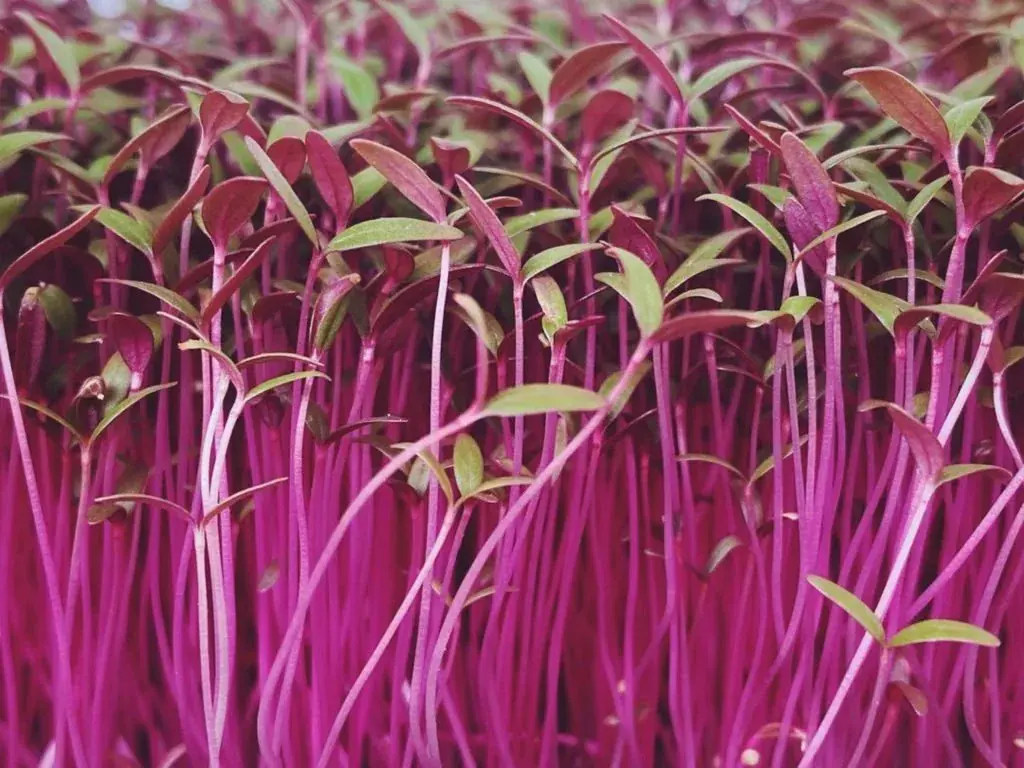
Red Amaranthus Seeds
Premium red amaranthus seeds for growing vibrant, nutrient-dense microgreens at home. Produces deep red-purple shoots with a mild, earthy flavour. Non-GMO, untreated, high germination rate. 100g pack grows 4–6 standard trays.
₹198 / 100g
₹22010% offHealth Benefits
- •Rich in iron, calcium, and magnesium
- •High in vitamins C and K
- •Contains betacyanins — powerful antioxidants responsible for the red colour
- •Supports blood health and reduces inflammation
- •Non-GMO and untreated — safe for daily consumption
How to Grow
- No pre-soaking needed — amaranthus seeds are tiny and soak easily
- Spread seeds evenly in a dense single layer over moist cocopeat
- Mist lightly with water and cover for 3–4 days in blackout
- Uncover and place in bright indirect sunlight when shoots reach 2–3 cm
- Harvest at 10–14 days when cotyledons are fully open and red colour is vivid
- Bottom-water to keep leaves dry and maintain colour intensity
Germination tips for microgreens
- •Do not pre-soak — amaranthus seeds are very small and over-watering causes clumping.
- •Use a fine mist spray to water; heavy watering washes small seeds to one corner.
- •Blackout phase of 3–4 days is critical for even germination and stem elongation.
- •Maintain temperature of 22–28°C for best germination; avoid cold drafts.
- •The vivid red-purple colour deepens with more light exposure — place near a south-facing window.
- •Harvest before true leaves appear for best flavour and texture.
- •Store unused seeds in an airtight container in a cool, dark place for up to 2 years.
Frequently Asked Questions
What are red amaranthus microgreens called in India?
Lal math in Marathi and chaulai or lal saag across north India. The mature plant is a common leafy vegetable, and the seedling carries the same iron-rich profile with a far more intense magenta colour.
How long do red amaranthus microgreens take to grow?
10 to 12 days. Blackout for 3 to 4 days, then bright indirect light, which is what develops the deep magenta stem colour. No soaking is needed.
Do amaranthus seeds need soaking before sowing?
No. Amaranthus seed is extremely small and soaking makes it clump and impossible to spread. Sow it dry on pre-moistened cocopeat and mist rather than pour for the first two days.
How much amaranthus seed does one tray need?
Only 4 to 6g for a standard tray, far less than radish or sunflower, because the seed is so fine. Sowing too densely is the most common mistake and causes damping off. A 100g pack fills around twenty trays.
Why are my amaranthus microgreens pale instead of red?
Not enough light. The magenta pigment is betacyanin and it develops in response to light exposure after blackout. Move the tray somewhere brighter and the colour deepens over two to three days.
What do red amaranthus microgreens taste like?
Mild and slightly earthy, closer to beetroot greens than to anything sharp. They are grown mainly for colour on a plate, which is why restaurants buy them, and they are rich in iron, vitamin K and betacyanin antioxidants.
Where can I buy red amaranthus seeds for microgreens in India?
SAGreens supplies NPOP-certified organic red amaranthus seeds at ₹198 for a 100g pack, untreated and germination tested above 90 percent. We ship across India with delivery charged at checkout, and same-day delivery within Pune.
Related Seeds
- Organic White Radish Seeds — ₹89 / 100g
- Organic Purple Sango Radish Seeds — ₹160 / 25g
- Organic Basil Seeds — ₹178 / 100g
- Organic Swiss Chard Seeds — ₹178 / 100g
Browse all microgreen seeds, or ask us what suits your tray.
Fresh Tips & Exclusive Offers
Subscribe for growing tips, seasonal updates, and exclusive offers on fresh organic microgreens in Pune.