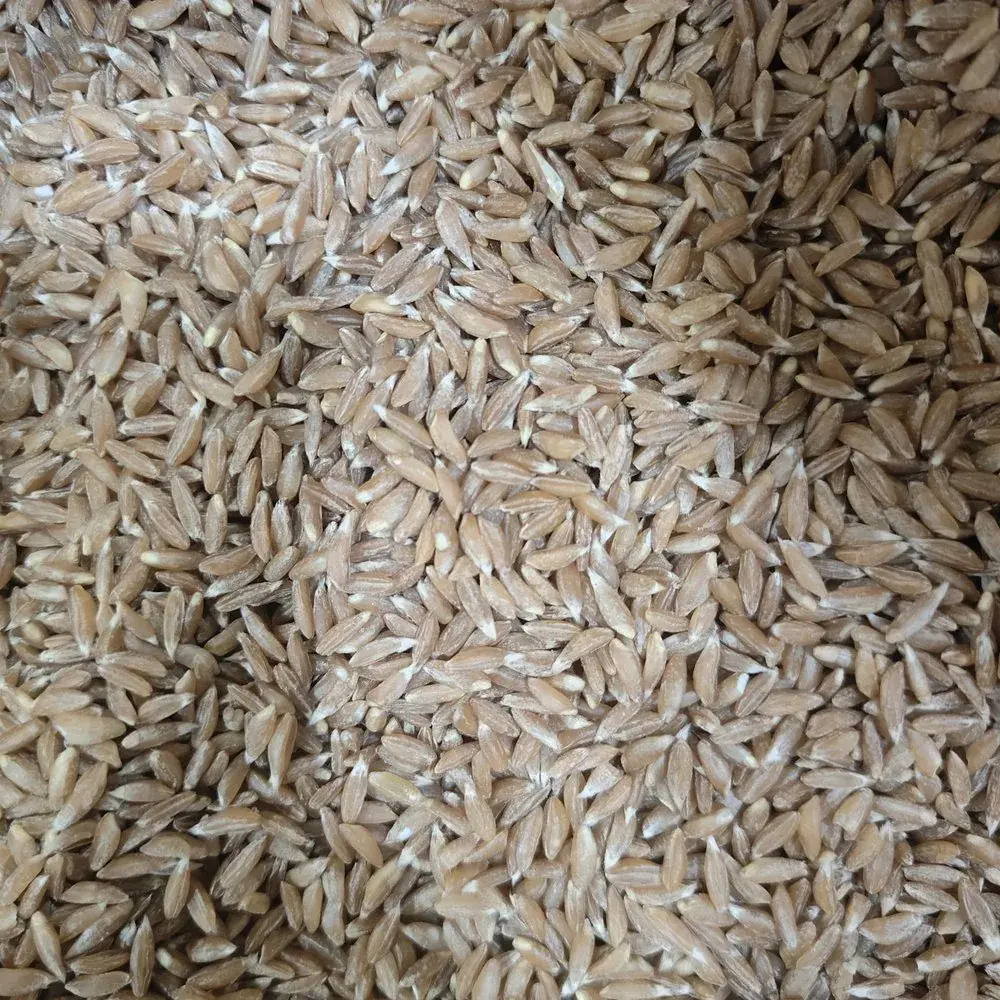
Organic Khapli Wheat Seeds (Emmer Wheat / खपली गेहूं)
Organic Khapli wheat seeds — खपली गेहूं, also called emmer wheat or khapli gahu in Maharashtra. An ancient, unhybridised wheat with a low glycaemic index and a nutty, chewy grain, grown the way it has been for generations. Sow for wheatgrass in 7–10 days, sprout it, or mill it into flour for rotis and thalipeeth. Germination rate: 90%+. Non-GMO, untreated, no chemical coating. Available in 100g, 500g and 1kg packs. Delivered across Pune and shipped India-wide.
₹120 / 100g
Health Benefits
- •Lower glycaemic index than modern hybrid wheat, which is why it is often chosen by people managing blood sugar
- •Higher fibre and protein per 100g than common aestivum wheat, with more magnesium and zinc
- •An unhybridised ancient grain — the variety Indian families grew before high-yield wheat replaced it
- •Grown as wheatgrass, the young shoots carry chlorophyll, vitamin C and the antioxidants of any fresh grass juice
How to Grow
- Soak Khapli wheat in clean water for 8–12 hours, then drain thoroughly
- For wheatgrass: spread the soaked grain densely on moist cocopeat and blackout for 2–3 days
- Move to bright indirect light once shoots reach 3–4 cm and green up over the next 2 days
- Harvest wheatgrass at 7–10 days when the blades are 15–20 cm, cutting just above the grain
Germination tips for microgreens
- •Khapli grain is larger and harder than common wheat — give it the full 8–12 hour soak or germination stays patchy.
- •The husk clings tightly to emmer. Buy it dehusked for growing; whole spikelets germinate unevenly.
- •Sow densely for wheatgrass, roughly 150–200g of soaked grain per 25cm × 25cm tray, for a thick cutting mat.
- •Blackout for 2–3 days only. Longer gives pale, weak blades that flop when uncovered.
- •Keep the tray between 18–28°C. Khapli is a cool-season grain and sulks above 32°C in Pune's April heat.
- •Bottom water once the shoots are up. Wetting the canopy in Indian humidity is the usual cause of mould at the grain line.
- •Cut wheatgrass once. Emmer regrowth is thin and bitter compared with the first cut, so re-sow instead.
- •For sprouting rather than grass, rinse and drain twice daily and eat at 2–3 days when the tail is the length of the grain.
Frequently Asked Questions
What is Khapli wheat called in Hindi and Marathi?
Khapli wheat is खपली गेहूं in Hindi and खपली गहू (khapli gahu) in Marathi. In English it is emmer wheat, botanically Triticum dicoccum. All four names refer to the same ancient grain.
How much do Khapli wheat seeds cost?
SAGreens sells Khapli wheat seeds at ₹120 for 100g, ₹240 for 500g and ₹350 for 1kg. The 1kg pack works out cheapest per gram, at ₹35 per 100g against ₹120 for the small pack.
Is Khapli wheat better than normal wheat for diabetics?
Khapli wheat has a lower glycaemic index than modern hybrid wheat, so it raises blood sugar more slowly, and it carries more fibre and protein per 100g. It is still wheat and still contains gluten, so it is not suitable for coeliac disease. Treat it as a better wheat, not a medicine, and follow your doctor's advice.
Can I grow wheatgrass from Khapli wheat seeds?
Yes, and it is one of the main reasons people buy it. Soak for 8-12 hours, sow densely on moist cocopeat, blackout for 2-3 days, then grow in bright indirect light. Harvest at 7-10 days when the blades are 15-20 cm.
Does Khapli wheat contain gluten?
Yes. Khapli wheat contains gluten, though its gluten structure differs from modern bread wheat and some people report finding it easier to digest. Anyone with coeliac disease or a diagnosed wheat allergy should avoid it entirely.
Do you deliver Khapli wheat seeds outside Pune?
Yes. Khapli wheat ships across India in 3-5 days. Pune orders are delivered same or next day, and delivery is charged at checkout.
Selected: 100g — ₹120
Related Seeds
- Organic Taramira Seeds (तारामीरा / Rocket Arugula) — ₹99 / 100g
- Pak Choi Microgreen Seeds (पाक चोई / Bok Choy) — ₹129 / 100g
- Organic Sunflower Seeds — ₹124 / 100g
- Organic Red Radish Seeds (China Rose) — ₹120 / 100g
Browse all microgreen seeds, or ask us what suits your tray.
Fresh Tips & Exclusive Offers
Subscribe for growing tips, seasonal updates, and exclusive offers on fresh organic microgreens in Pune.