Khapli Wheat in English Is Emmer — Benefits and Price
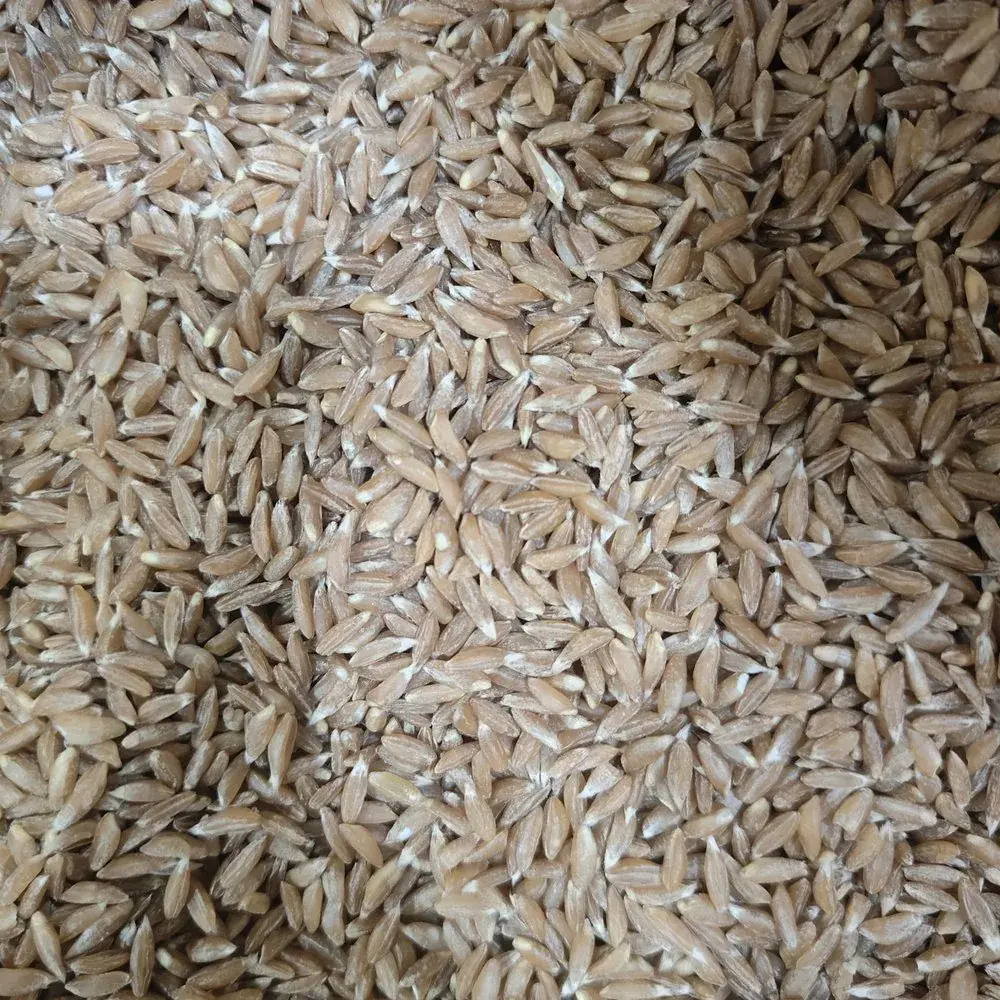
Khapli wheat is the wheat India grew before India grew modern wheat. In Maharashtra it is khapli gahu, in Hindi खपली गेहूं, in Tamil Nadu samba godhumai, and to a botanist it is Triticum dicoccum — emmer wheat, one of the oldest cultivated grains on earth. It nearly disappeared from Indian fields during the Green Revolution, when high-yield dwarf wheats replaced it almost everywhere. It is coming back now, and the reason is not nostalgia. It is blood sugar.
Key Takeaways: Khapli wheat (emmer, खपली गेहूं) is an ancient unhybridised wheat with a lower glycaemic index than modern bread wheat, more fibre and more protein per 100g. It contains gluten and is not safe for coeliac disease. SAGreens sells Khapli wheat seed at ₹120 for 100g, ₹240 for 500g and ₹350 for 1kg, with 90%+ germination — see khapli wheat seeds for pack sizes and ordering. It grows into sweet, dense wheatgrass in 7 to 10 days, sprouts in 2 to 3 days, and mills into flour for bhakri, thalipeeth and chapati.
This guide covers what Khapli wheat actually is, what the nutrition evidence does and does not show, how to grow it as wheatgrass or sprouts at home in Indian conditions, what it costs, and how to cook with it. We grow it at our Keshav Nagar farm in Pune and sell the seed, so the growing figures here are ours rather than borrowed.
What is Khapli wheat?
Khapli wheat is a hulled, tetraploid wheat species distinct from the common bread wheat (Triticum aestivum) that fills every Indian atta packet. The grain sits inside a tough husk that has to be removed before eating or milling — that husk is where the name comes from, and it is also why Khapli survived in pockets of Maharashtra, Karnataka, Gujarat, Madhya Pradesh and Tamil Nadu long after modern wheat took over the plains.
Khapli wheat, emmer wheat and खपली गेहूं are three names for the same grain. In Marathi it is khapli gahu, in Tamil samba godhumai, botanically Triticum dicoccum. If a seller uses these names interchangeably they are being accurate, not vague.
Being unhybridised matters more than it sounds. Modern wheat has been bred hard for eighty years toward yield, shorter straw and faster milling. Khapli was left alone. What you buy today is close to what was grown here centuries ago, which is why its protein, fibre and mineral profile looks different from the wheat in a supermarket.
Khapli wheat vs modern wheat
| Khapli (emmer) | Modern bread wheat | |
|---|---|---|
| Species | Triticum dicoccum | Triticum aestivum |
| Grain | Hulled, needs dehusking | Free-threshing |
| Glycaemic index | Lower in published comparisons | Higher, particularly as refined flour |
| Fibre | Higher per 100g | Lower |
| Protein | Higher per 100g | Lower |
| Gluten | Present | Present |
| Yield per acre | Low | High |
| Price | Premium | Commodity |
The yield row explains the price row. Khapli produces far less grain per acre than a dwarf hybrid, and the dehusking step adds cost. Anyone selling Khapli at commodity wheat prices is either not selling Khapli or not telling you the whole story.
Khapli wheat benefits, and what the evidence actually says
This is where Khapli attracts more claims than it can carry, so it is worth separating what is well supported from what is marketing.
The glycaemic index claim is the strongest one. Published comparisons consistently put emmer wheat below refined modern wheat flour on the glycaemic index, and the mechanism is plausible: more intact fibre, more resistant starch, a coarser grind. This is why Khapli has become common in Maharashtrian households managing type 2 diabetes. It is also why we get asked about it more than any other grain we sell.
Khapli wheat is a better wheat, not a medicine. It raises blood sugar more slowly than refined wheat flour, but it still raises it. Portion size and what you eat alongside it matter more than the grain itself. Anyone with diabetes should treat it as a swap worth making, not a treatment, and follow their doctor rather than a seed seller.
Fibre and protein are straightforwardly higher per 100g than common wheat, which is a real and uncontroversial nutritional advantage. Higher fibre also explains the fuller feeling people report — relevant if you are reading our guide to microgreens for weight loss in India and thinking about the whole plate rather than just the greens.
Mineral content, particularly magnesium and zinc, is generally reported higher in emmer than in modern wheat, though the numbers vary with soil and season rather than being fixed properties of the grain.
The digestibility claim needs care. Many people say Khapli sits easier than modern wheat. Its gluten structure does differ from bread wheat, and that may genuinely matter for some people with non-coeliac wheat sensitivity. But this is not the same as being gluten-free.
Khapli wheat contains gluten. It is not safe for anyone with coeliac disease or a diagnosed wheat allergy. Sellers who imply otherwise are wrong, and the mistake is a dangerous one. If you need to avoid gluten entirely, Khapli is not your grain.
Khapli wheat price in India
Khapli seed and Khapli atta are different products at different prices. Seed is sold for growing and sprouting; atta is milled flour for the kitchen. What follows is our seed pricing.
| Pack | Price | Roughly covers |
|---|---|---|
| 100g | ₹120 | 1 wheatgrass tray, or several rounds of sprouts |
| 500g | ₹240 | 3 to 4 wheatgrass trays |
| 1kg | ₹350 | 6 to 8 trays, or a first milling batch |
The 1kg pack works out at ₹35 per 100g against ₹120 for the small pack. If you already know you want Khapli, buying the small pack repeatedly is the expensive way to do it. The 100g pack exists so you can find out whether you like it first.
Order any size from the Khapli wheat seeds page, where you pick the pack on the product itself. For how our seed pricing compares across every variety we sell, see our microgreen seed price guide for India.
Growing Khapli wheat as wheatgrass
Khapli makes noticeably sweeter, denser wheatgrass than common wheat. The blades are thicker and the juice is less harsh, which matters if you have tried wheatgrass before and given up on the taste.
What you need
- 100g to 200g Khapli wheat seed per standard tray
- A shallow tray, roughly 25cm × 25cm, with drainage
- A second solid tray underneath for bottom watering
- Cocopeat, soaked and drained to damp rather than wet
- A spray bottle
Step by step
- Soak. Cover the grain with clean water and leave for 8 to 12 hours. Khapli is larger and harder than common wheat and a short soak leaves germination patchy.
- Drain thoroughly. Standing water at this stage is the single most common cause of a failed tray in Indian humidity.
- Sow densely. Spread the soaked grain in one even layer across damp cocopeat. Grain touching grain is correct for wheatgrass; you want a mat, not spaced plants.
- Blackout for 2 to 3 days. Cover with an inverted tray. Longer than three days gives pale, weak blades that flop the moment you uncover them.
- Light. Move to bright indirect light once shoots reach 3 to 4 cm. They green up over the next 48 hours.
- Bottom water. Pour water into the outer tray and let the medium wick it up. Wetting the canopy in Pune or Mumbai humidity is how mould starts at the grain line.
- Harvest at 7 to 10 days, when blades are 15 to 20 cm. Cut just above the grain with clean scissors.
Cut Khapli wheatgrass once and re-sow. Emmer regrowth is thin and noticeably more bitter than the first cut. Common wheat tolerates a second cut better; Khapli does not reward it.
Our full method for any variety, including the equipment and the mistakes, is in the complete guide to growing microgreens at home in India. For the wheatgrass-specific version using common wheat, see our wheatgrass seeds benefits guide.
Growing Khapli through the Indian year
Khapli is a cool-season grain and it behaves like one indoors.
Winter, November to February. The best season. Germination is even, growth is steady, mould pressure is low. Trays take the full 10 days and the grass is at its sweetest.
Summer, March to June. Above 32°C the grain germinates fast and then stalls. Move trays away from west-facing windows, water in the early morning, and expect to harvest a day or two earlier at a slightly shorter blade.
Monsoon, July to September. The hard season, as with every crop we grow. Cut watering frequency, run a fan near the trays for a few hours daily, and reduce sowing density slightly so air can move through the mat. Our monsoon growing guide covers the tactics in detail.
Sprouting Khapli wheat
Sprouted Khapli is quicker than wheatgrass and needs no tray at all.
- Soak 8 to 12 hours, drain
- Keep in a covered jar or muslin cloth
- Rinse and drain twice daily
- Eat at 2 to 3 days, when the white tail is about the length of the grain
Sprouting reduces phytate in the grain, which improves mineral absorption — the same mechanism that makes sprouted moong more useful than dry moong. If you sprout regularly, our organic green gram seeds are the faster companion crop; moong is ready in 2 days flat.
Do not eat Khapli sprouts that smell sour or feel slimy. A warm Indian kitchen and a jar that has not drained properly is an excellent bacterial culture. Rinse twice a day without exception, and if a batch smells wrong, compost it.
Cooking with Khapli wheat
Khapli behaves differently from atta in a way that catches people out on the first attempt. It absorbs more water, the dough is less elastic because of the different gluten structure, and the flavour is nuttier and slightly sweet.
Bhakri and thalipeeth are where Khapli is most at home, because both are traditionally made from coarser flours and neither depends on a stretchy dough.
Chapati works but needs adjustment: more water, a longer rest, and an acceptance that the roti will be denser and will not puff the way maida-blended atta does. Many households blend Khapli with regular atta at first and shift the ratio over time.
Upma, khichdi and laddoo all take cracked or coarsely milled Khapli well.
A practical note: mill Khapli in small batches. The grain keeps for years, but the flour has more intact oil than refined atta and goes rancid faster, particularly in a Pune summer kitchen.
Who Khapli wheat is and is not for
Worth trying if you are managing blood sugar and want a better wheat, want more fibre without changing what you cook, want denser and sweeter wheatgrass, or simply want to eat a grain your grandparents would recognise.
Not for you if you have coeliac disease or a wheat allergy, need the cheapest possible wheat, or want a roti that puffs like a restaurant one.
Frequently Asked Questions
What is Khapli wheat called in Hindi and Marathi?
Khapli wheat is खपली गेहूं in Hindi and खपली गहू (khapli gahu) in Marathi. In Tamil it is samba godhumai. In English it is emmer wheat, botanically Triticum dicoccum. All of these refer to the same ancient grain.
Is Khapli wheat good for diabetes?
Khapli wheat has a lower glycaemic index than modern refined wheat flour, so it raises blood sugar more slowly, and it carries more fibre. That makes it a sensible swap for people managing type 2 diabetes, and it is why the grain is popular in Maharashtra. It is not a treatment, it still contains carbohydrate, and portion size still matters. Follow your doctor's guidance rather than replacing medical advice with a flour change.
Does Khapli wheat have gluten?
Yes. Khapli wheat contains gluten. Its gluten structure differs from modern bread wheat and some people with non-coeliac wheat sensitivity report finding it easier to digest, but that is a different question from being gluten-free. Anyone with coeliac disease or a diagnosed wheat allergy must avoid it.
How much does Khapli wheat seed cost?
SAGreens sells Khapli wheat seed at ₹120 for 100g, ₹240 for 500g and ₹350 for 1kg. The 1kg pack is the cheapest per gram at ₹35 per 100g. Delivery is charged at checkout and the seed ships across India in 3 to 5 days.
Can I grow wheatgrass from Khapli wheat?
Yes, and it is one of the main reasons people buy it. Soak 8 to 12 hours, sow densely on damp cocopeat, blackout for 2 to 3 days, then grow in bright indirect light and harvest at 7 to 10 days when the blades are 15 to 20 cm. Khapli wheatgrass is sweeter and denser than grass from common wheat.
How long does Khapli wheat take to sprout?
Khapli sprouts in 2 to 3 days after an 8 to 12 hour soak, rinsing and draining twice daily. Eat the sprouts when the white tail is roughly the length of the grain.
Is Khapli wheat the same as emmer wheat?
Yes. Khapli is the Indian name for emmer wheat, Triticum dicoccum. Some sellers use one name and some the other, and occasionally both appear on the same packet, which is accurate rather than confusing.
Why is Khapli wheat more expensive than normal wheat?
Two reasons. Khapli yields far less grain per acre than modern dwarf wheat, and the grain is hulled, so it needs a dehusking step that free-threshing wheat does not. Lower yield plus extra processing produces a higher price. A Khapli sold at commodity wheat prices is worth questioning.
Can I use Khapli wheat seed for making flour?
Yes. Our Khapli seed is untreated and uncoated, so it is food-grade and can be milled. Mill in small batches — Khapli flour has more intact oil than refined atta and turns rancid faster in Indian kitchen heat.
Do you deliver Khapli wheat seeds outside Pune?
Yes. Khapli wheat ships across India in 3 to 5 days, with delivery charged at checkout. Pune orders are delivered same or next day from our Keshav Nagar farm. Contact us for wholesale rates from 500g upward.
Ordering Khapli wheat seed from SAGreens
Our Khapli wheat seed is untreated, uncoated and non-GMO, germination tested at 90%+ before it is packed. It is sold in 100g, 500g and 1kg packs, and because it is a food-grade grain rather than a treated planting seed, you can grow it, sprout it or mill it.
For growing alongside it, our organic wheatgrass seeds are the cheaper everyday juice crop, and the full microgreen seed catalogue covers every variety we stock. If you are ordering for a shop, cafe or juice bar, get in touch for wholesale rates — these start at 500g and we quote by variety.
About the author. SAGreens is run by Ajay Toradmal in Keshav Nagar, Mundhwa, Pune, from a three-generation farming family. The growing figures in this guide — soak times, blackout durations, germination rates, the seasonal adjustments — come from trays grown at our own farm rather than from other people's blog posts. If a tray of yours is behaving oddly, send us a photo through our contact page and we will tell you what we see.
Where Khapli wheat grows in India
Emmer is one of the first grains humans ever domesticated, cultivated in the Fertile Crescent roughly ten thousand years ago and carried east from there. In India it settled into the Deccan, and that is broadly where it still is: pockets of Maharashtra, particularly the Nashik, Ahmednagar and Pune belts, along with parts of Karnataka, Gujarat, Madhya Pradesh and Tamil Nadu.
Its retreat was not gradual. The Green Revolution of the 1960s and 70s replaced traditional wheats across the Indian plains with semi-dwarf high-yield varieties, and it did so for a defensible reason — the country needed calories per acre, urgently, and Khapli could not deliver them. What survived did so in dryland farms and in households that simply kept growing what they had always grown.
The revival has come from the other direction. Agricultural universities, including work at Dharwad in Karnataka on dicoccum lines and at research institutes in Pune, have put effort into improved emmer varieties. Meanwhile demand grew from urban households looking for a lower-GI wheat, which turned a heritage crop into a premium one.
Khapli was never lost, only pushed to the margins. Farming families in the Deccan kept growing it through the decades when the rest of India switched. Buying it today supports the growers who did not give up on it.
That history is worth knowing because it shapes what you can buy. Khapli supply is small and seasonal, and quality varies far more between lots than commodity wheat does. It is also why we germination-test each incoming batch rather than trusting a supplier's number, the same as we do for every variety in our seed supplier evaluation framework.
Storing Khapli wheat seed
Whole Khapli grain is one of the most durable things in an Indian kitchen. Stored properly it stays viable for growing for two to three years and edible for longer.
- Keep it whole. Do not mill until you need flour. Intact grain keeps for years; Khapli flour turns rancid within weeks in summer heat.
- Airtight and dark. A steel dabba or a sealed glass jar in the coolest, darkest part of the kitchen. Light and heat both cost you germination.
- Add a desiccant in the monsoon. A silica gel sachet in the container is cheap insurance during Pune's July and August, when ambient humidity does the damage rather than the temperature.
- Do not refrigerate loose grain. Condensation on the grain when you take it out is worse than the room temperature you were avoiding.
- Check before a big sow. Germination drifts down slowly with age. Sprout twenty grains on damp tissue; if fifteen or more come up you are still in good shape.
Our full method, including the variety-by-variety viability figures, is in the seed storage and shelf life guide.
Troubleshooting Khapli trays
| What you see | Why | What to do |
|---|---|---|
| Patchy, uneven germination | Soak too short for a large hard grain | Soak the full 8 to 12 hours next time |
| White fuzz at the grain line | Wet canopy, poor airflow | Bottom water only, run a fan, sow slightly thinner |
| Pale, floppy blades | Blackout ran past 3 days | Uncover at day 2 to 3 and give bright indirect light |
| Sour smell in a sprouting jar | Not drained properly | Rinse and drain twice daily; discard the batch |
| Grass bitter on the second cut | Normal for emmer | Cut once and re-sow rather than expecting regrowth |
| Slow growth above 32°C | Khapli is a cool-season grain | Move off hot windowsills, water early morning |
Most Khapli failures come down to moisture management rather than the seed, which is true of nearly everything we grow. If you are new to trays entirely, start with our beginner seed guide before adding a grain crop.
Fresh Tips & Exclusive Offers
Subscribe for growing tips, seasonal updates, and exclusive offers on fresh organic microgreens in Pune.