Microgreens for Liver Health: India's NAFLD Guide
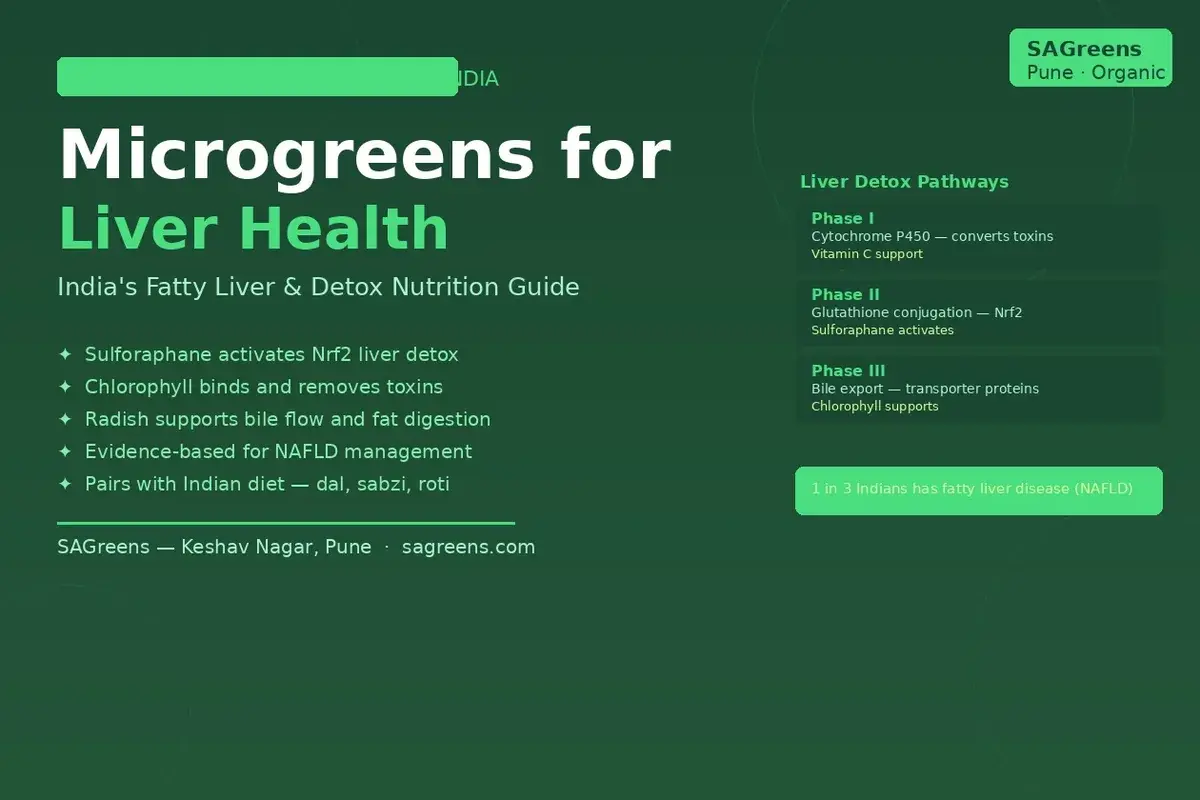
Key Takeaways: Broccoli microgreens (sulforaphane activating liver Phase 2 detox enzymes), radish microgreens (bile flow stimulation), and sunflower microgreens (vitamin E reducing liver oxidative stress) are the most evidence-supported varieties for liver health. India has the world's second-highest burden of non-alcoholic fatty liver disease (NAFLD), affecting an estimated 1 in 3 adults. Microgreens cannot reverse established liver disease but provide targeted nutritional support for liver function that is missing from most Indian diets. Always work with your gastroenterologist for diagnosed liver conditions.
The liver is India's most stressed major organ. Non-alcoholic fatty liver disease (NAFLD) affects an estimated 32-38% of Indian adults — comparable to Western rates but occurring at lower BMI thresholds (Indians develop NAFLD at a lower body weight than Caucasian populations, due to a higher tendency toward visceral adiposity even at normal BMI). The urban Indian diet — high in refined carbohydrates (white rice, maida, sugar), vegetable oils high in omega-6 fatty acids, and processed foods — is a direct driver of hepatic fat accumulation.
Beyond NAFLD, India's liver burden includes high rates of viral hepatitis B and C, cirrhosis (5th most common cause of death), and liver toxicity from medication overuse (particularly NSAID and antibiotic overuse). Environmental toxin exposure — aflatoxins from stored groundnuts and grains, heavy metals in urban water, and pesticide residues — adds to the hepatic burden that the liver must continuously process.
Microgreens target liver health at a molecular level through three primary mechanisms: activation of detoxification enzymes (sulforaphane/Nrf2), stimulation of bile flow and fat digestion (radish glucosinolates), and reduction of hepatic oxidative stress (vitamin E, selenium). This guide covers the mechanisms, the evidence, and a practical India-specific liver support protocol. For related cardiovascular protection (the liver-heart axis), read our microgreens for heart health India guide.
How the Liver Detoxifies: The Two Phases
Understanding liver detoxification requires knowing how the liver processes toxins. It happens in two phases:
Phase 1 (Oxidation): Cytochrome P450 enzymes convert fat-soluble toxins into intermediate metabolites. These intermediates are often more reactive and potentially more toxic than the original compounds. Phase 1 is the "activation" step.
Phase 2 (Conjugation): Transferase enzymes attach water-soluble molecules (glutathione, glucuronide, sulphate) to Phase 1 intermediates, rendering them water-soluble and excretable through bile or urine. Phase 2 is the "neutralisation" step.
A common failure mode in chronic toxin exposure is Phase 1 activity that outpaces Phase 2 — producing a backlog of reactive intermediates that damage liver cells before they can be neutralised. This is the mechanism behind the liver damage seen with regular paracetamol use, alcohol consumption, and certain herbal supplements (interestingly, many "liver tonic" Ayurvedic preparations activate Phase 1 but are poor Phase 2 inducers).
Sulforaphane from broccoli microgreens is one of the most potent Phase 2 enzyme inducers identified in food. It specifically activates the Nrf2 transcription factor, which upregulates glutathione-S-transferase, NAD(P)H quinone oxidoreductase (NQO1), and heme oxygenase-1 — the core Phase 2 enzymes. This is the molecular basis for the liver-protective effects of cruciferous vegetables documented across multiple research traditions.
NAFLD: India's Hidden Liver Epidemic
Non-alcoholic fatty liver disease begins with simple steatosis (fat accumulation in liver cells) and can progress through non-alcoholic steatohepatitis (NASH, with inflammation), fibrosis, cirrhosis, and hepatocellular carcinoma. The progression is slow (decades) but the endpoint — cirrhosis — is largely irreversible.
India's NAFLD profile has specific characteristics that make dietary intervention particularly relevant:
- Normal-weight NAFLD: Many Indian NAFLD patients have a normal BMI but excess visceral fat — meaning standard weight-based screening misses them
- Young onset: Indian NAFLD is being diagnosed in patients as young as 25-35, significantly younger than Western patterns
- Diet drivers: High refined carbohydrate intake (rice, roti, sugar) is the primary driver — dietary fat is secondary
- Rapid progression: NASH-to-cirrhosis progression appears faster in Indian patients than in Western cohorts, possibly due to genetic factors
There is no approved pharmacological treatment for NAFLD — lifestyle modification (dietary change and exercise) is the primary and currently only evidence-based intervention. This gives dietary approaches genuine clinical relevance.
A 2019 study in the American Journal of Clinical Nutrition found that broccoli sprout supplementation (standardised for sulforaphane) in overweight adults with NAFLD significantly reduced liver fat percentage and serum alanine aminotransferase (ALT) — a liver inflammation marker — after 8 weeks. This is among the first direct evidence that sulforaphane-rich foods may benefit NAFLD specifically.
Microgreens That Support Liver Health
Broccoli Microgreens: Phase 2 Activation
As covered above, sulforaphane is the primary active compound. For liver health specifically:
- Upregulates glutathione production (the liver's primary internal antioxidant)
- Activates NQO1 (protects against electrophilic toxins from food processing)
- Reduces hepatic NF-κB activity (the inflammatory signalling that drives NASH progression from simple steatosis)
- Protects against hepatocyte apoptosis (programmed cell death) under toxic challenge
The therapeutic dose used in research is typically 20-40 mg of sulforaphane equivalent per day, which corresponds to approximately 40-80 g of fresh broccoli microgreens. This is achievable as a daily dietary target. Browse SAGreens broccoli microgreens for fresh delivery across Pune.
Radish Microgreens: Bile Flow and Fat Digestion
Radish microgreens are a well-documented choleretic agent — they stimulate bile production and bile flow from the liver and gallbladder. Bile is essential for fat digestion and absorption, and for the excretion of fat-soluble toxins (including cholesterol, bilirubin, and environmental toxins) from the body.
The active compounds responsible for radish's choleretic action are its glucosinolates (particularly glucoraphenin, which converts to raphenin isothiocyanate) and its high sulphur content. In Ayurvedic medicine, radish (mooli) has been used as a liver tonic for centuries — the modern biochemical mechanism is now understood.
For fatty liver patients, improved bile flow means better fat digestion and reduced hepatic fat accumulation — directly addressing the metabolic driver of NAFLD. Radish microgreens are also high in vitamin C (60-70 mg per 100 g), which protects against hepatocyte oxidative damage.
Sunflower Microgreens: Reducing Hepatic Oxidative Stress
Oxidative stress is the central mechanism through which simple steatosis progresses to NASH and then fibrosis. Hepatocytes loaded with fat become highly vulnerable to oxidative damage — lipid peroxidation of stored fat generates malondialdehyde and 4-hydroxynonenal, which directly activate hepatic stellate cells and drive fibrosis.
Vitamin E is the primary fat-soluble antioxidant in hepatocyte membranes and is the most studied nutrient for NAFLD management after dietary fat restriction. A landmark study in the New England Journal of Medicine (PIVENS trial, 2010) found that vitamin E supplementation at 800 IU/day improved liver histology in non-diabetic NASH patients compared to placebo — the first pharmacological agent to show histological benefit in NASH.
Sunflower microgreens provide 5-10 mg of vitamin E per 100 g. While this is far below the 800 IU therapeutic dose used in PIVENS, food-source vitamin E is more bioavailable than synthetic alpha-tocopherol supplements and comes with a complete tocopherol family (alpha, beta, gamma, delta) rather than isolated alpha-tocopherol. For long-term liver support as part of a dietary pattern, daily sunflower microgreens represent a safe, food-matrix vitamin E source.
The Liver-Gut Axis: Why Gut Health Affects Liver Health
The liver receives 75% of its blood supply directly from the portal vein — the vessel that drains the intestines. Everything absorbed from the gut goes to the liver first. This means gut dysbiosis has a direct hepatic impact: bacterial endotoxins (lipopolysaccharide, LPS) produced by gram-negative gut bacteria are continuously transported to the liver via the portal vein and activate Kupffer cells (the liver's resident immune cells), driving hepatic inflammation.
In NAFLD patients, intestinal permeability ("leaky gut") is significantly increased compared to controls — more bacterial endotoxin reaches the liver, amplifying the inflammatory signal. This is now understood as a major driver of the progression from steatosis to steatohepatitis.
Microgreens address this axis: the prebiotic fibre in pea shoots and fenugreek microgreens feeds beneficial bacteria that reduce LPS production, and sulforaphane from broccoli microgreens reduces intestinal permeability directly. Our microgreens for gut health India guide covers this axis in more detail.
Nutrients in Microgreens Relevant to Liver Health
| Nutrient | Liver Function | Best Microgreen Sources |
|---|---|---|
| Sulforaphane | Phase 2 enzyme induction, Nrf2 activation | Broccoli, radish, mustard |
| Vitamin E | Hepatocyte membrane protection, NASH | Sunflower, kale |
| Vitamin C | Hepatocyte antioxidant, collagen synthesis | Radish, broccoli |
| Selenium | Glutathione peroxidase (antioxidant enzyme) | Sunflower |
| Chlorophyll | Toxin binding, alkalising | All green microgreens |
| Folate | Methyl group supply for liver detox | Pea shoots, sunflower |
| Fibre (prebiotic) | Gut-liver axis, reduces LPS | Fenugreek, pea shoots |
A Practical India-Specific Liver Support Protocol
This protocol is for general liver health support in people without diagnosed liver disease, as a dietary adjunct. For diagnosed NAFLD, NASH, hepatitis, or cirrhosis, work with a hepatologist.
Daily core:
- 30-50 g broccoli microgreens raw (sulforaphane for Phase 2 enzymes)
- 20-30 g radish microgreens raw (choleretic for bile flow)
- 20-30 g sunflower microgreens raw (vitamin E for hepatocyte protection)
Weekly additions:
- 30-40 g pea shoots 3x per week (folate for methylation, prebiotic fibre for gut-liver axis)
Dietary context:
- Reduce refined carbohydrates (white rice, maida, sugar) — these are the primary drivers of hepatic fat in India
- Pair with adequate protein (dal, paneer, eggs) — protein intake supports liver regeneration
- Minimise processed vegetable oils high in omega-6 (sunflower oil in excess, palm oil) — replace with small amounts of ghee, mustard oil, or coconut oil
The NAFLD Reality Check: Microgreens support liver health — they do not reverse established NAFLD or fibrosis. If you have been diagnosed with fatty liver, the non-negotiable primary interventions are: 1) significant dietary carbohydrate reduction (not just fat restriction), 2) 150-200 minutes of moderate exercise weekly, and 3) weight loss of 7-10% body weight if overweight (this is the threshold at which histological improvement is documented). Microgreens are a meaningful nutritional addition to these primary interventions, not a replacement for them.
What to Avoid for Liver Health
Alongside adding microgreens, certain common Indian dietary habits accelerate liver damage:
- Excess sugar and fructose: Table sugar and fruit juice are significant drivers of hepatic fat. Jaggery, despite being marketed as healthy, is still primarily sucrose.
- Alcohol: Even "moderate" alcohol (2 drinks/day) significantly accelerates progression from NAFLD to NASH in genetically predisposed individuals. Many Indian patients underreport alcohol intake to their hepatologist.
- Regular NSAID use: Paracetamol at high doses, ibuprofen, and aspirin all produce hepatic toxicity with regular use. This is underappreciated in India where NSAIDs are dispensed without prescription.
- Unregulated herbal supplements: Many Ayurvedic liver tonics contain hepatotoxic plants (including some pyrrolizidine alkaloid-containing plants) that have caused documented liver failure in Indian patients.
Seed Quality & Pricing: All SAGreens microgreen seeds are NPOP-certified organic — untreated, non-GMO, germination tested before dispatch. Seeds start at ₹50/100g (wheatgrass), ₹124/100g (sunflower, mustard) and ₹120/100g (radish). Delivery charged at checkout, by city and weight. Browse microgreen seeds or contact us for bulk pricing.
Frequently Asked Questions
Which microgreen is best for fatty liver (NAFLD)?
Broccoli microgreens are the most evidence-supported for NAFLD specifically — sulforaphane activates the Phase 2 detoxification enzymes that reduce hepatic inflammation and has shown direct liver fat reduction in clinical studies. Radish microgreens are the best complementary choice for their choleretic action (bile stimulation), which improves fat processing. Sunflower microgreens add vitamin E for hepatocyte protection.
Can microgreens reverse fatty liver?
No dietary intervention reverses established fatty liver on its own. Significant carbohydrate restriction, exercise, and weight loss are the primary interventions with documented histological reversal. Microgreens support the process by providing targeted antioxidants and detoxification support, but they cannot substitute for the primary lifestyle interventions.
How much broccoli microgreens should I eat for liver support?
Research studies on sulforaphane and liver health typically use doses corresponding to 40-80 g of fresh broccoli microgreens daily. This is the practical target for liver-specific support — achievable as a daily garnish across two meals (20-40 g per meal).
Is it safe to eat microgreens with liver disease medication?
Most microgreens are safe alongside common liver medications (ursodeoxycholic acid, vitamin E supplements used for NASH). Sulforaphane from broccoli microgreens induces CYP450 enzymes, which in theory could slightly alter the metabolism of some drugs processed by this pathway. If you are on multiple medications for liver disease, inform your hepatologist that you are eating broccoli microgreens regularly. The effect at food-serving quantities (40-80 g/day) is unlikely to be clinically significant.
Does radish microgreen help with gallstones?
Radish's choleretic action increases bile flow, which theoretically reduces bile stasis (a factor in gallstone formation). However, rapid increase in bile flow can trigger gallstone pain in people with existing stones. If you have diagnosed gallstones, increase radish microgreen consumption gradually and inform your gastroenterologist.
Can I eat microgreens if I have hepatitis B or C?
Yes. Microgreens are food, not hepatotoxic compounds. The antioxidant support from vitamin E (sunflower microgreens) and sulforaphane (broccoli microgreens) may be genuinely supportive for hepatitis patients dealing with chronic liver inflammation. Ensure microgreens are thoroughly washed before consumption to avoid any foodborne infection risk, which is more consequential for immunocompromised hepatitis patients.
How does sulforaphane actually protect the liver at a cellular level?
Sulforaphane activates the Nrf2 transcription factor, which controls the expression of over 200 genes involved in antioxidant defence, detoxification, and anti-inflammatory response. In the liver specifically, Nrf2 activation upregulates glutathione synthetase (increasing the liver's master antioxidant), quinone reductase and glutathione-S-transferase (Phase 2 detox enzymes), and heme oxygenase-1 (anti-inflammatory). These enzymes handle the liver's core toxin-processing work. Sulforaphane from broccoli microgreens essentially increases the liver's detoxification throughput capacity.
What is the gut-liver axis and why does it matter for NAFLD?
The gut-liver axis is the bidirectional communication pathway between the gut microbiome and the liver via the portal vein, which carries gut-absorbed materials directly to the liver. When gut bacteria are dysbiotic, they produce excess lipopolysaccharide (LPS), a bacterial endotoxin transported to the liver and activating Kupffer cells (liver immune cells), driving chronic hepatic inflammation. In NAFLD, increased intestinal permeability amplifies this LPS signal. Microgreens improve gut-liver axis health through prebiotic fibre in pea shoots and fenugreek (reducing LPS-producing bacteria) and sulforaphane (reducing intestinal permeability) — less LPS reaches the liver, reducing the inflammatory driver.
How long do I need to eat microgreens before seeing liver health benefits?
Measurable changes in liver enzymes (ALT, AST) are documented in clinical sulforaphane trials over 4-12 weeks of consistent daily intake. Histological changes — reduction in liver fat visible on ultrasound — take longer, typically 3-6 months in lifestyle intervention studies. For people with elevated liver enzymes, checking liver function tests 8-12 weeks after starting a consistent broccoli and radish microgreen daily protocol is a reasonable way to monitor impact. The effects are cumulative, not acute.
Can microgreens help with elevated bilirubin levels?
Elevated bilirubin can have multiple causes — pre-hepatic (haemolysis), hepatic (liver cell damage), or post-hepatic (bile duct obstruction). Microgreens are not a primary treatment for jaundice of any cause. Broccoli sulforaphane has some evidence for supporting Phase 2 bilirubin conjugation through UGT1A1 enzyme upregulation — potentially relevant for mild constitutional hyperbilirubinaemia (Gilbert's syndrome). For clinical jaundice, see a hepatologist before relying on any dietary intervention.
Which microgreens should I avoid with liver disease?
No common microgreen variety is hepatotoxic at normal dietary quantities. The main consideration is that broccoli sulforaphane induces CYP450 enzymes, which in theory could alter the metabolism of drugs processed by this pathway. At typical food-serving quantities of 40-80 g of broccoli microgreens daily, this effect is unlikely to be clinically significant, but if you are on multiple liver medications, inform your hepatologist. High-dose milk thistle (silymarin) supplements should not be confused with microgreens — the potential drug interactions of concentrated silymarin extracts do not apply to food-quantity microgreens.
Are microgreens safe for people with liver disease?
For most people with early-stage NAFLD or mildly elevated liver enzymes, microgreens are safe and potentially beneficial. People with advanced liver disease (cirrhosis, hepatic encephalopathy) or those on multiple hepatic medications should consult their hepatologist before making dietary changes, as protein and micronutrient metabolism may be affected.
Do microgreens help with liver enzyme levels (ALT, AST)?
Clinical studies have shown that sulforaphane supplementation reduces ALT and AST levels in NAFLD patients. Vitamin E has similarly shown liver enzyme reductions in clinical trials. Eating 30-50 g of broccoli microgreens daily provides meaningful sulforaphane precursors; check liver function tests after 8-12 weeks of consistent intake to monitor impact.
How long before I see liver health benefits from eating microgreens?
Measurable changes in liver enzymes (ALT, AST) are documented in clinical sulforaphane trials over 4-12 weeks of consistent daily intake. Histological changes in liver fat visible on ultrasound take longer — typically 3-6 months in lifestyle intervention studies. Check liver function tests 8-12 weeks after starting a consistent broccoli and radish microgreen daily protocol.
Liver Detox Myths vs Microgreen Reality
The "liver cleanse" and "detox" market in India is enormous — encompassing kadha mixtures, commercial supplements, herbal pills, and fad juices promoted as dramatic liver-clearing interventions. Most have minimal or no clinical evidence. Understanding what actually supports liver function helps you make evidence-based choices.
| Liver Detox Claim | Evidence Status | What Microgreens Actually Do |
|---|---|---|
| "Detox juice cleanses the liver in 3 days" | No scientific basis | Consistent daily habits, not acute flushes, drive Phase 2 enzyme upregulation |
| "Liver supplements eliminate toxins" | Largely unsupported for common commercial products | Sulforaphane has clinical evidence for Nrf2 activation |
| "Alkaline water supports liver" | No mechanism established | Hydration supports bile flow — plain water is as effective |
| "Turmeric cures fatty liver" | Curcumin has weak bioavailability without piperine | Radish glucosinolates have better evidence for Phase 2 enzyme support |
The liver supports its own detoxification continuously — the role of food is to provide the substrate and cofactors for enzymes, not trigger a one-off "cleanse." Consistently eating liver-supportive foods daily for months changes the enzyme landscape of the liver more meaningfully than any periodic flush or detox product.
India's NAFLD epidemic adds urgency to this evidence gap. NAFLD affects an estimated 38% of Indians — higher than the global average — with a distinct Indian pattern: lean NAFLD at lower BMIs is common, refined carbohydrate (white rice, maida, sugar) is the primary dietary driver rather than fat, and age of onset is a decade earlier than Western cohorts. There is no FDA-approved drug for NAFLD; lifestyle intervention remains the primary treatment, making evidence-based dietary habits like daily microgreen consumption particularly relevant for the 38% of Indian adults at risk.
Start with 30-50 g of broccoli microgreens and 20-30 g of radish microgreens daily. For the complementary gut-liver axis perspective, read our microgreens for gut health India guide. Contact SAGreens for personalised guidance on liver-supportive microgreen protocols.
Conclusion
India's liver health crisis is driven by dietary patterns — primarily refined carbohydrate overconsumption and environmental toxin exposure — that create a hepatic environment under chronic oxidative stress and inflammation. Microgreens directly address this environment through sulforaphane's Phase 2 enzyme induction, radish glucosinolates' bile-stimulating action, and sunflower vitamin E's hepatocyte membrane protection.
These are not dramatic interventions. Microgreens are food, and their effects build over weeks to months of consistent consumption. But for a country where NAFLD affects 1 in 3 adults and pharmaceutical options for liver disease remain limited, a daily dietary habit that meaningfully supports liver detoxification capacity and reduces hepatic oxidative stress has genuine public health relevance.
Start with 30-50 g of broccoli microgreens and 20-30 g of radish microgreens daily. Browse the SAGreens microgreens range for fresh delivery across Pune. Read our microgreens for gut health guide for the complementary gut-liver axis perspective. Contact SAGreens for personalised guidance on liver-supportive microgreen protocols.
The Liver Lesson: The liver processes everything you eat, drink, breathe, and absorb. It has remarkable regenerative capacity — but only if the ongoing toxic and oxidative load does not outpace its detoxification capacity. Microgreens are one of the most direct food-based ways to upregulate that capacity, specifically through sulforaphane's Nrf2 activation and radish's bile-stimulating glucosinolates. They are not a cure. But for a country with India's liver burden, they are a meaningful daily nutritional choice.
How much do microgreens cost from SAGreens in Pune?
Fresh microgreens delivered across Pune in 50g punnets — ₹100 for mustard and sunflower, ₹150 for radish and pea shoots, ₹200 for broccoli. Seed packets for home growing start at ₹50 per 100g. All varieties are organically grown, farm-fresh, and delivered same-day. WhatsApp SAGreens or browse the full microgreens range.
*This guide is written by the SAGreens team, led by Ajay Toradmal — a three-generation farming family from Pune, Maharashtra. We grow organic broccoli, radish, sunflower, and other microgreens year-round and supply households and wellness practitioners across Pune. For fresh liver-supportive microgreens delivered to your door, contact SAGreens.*
Fresh Tips & Exclusive Offers
Subscribe for growing tips, seasonal updates, and exclusive offers on fresh organic microgreens in Pune.