Microgreens for Heart Health: Best Varieties for India
India is facing a cardiac crisis that has been building for decades. According to the Indian Heart Association, Indians develop coronary artery disease ten years earlier than Western populations, and heart disease now accounts for nearly 25% of all deaths in India. The risk factors are well-documented: a diet high in refined carbohydrates, saturated fats from processed foods, low physical activity, unmanaged stress, and a genetic predisposition to insulin resistance and dyslipidaemia. But emerging nutrition science is pointing to a remarkably practical intervention that fits naturally into the Indian diet: microgreens.
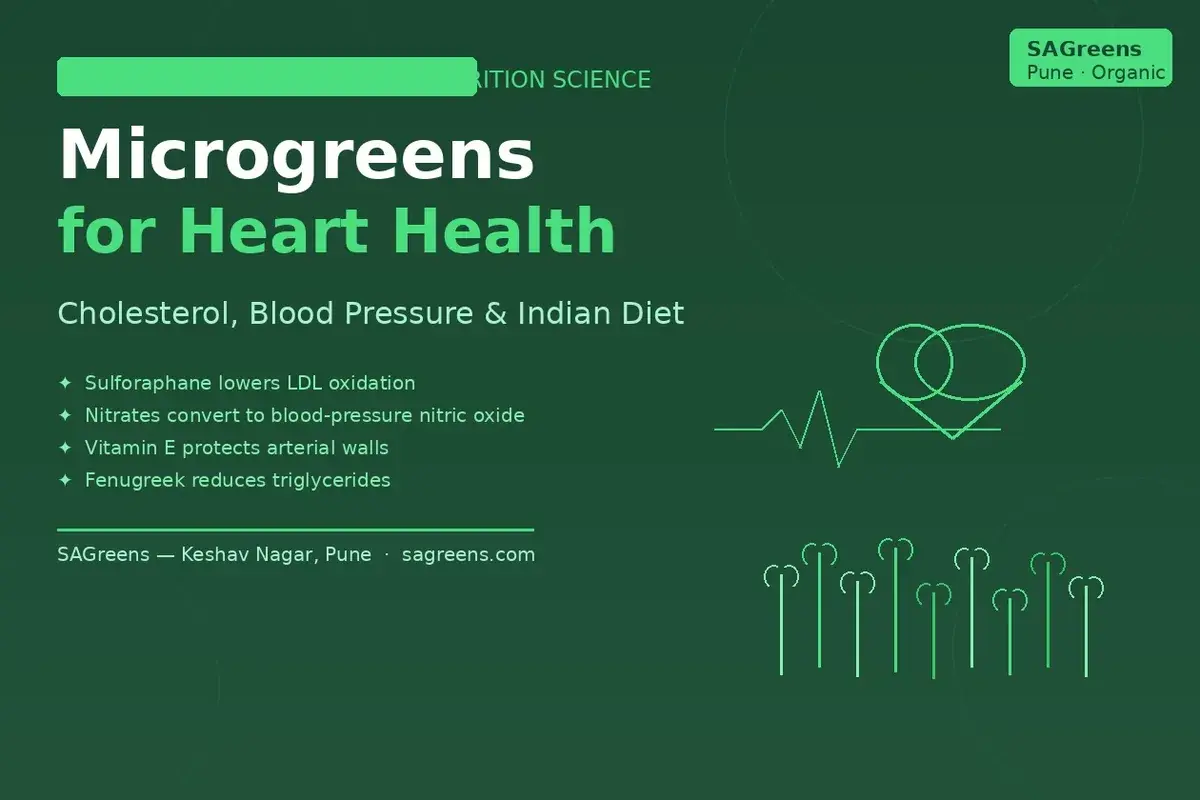
Key Takeaways: Broccoli, radish, sunflower, fenugreek, and pea shoot microgreens each target different cardiovascular risk pathways. Broccoli microgreens deliver sulforaphane that activates Nrf2 antioxidant defences and reduces LDL oxidation. Radish and pea shoot microgreens provide nitrates that convert to nitric oxide for blood pressure management. Sunflower microgreens are among the richest plant sources of vitamin E, protecting arterial walls from oxidative damage. Fenugreek microgreens help lower post-meal blood glucose and triglycerides. A daily 30-50 g mix of 2-3 varieties provides meaningful cardiovascular support within a typical Indian meal pattern.
Why Cardiovascular Disease Hits Indians Harder
The Indo-Asian cardiovascular paradox has puzzled cardiologists for decades. Indians who migrate to Western countries develop heart disease at rates significantly higher than the local population, even after accounting for smoking, activity levels, and diet. Several biological factors contribute:
Lipoprotein(a) elevation: Indians have genetically higher average Lp(a) levels than Europeans. Lp(a) is a particularly atherogenic (artery-clogging) lipoprotein variant that standard cholesterol tests do not measure and statins do not reduce. It promotes both arterial plaque formation and clot formation simultaneously.
Central adiposity: Indians accumulate more visceral fat (around internal organs) relative to body weight than other populations. Visceral fat releases inflammatory cytokines including IL-6 and TNF-alpha, which drive endothelial dysfunction — the earliest stage of arterial disease — even in people who appear slim by conventional BMI standards.
Insulin resistance: The combination of a carbohydrate-heavy traditional diet and genetic predisposition to insulin resistance produces elevated fasting insulin, high triglycerides, and low HDL — the metabolic pattern most predictive of future cardiac events in South Asian populations.
Inflammatory dietary exposures: Refined wheat, white rice, maida-heavy snacks, and deep-fried foods — common across Indian dietary patterns — cause postprandial oxidative stress and glycaemic spikes that directly damage arterial endothelium over time.
Microgreens address several of these pathways simultaneously through their concentrated content of specific phytonutrients, antioxidants, and minerals. No single food is a cure, but microgreens occupy a unique position: a very small daily serving (30-50 g) delivers nutrients in concentrations that would require much larger amounts of mature vegetables to match.
The Cardiovascular Nutrients in Microgreens
Sulforaphane (Broccoli and Radish Microgreens)
Sulforaphane is the single best-researched phytonutrient for cardiovascular protection. Generated when the glucosinolate glucoraphanin is broken down by the enzyme myrosinase during chewing, sulforaphane activates the Nrf2 transcription factor — a master regulator of the body's antioxidant and anti-inflammatory defences. Activated Nrf2 triggers the production of glutathione, superoxide dismutase, and catalase — the cell's internal antioxidant arsenal.
In the context of heart disease, sulforaphane has been shown in peer-reviewed studies to:
- Reduce LDL oxidation (oxidised LDL is the form that most actively promotes plaque formation)
- Decrease expression of ICAM-1, an adhesion molecule that helps monocytes (white blood cells) stick to arterial walls — an early step in atherosclerosis
- Reduce C-reactive protein (CRP), a key inflammatory marker associated with cardiac risk
- Protect cardiomyocytes (heart muscle cells) against ischemia-reperfusion injury — the cellular damage that occurs during and after a heart attack
A 2015 study in the journal Oxidative Medicine and Cellular Longevity found that sulforaphane supplementation significantly reduced cardiac oxidative stress markers and improved heart function in animal models of heart failure. Human trials on broccoli sprout extract (concentrated sulforaphane) have shown reductions in LDL cholesterol, improved insulin sensitivity, and lower inflammatory biomarkers in participants with type 2 diabetes.
SAGreens broccoli microgreens are harvested at peak sulforaphane content — the seedling stage before the plant begins investing energy in true leaf development.
Nitrates (Radish, Pea Shoots, and Amaranth Microgreens)
Dietary nitrates are converted by oral bacteria to nitrite, and subsequently to nitric oxide (NO) in the body's tissues. Nitric oxide is a powerful vasodilator — it relaxes the smooth muscle in arterial walls, widening blood vessels and reducing blood pressure. This is the same mechanism by which nitrate-containing drugs like glyceryl trinitrate relieve angina.
Beetroot juice has become famous in sports nutrition for its nitrate content and blood pressure effects. Radish microgreens, pea shoot microgreens, and amaranth microgreens all contain significant nitrate levels that translate to meaningful NO production. A 2013 meta-analysis in the British Journal of Nutrition found that dietary nitrate consumption reduced systolic blood pressure by an average of 4.4 mmHg and diastolic pressure by 1.1 mmHg — clinically meaningful reductions that correspond to a 10-17% reduction in stroke risk.
For Indian patients with hypertension — affecting an estimated 29% of the adult Indian population — incorporating nitrate-rich microgreens into daily meals is a practical, food-first blood pressure strategy.
Vitamin E (Sunflower Microgreens)
Sunflower microgreens contain approximately 44.5 mg of vitamin E per 100 g fresh weight — one of the highest concentrations of any common food. Vitamin E is a fat-soluble antioxidant that resides in the phospholipid bilayer of cell membranes and in LDL particles, where it acts as the primary defence against lipid peroxidation.
LDL cholesterol is not harmful in its native form — it only becomes atherogenic when oxidised by free radicals. Vitamin E interrupts this oxidation chain reaction, protecting LDL particles from modification and thereby reducing their contribution to plaque formation. This mechanism has been documented in multiple human trials showing that vitamin E supplementation reduces LDL oxidisability — though whole-food sources, with their accompanying phytosterols and other lipid-associated nutrients, appear more effective than isolated vitamin E supplements.
Just 20 g of sunflower microgreens daily provides approximately 9 mg of vitamin E — 60% of the adult daily requirement from a small daily garnish.
Omega-3 Precursors and Phytosterols (Pea Shoots, Flaxseed Microgreens)
Pea shoot microgreens contain alpha-linolenic acid (ALA), the plant-form omega-3 fatty acid. While ALA conversion to the more biologically active EPA and DHA forms is limited (typically 5-10% efficiency), regular ALA consumption is independently associated with reduced cardiac event risk. A 2012 meta-analysis in the American Journal of Clinical Nutrition found that higher ALA intake was associated with a 10% reduction in cardiovascular mortality.
Many microgreens also contain phytosterols — plant compounds that structurally resemble cholesterol and competitively block its absorption in the intestine. Consuming 2 g of phytosterols daily is estimated to reduce LDL cholesterol by 8-10%.
Potassium and Magnesium (Multiple Varieties)
Potassium is the principal mineral for blood pressure regulation, counteracting the vasoconstricting effects of sodium by promoting renal sodium excretion. The WHO recommends at least 3,500 mg of potassium daily for blood pressure management — a target that most Indians fall far short of given the low fruit and vegetable content of typical diets.
Pea shoot microgreens and sunflower microgreens are among the best microgreen sources of potassium. Magnesium, present in significant amounts in broccoli, fenugreek, and pea shoot microgreens, is essential for arterial wall relaxation and normal cardiac rhythm. Low magnesium is independently associated with increased cardiac arrhythmia risk.
Top 5 Microgreens for Heart Health: A Science-Ranked Guide
| Rank | Microgreen | Primary Cardiac Benefit | Key Compound | Daily Serving |
|---|---|---|---|---|
| 1 | Broccoli | LDL oxidation reduction, anti-inflammatory | Sulforaphane | 25-30 g |
| 2 | Radish | Blood pressure reduction via nitric oxide | Dietary nitrates | 20-30 g |
| 3 | Sunflower | Arterial wall protection from oxidative damage | Vitamin E (44.5 mg/100g) | 20-25 g |
| 4 | Fenugreek | Triglyceride reduction, post-meal glucose control | Galactomannan, 4-HI | 20-25 g |
| 5 | Pea Shoots | Blood pressure, potassium, ALA omega-3 | Nitrates, potassium | 25-30 g |
1. Broccoli Microgreens (Best Overall for Heart Health)
Broccoli microgreens contain up to 50 times more glucoraphanin (the sulforaphane precursor) than mature broccoli — the most important statistic in microgreen nutrition science. The 2012 USDA-University of Maryland study that established this figure sparked significant research interest in broccoli sprouts and microgreens as cardiovascular functional foods.
For heart health specifically, the sulforaphane pathway operates through two distinct mechanisms:
Direct antioxidant: Sulforaphane is not itself a free radical scavenger in the conventional sense. Rather, it induces the cell's own production of antioxidant enzymes through Nrf2 activation — a more potent and sustained effect than consuming a direct antioxidant (like vitamin C or beta-carotene), because the cell's own enzymes can turn over millions of free radical molecules rather than reacting one-to-one.
Anti-inflammatory: Sulforaphane inhibits NF-kB, a transcription factor that drives production of inflammatory cytokines including CRP, IL-6, and TNF-alpha. These inflammatory markers are the same ones elevated in Indian patients with metabolic syndrome and visceral adiposity — the precise patient population at highest cardiac risk.
Practical recommendation: 25-30 g of broccoli microgreens daily, consumed raw (heat degrades sulforaphane). Add to dal, rice, or roti as a finishing garnish. Order fresh broccoli microgreens from SAGreens, delivered across Pune.
2. Radish Microgreens (Best for Blood Pressure)
Radish microgreens combine nitrates (for nitric oxide production), isothiocyanates (for Nrf2 activation), and vitamin C (47 mg per 100 g) in a flavour profile that integrates naturally into Indian food — their peppery, slightly spicy taste echoes the role of fresh radish (mooli) in North Indian cuisine.
The isothiocyanate sulforaphene, which is the dominant glucosinolate breakdown product in radish rather than broccoli, has been shown to reduce VCAM-1 expression (a marker of endothelial inflammation) in human cell studies. This makes radish microgreens a complementary choice to broccoli microgreens for those wanting maximum endothelial protection.
Radish microgreens also contain anthocyanins in their stems (particularly the red-stemmed varieties), which are independently associated with lower risk of myocardial infarction in prospective cohort studies.
3. Sunflower Microgreens (Best for Antioxidant Protection)
Sunflower microgreens' vitamin E content (44.5 mg/100g) is extraordinary in the plant kingdom. For context, almonds — considered one of the best plant sources of vitamin E — contain 25.6 mg per 100 g. Sunflower seeds themselves contain 35.2 mg/100g. Sunflower microgreens surpass both.
In addition to vitamin E, sunflower microgreens provide:
- Phytosterols: 0.6 mg per 100 g — contributing to LDL cholesterol reduction through intestinal absorption blockade
- Chlorogenic acid: A polyphenol antioxidant documented to lower blood pressure and improve insulin sensitivity in clinical trials
- Selenium: An essential mineral for glutathione peroxidase activity — the enzyme that reduces lipid hydroperoxides in arterial walls
Sunflower microgreens have a mild, nutty flavour that works across Indian cuisines — as a biryani garnish, in raita, over dal, or as a salad base. Their flavour is the least challenging of the heart-health microgreens, making them the easiest to introduce into an Indian family's regular meals.
4. Fenugreek (Methi) Microgreens (Best for Triglycerides)
Fenugreek microgreens address a different cardiovascular risk factor than the other varieties: elevated triglycerides and post-meal blood glucose spikes. Triglyceridaemia — elevated blood triglyceride levels — is a particularly prevalent cardiac risk factor in Indians with central adiposity and insulin resistance.
The galactomannan fibre in fenugreek forms a viscous gel in the digestive tract that slows glucose absorption and reduces the post-meal glycaemic spike. The amino acid 4-hydroxyisoleucine directly stimulates pancreatic insulin secretion and improves peripheral insulin sensitivity. Together, these compounds reduce the metabolic load that drives triglyceride synthesis in the liver.
A 2014 study in the International Journal of Vitamin and Nutrition Research found that fenugreek seed consumption significantly reduced post-meal blood glucose in Type 2 diabetic patients. As a microgreen, fenugreek delivers these compounds at approximately 3-5 times higher concentration per gram than dried seeds. For a complete guide to microgreens and blood sugar management, see our microgreens for diabetes India guide.
The familiar methi flavour means fenugreek microgreens integrate seamlessly into Indian cooking without any adaptation — scatter over dal, mix into sabzi, or stir into raita for a natural cardiac benefit.
5. Pea Shoot Microgreens (Best for Blood Pressure and Potassium)
Pea shoot microgreens provide a combination of nitrates (for NO and blood pressure), potassium (for sodium-potassium balance), folate (for homocysteine metabolism), and ALA omega-3 fatty acids (for anti-inflammatory lipid modulation). This multi-target profile makes pea shoots the most comprehensive single variety for overall cardiovascular risk reduction.
Folate deserves particular attention in the Indian context. Elevated homocysteine — an amino acid that is a potent endothelial toxin — is a significant cardiac risk factor in Indians, partly because the vegetarian diet provides less methionine for the homocysteine methylation cycle and partly due to common B12 deficiency (which also affects this cycle). Folate (from pea shoots) combined with adequate B12 (from any animal-source food or supplement) drives homocysteine back to safe levels.
Pea shoots have a mild, sweet, fresh flavour — the least challenging microgreen taste-wise — making them an excellent gateway variety for Indian households who are new to microgreens.
How to Build a Heart-Healthy Microgreen Habit: The Indian Meal Pattern
The most effective cardiovascular microgreen strategy is one that fits your existing cooking routine without requiring significant change. Here are practical integration points in a typical Indian daily meal pattern:
Breakfast (7-9 AM):
- Add 15-20 g of sunflower or pea shoot microgreens to poha, upma, or besan chilla just before serving
- Mix into idli/dosa batter (small amounts), or use as a side garnish
Lunch (1-2 PM):
- Scatter 20-25 g of broccoli or radish microgreens over dal or sabzi after serving in bowls
- Use as a fresh component in roti wraps or rice bowls
Dinner (7-8 PM):
- Add to dal tadka, sambar, or curry as a finishing garnish
- Use fenugreek microgreens over khichdi or curd rice
Total daily target: 40-60 g across 2-3 meals, ideally comprising 2-3 different varieties for complementary nutrient coverage.
For Indian Heart Patients: If you are on anticoagulant medication (warfarin), consult your doctor before significantly increasing consumption of high-vitamin K microgreens (amaranth, kale, broccoli). The other heart-health microgreens (sunflower, radish, fenugreek, pea shoots) are safe at recommended serving levels for most patients on cardiac medication.
What the Research Says: Key Human Studies
Broccoli Sprout/Microgreen Studies:
A randomised controlled trial published in PLOS ONE (2019) found that 3-day broccoli sprout supplementation (containing sulforaphane equivalent to broccoli microgreens) significantly reduced circulating inflammatory markers CRP and IL-6 in overweight adults. A 2017 study in the journal Nutrients found that sulforaphane improved endothelial function measured by flow-mediated dilation — a direct measure of arterial health — in healthy volunteers.
Dietary Nitrate Studies:
A 2013 meta-analysis in the British Journal of Nutrition (Larsen et al.) of 22 clinical trials found that dietary nitrate consistently reduced systolic blood pressure by 4.4 mmHg. A 2015 Cochrane systematic review confirmed these findings specifically for beetroot juice and leafy vegetable nitrates.
Phytosterol Studies:
A 2003 meta-analysis in the American Journal of Clinical Nutrition (Katan et al.) of 41 trials found that consuming 2 g of plant sterols/stanols daily reduced LDL cholesterol by 10% on average. Multiple microgreen varieties contain phytosterols that contribute to this effect.
Fenugreek Studies:
A 2020 systematic review in the Journal of Ethnopharmacology found that fenugreek consumption significantly reduced fasting blood glucose, HbA1c, and triglycerides in patients with Type 2 diabetes across 12 randomised trials — the metabolic profile most associated with cardiac risk in Indians.
Microgreens vs Other Heart-Healthy Foods: A Practical Comparison
| Food | LDL Reduction | Blood Pressure | Anti-inflammatory | Easy in Indian Diet |
|---|---|---|---|---|
| Broccoli Microgreens | High (sulforaphane) | Moderate (Nrf2) | High | Yes |
| Radish Microgreens | Moderate | High (nitrates) | Moderate | Yes |
| Sunflower Microgreens | High (vit E, phytosterols) | Moderate | Moderate | Yes |
| Oats | High (beta-glucan) | Moderate | Low | Moderate |
| Almonds | High (MUFA, vit E) | Low | Moderate | Yes |
| Walnuts | Moderate | Moderate (ALA) | High (ALA, polyphenols) | Yes |
| Dark Chocolate | Low | Moderate (flavanols) | Moderate | Low |
| Beetroot Juice | Low | High (nitrates) | Moderate | Moderate |
Microgreens compare favourably with established heart-healthy foods — and uniquely, they can be combined with most of these other foods in the same meal without any conflict. A dal topped with broccoli microgreens alongside an almond-enriched chutney provides synergistic cardiac benefit from multiple pathways simultaneously.
Building a Microgreen Heart Health Protocol for Indian Conditions
Given India's specific cardiac risk profile, here is a practical protocol based on available evidence:
Priority 1 — Sulforaphane: Broccoli microgreens daily (25 g). Most important for the Indian patient profile where LDL oxidation and endothelial inflammation are the primary early-disease mechanisms.
Priority 2 — Blood Pressure Management: Radish or pea shoot microgreens daily (20-25 g). Hypertension affects nearly 30% of Indian adults and is the single largest modifiable cardiac risk factor.
Priority 3 — Triglyceride Management: Fenugreek microgreens 3-4 times weekly (20 g). Particularly important for Indians with central adiposity and metabolic syndrome.
Optional Add-On — Antioxidant Coverage: Sunflower microgreens 3-4 times weekly (20 g) for vitamin E protection of LDL and arterial membranes.
This protocol delivers meaningful cardiovascular support at a total daily cost of ₹30-60 from home-grown microgreens, or ₹80-150 per day from fresh SAGreens delivery.
About SAGreens: Three-Generation Farming Family Behind Your Microgreens
Ajay Toradmal and the SAGreens team bring three generations of Maharashtra farming knowledge to precision microgreen cultivation in Pune. Every tray is grown without synthetic pesticides or chemical fertilisers, with monitoring of temperature, humidity, and light to maximise the specific phytonutrients each variety is known for. Cardiovascular benefits from sulforaphane and vitamin E are only as good as the growing conditions that produce them — which is why SAGreens' commitment to fresh, never-stored produce matters for health outcomes, not just flavour.
Seed Quality & Pricing: All SAGreens microgreen seeds are NPOP-certified organic — untreated, non-GMO, germination tested before dispatch. Seeds start at ₹50/100g (wheatgrass), ₹124/100g (sunflower, mustard) and ₹120/100g (radish). Delivery charged at checkout, by city and weight. Browse microgreen seeds or contact us for bulk pricing.
Frequently Asked Questions: Microgreens and Heart Health
Can microgreens replace my cardiac medication?
No. Microgreens are a nutritional support strategy, not a medical treatment. They should be used alongside prescribed medications, not instead of them. Always consult your cardiologist before making dietary changes. That said, meaningful reductions in LDL oxidation, blood pressure, and triglycerides from regular microgreen consumption may, over time, allow your doctor to adjust medication dosages — but this is a decision for your physician based on your monitored biomarkers.
How long before I see any effect on my cholesterol or blood pressure?
Clinical studies showing measurable changes in inflammatory markers and blood pressure from sulforaphane and dietary nitrates typically use 2-8 week intervention periods. Cholesterol changes take longer — typically 8-12 weeks of consistent daily consumption. Track your biomarkers quarterly with your doctor to assess the effect of dietary changes.
Are microgreens safe for people with heart disease or those on blood thinners?
Most microgreens are safe for cardiac patients. The caution is specifically for high-vitamin K varieties (broccoli, kale, amaranth, fenugreek) and patients on warfarin (acenocoumarol), where sudden increases in vitamin K intake can destabilise the anticoagulation effect. If you are on warfarin, maintain a consistent intake rather than avoiding microgreens entirely, and monitor your INR more frequently when you begin incorporating them. Consult your cardiologist.
Which single microgreen is most important for heart health?
Based on current evidence, broccoli microgreens are the most important for overall cardiovascular protection due to sulforaphane's multi-mechanism action across LDL oxidation, endothelial inflammation, and cardiomyocyte protection. If you can only add one variety, make it broccoli microgreens daily.
How do I know if my microgreens have high sulforaphane content?
Sulforaphane content is highest in fresh-harvested broccoli microgreens at the cotyledon stage (days 8-12 after germination), consumed raw. Pre-packaged or older microgreens that have been stored for several days have lower sulforaphane because myrosinase (the enzyme that converts glucoraphanin to sulforaphane) degrades over time. Buy from farms that deliver same-day or grow your own and harvest just before eating.
Is it better to eat microgreens raw or cooked?
Raw is strongly preferred for cardiovascular benefit. Heat above 70 degrees Celsius destroys both myrosinase (the enzyme needed for sulforaphane production) and a significant portion of vitamin C. Cooking also reduces nitrate levels by causing leaching into cooking water. Add microgreens as a raw garnish after cooking is complete and food has been plated.
How do microgreens compare to green smoothies for heart health?
Green smoothies typically use mature spinach, kale, or cucumber — nutritious but lower in the specific cardiovascular phytonutrients (sulforaphane, high-density vitamin E, concentrated nitrates) that make microgreens distinctive. Blending microgreens into a smoothie destroys the cellular structure that slows enzyme degradation, reducing sulforaphane yield unless you chew them. The best approach is to consume microgreens whole (in food) rather than blended, and to use mature greens in smoothies.
Are microgreens safe for people on blood thinners?
Most microgreens are safe for cardiac patients. The caution is for high-vitamin K varieties (broccoli, kale, amaranth) and patients on warfarin. Sudden increases in vitamin K intake can destabilise anticoagulation. Maintain a consistent intake and monitor your INR when you begin incorporating microgreens. Consult your cardiologist.
How much microgreens should I eat daily for heart health?
A daily total of 40-60 g across 2-3 meals, comprising 2-3 different varieties, provides meaningful cardiovascular support. This is roughly two small handfuls spread across the day — as a dal garnish at lunch and a finishing element on dinner.
Start Your Cardiovascular Microgreen Practice Today
India's cardiac epidemic requires solutions that work within the Indian dietary context — not imported supplements or dietary patterns foreign to Indian culture. Fresh microgreens grown in Pune and consumed as daily garnishes on dal, rice, roti, and sabzi represent exactly that: evidence-backed cardiovascular nutrition that integrates into Indian food without changing the food itself.
Order SAGreens broccoli microgreens for daily sulforaphane support. Add radish microgreens for nitric oxide and blood pressure benefit. Or explore our full microgreens range to build your personalised heart health protocol. For guidance on which varieties suit your specific health history, contact the SAGreens team — we are glad to help you start.
For related reading, explore our guide to microgreens for diabetes and blood sugar management — the metabolic conditions most closely linked to cardiac risk in India.
*This guide is written by the SAGreens team — Ajay Toradmal and a three-generation farming family in Pune, Maharashtra, with decades of hands-on experience growing microgreens and food crops organically.*
Related Reading
More Microgreens Tips & Recipes
Microgreens in Indian Cuisine: Nutritional Boost
Discover how locally grown microgreens can elevate traditional Indian recipes with better nutrition, flavor and easy Pune home cooking.
Mustard Microgreens: How to Grow and Use Them at Home
Grow mustard microgreens in 7-10 days from seed. Sowing rate, no soaking, harvest timing, how hot they taste, and how to use them in Indian cooking.
How to Grow Red Amaranth Microgreens in 7-16 Days
Grow red amaranth microgreens at home in 7 to 16 days. Iron and vitamin C, vivid magenta stems, and how to use them in salads and Indian dishes.
Fresh Tips & Exclusive Offers
Subscribe for growing tips, seasonal updates, and exclusive offers on fresh organic microgreens in Pune.