Microgreens in Indian Cuisine: Nutritional Boost
Microgreens in Indian Cuisine: Nutritional Boost
Indian cuisine is globally renowned for its rich heritage, flavorful spices, and diverse dishes passed down through generations. Yet, as the world embraces healthier and more conscious eating, there is a delightful twist entering traditional Indian kitchens: microgreens. These tiny, nutrient-rich seedlings are revolutionizing how we view and prepare our beloved meals, offering a modern touch without compromising authenticity. This blog dives deep into the fusion of microgreens with Indian culinary traditions, showcasing how these miniature greens can elevate taste, aesthetics, and nutrition.
Key Takeaways: The best microgreens for Indian cooking are fenugreek (methi), coriander (dhania), radish (mooli), and mustard (sarson) — all familiar flavours in Indian cuisine. Always add microgreens off heat (after cooking) to preserve vitamins. They work as garnishes on dal, sabzi, poha, upma, and chaats. Sunflower and pea shoots blend into smoothies and work in most dishes. One daily handful (25–50g) adds significant nutrition.
What are Microgreens?
Microgreens are young seedlings of vegetables and herbs harvested after the first true leaves appear. Typically harvested 7-14 days after germination, these small greens are more than just a garnish. They are nutritional powerhouses containing concentrated amounts of vitamins, minerals, and antioxidants.
Characteristics of Microgreens:
Height: 1 to 3 inches
Harvest Time: 7 to 14 days
Common Varieties Mustard, fenugreek (methi), coriander, radish, spinach, amaranth, beetroot, sunflower, pea shoots
Taste: Ranges from mild and sweet to spicy and bitter depending on the variety
Nutritional Profile:
Studies have shown that microgreens contain up to 40 times more nutrients than their mature counterparts. They are rich in:
- Vitamins A, C, E, K
- Minerals like iron, calcium, potassium, and magnesium
- Antioxidants and polyphenols
Microgreens and Ayurveda
Ayurveda, India’s ancient system of medicine, emphasizes the balance of body, mind, and spirit through diet and lifestyle. While microgreens are a relatively new term, their properties align closely with Ayurvedic principles.
Ayurvedic Benefits of Microgreens:
- Tridoshic Balance: Depending on the variety, microgreens can pacify all three doshas (Vata, Pitta, Kapha)
- Rasa (Taste): Bitter, pungent, and astringent microgreens can enhance digestion and detoxification
- Virya (Potency): Their cooling or heating effect can be used to balance body temperature
- Prabhava (Special Effect): Their sattvic nature promotes clarity and vitality
Growing Microgreens at Home
Growing microgreens requires minimal space and resources, making them ideal for Indian households, especially urban apartments.
Materials Needed:
- Shallow tray or container
- Organic potting soil or cocopeat
- Microgreen seeds (non-treated)
- Water spray bottle
- Sunlight or grow light
Steps to Grow:
- Fill the tray with soil or cocopeat and level the surface.
- Sprinkle seeds evenly across the surface.
- Cover lightly with a thin layer of soil.
- Mist with water to moisten the soil.
- Place the tray in indirect sunlight.
- Water daily using a spray bottle.
- Harvest after 7-10 days by snipping above the soil line.
Incorporating Microgreens in Traditional Indian Dishes
1. Poha with Mustard Microgreens
Traditional Context: Poha, a flattened rice dish, is a staple in Western India.
Microgreen Twist: Add mustard microgreens just before serving for a spicy kick and crunchy texture.
Benefits: Enhances iron and vitamin C content.
2. Thepla with Methi Microgreens
Traditional Context: Gujarati thepla is made with wheat flour and spices.
Microgreen Twist: Replace chopped methi with methi microgreens. Read our methi microgreens growing guide for nutrition data and more recipe ideas.
Benefits: Less bitterness, more nutrition, and easier digestion.
3. Dal Tadka with Coriander Microgreens
Traditional Context: Dal is a protein-rich staple.
Microgreen Twist: Garnish with coriander microgreens instead of mature leaves.
Benefits: Richer aroma and higher vitamin content.
4. Chaat with Radish and Sunflower Microgreens
Traditional Context: Indian chaat combines tangy, spicy, and sweet elements.
Microgreen Twist: Top with spicy radish and nutty sunflower microgreens.
Benefits: Adds crunch and boosts digestion.
5. Parathas Stuffed with Microgreens
Traditional Context: Parathas are North Indian stuffed flatbreads.
Microgreen Twist: Use radish, mustard, or pea microgreens as stuffing or knead into dough.
Benefits: Protein-rich, improves gut health.
6. Microgreen Raita
Traditional Context: Yogurt-based side dish.
Microgreen Twist: Mix in dill, mint, or coriander microgreens.
Benefits: Cooling, aids digestion, rich in calcium and probiotics.
7. Microgreen Pulao
Traditional Context: Rice dish with vegetables and spices.
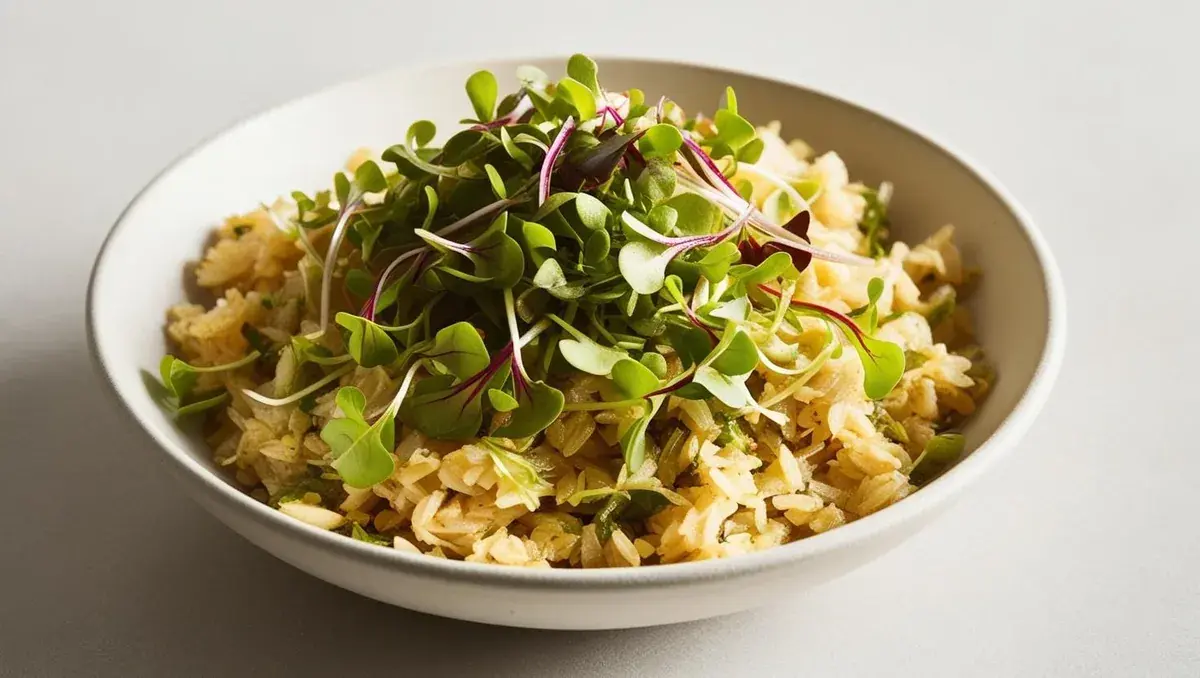
Microgreen Twist: Stir in amaranth or spinach microgreens at the end for an iron boost. See our palak microgreens home growing guide for step-by-step instructions on growing your own.
Benefits: Increases iron and fiber without overpowering taste.
8. Dhokla with Microgreens
Traditional Context: Steamed savory cake from Gujarat.
Microgreen Twist: Garnish with mustard and coriander microgreens.
Benefits: Adds freshness and boosts folate levels.
9. Idli-Sambar with Microgreen Chutney
Traditional Context: South Indian breakfast combo.
Microgreen Twist: Create a chutney using coriander and mint microgreens blended with coconut.
Benefits: Enhances taste, improves digestion.
10. Upma with Mixed Microgreens
Traditional Context: Savory semolina porridge.
Microgreen Twist: Stir in mixed microgreens just before serving.
Benefits: Boosts nutritional content with minimal prep.
Microgreens in Festive Indian Cooking
During festivals like Diwali, Holi, or Navratri, microgreens can elevate both traditional sweets and savories:
- Khaman topped with microgreens
- Microgreen chivda (snack mix)
- Sweet coconut laddoos rolled in amaranth microgreens
Storage and Safety Tips
- Store in airtight containers in the fridge
- Rinse before use
- Consume within 2-3 days of harvest
- Avoid wilted or yellowing leaves
Microgreens in Modern Indian Restaurants
Restaurants and cafes across metro cities like Mumbai, Bangalore, and Delhi are now incorporating microgreens in:
- Fusion curries
- Salads with Indian masala dressings
- Modern thalis
- Gourmet street food presentations
Microgreens for Kids and Elderly
Kids:
- Add to sandwiches, parathas, dosas
- Mix with fruit juices or smoothies
Read our detailed microgreens for kids guide with 10 Indian recipes and tips for picky eaters.
Elderly:
- Easier to chew than mature greens
- Helps with blood sugar control
- Supports joint health and vision
Sustainable Farming and Microgreens
Microgreens support sustainable farming by:
- Reducing water usage
- Requiring less space
- Encouraging urban agriculture
- Promoting chemical-free food
Final Thoughts
The integration of microgreens into Indian cuisine is more than a trend—it's a thoughtful evolution. It allows us to hold onto the soul of our food culture while embracing modern nutrition science. Whether you're a home cook or a chef, incorporating microgreens can revitalize your meals and your health.
So the next time you make dal, poha, or thepla, try adding a handful of microgreens. You may just find a new favorite way to enjoy an old classic.
Stay tuned for recipes, growing kits, and more updates on how to bring the microgreen revolution into your Indian kitchen!
Microgreens Across India's Regional Cuisines: A Deep Dive
India's culinary diversity spans thousands of recipes, dozens of regional traditions, and centuries of spice wisdom. Microgreens are not an alien ingredient here — they are a natural evolution of India's deep tradition of consuming fresh sprouts, raw herbs, and seasonal greens as both medicine and nourishment. At SAGreens in Keshav Nagar, Pune, Ajay Toradmal's three-generation farming family has spent years studying which microgreens integrate best with Indian cooking and why.
Regional Insight: Every Indian regional kitchen has a natural place for microgreens. Fenugreek microgreens echo the methi of Punjabi parathas. Mustard microgreens amplify the flavour of Bengali kashundi. Radish microgreens intensify the crunch of Maharashtra chaat. The ingredients are familiar — only the form is new.
North India: Dal, Paratha, and Sabzi
North Indian cooking revolves around slow-cooked dals, stuffed parathas, and rich sabzis loaded with cumin, coriander, hing, and garam masala. The bold spice base can overpower delicate garnishes, but the right microgreen holds its own perfectly.
Radish Microgreens in Dal Tadka: Scatter 10–15g of fresh radish microgreens over your moong dal or arhar dal just before serving. The peppery bite cuts through the richness of the ghee tadka and revives the palate. The red stems of radish microgreens create a visual contrast against the yellow dal that restaurants would charge a premium for.
Mustard Microgreens in Sarson Ka Saag: For authentic Punjabi saag, substitute 20% of your mature mustard leaves with mustard microgreens. Add them at the final stir — not during the long cooking — to preserve their concentrated glucosinolate content and their fresh, sharp bite. The flavour is more intense and cleaner than mature greens.
Pea Shoots in Aloo Paratha Stuffing: Fold 30g of finely chopped pea shoot microgreens into your standard potato stuffing. They wilt slightly from the heat of the paratha iron but retain their sweet, green flavour. This addition is virtually invisible to picky eaters but adds significant folate, vitamin C, and plant protein.
South India: Sambar, Rasam, and Dosa
South Indian cooking is built on fermented batters, tangy tamarind, and the irreplaceable aroma of curry leaves. Its acidic, spiced base requires microgreens with structure and resilience.
Sunflower Microgreens in Sambar Rice: Ladle hot sambar over steamed rice and scatter 15g of sunflower microgreens on top immediately before eating. The mildly nutty, slightly sweet flavour of sunflower microgreens absorbs the tamarind-toor dal base without competing. The crunch against the soft rice and stew creates the kind of textural contrast that elevates an everyday meal.
Fenugreek Microgreens in Rasam: Rasam's thin, spicy, deeply aromatic consistency makes it ideal for floating microgreens. Fenugreek microgreens add a characteristic mild bitterness that echoes the methi seeds already in the rasam powder. Use 8–10g per bowl. Their digestive properties align perfectly with rasam's traditional function as a digestive aid.
Broccoli Microgreens in Masala Dosa Filling: Mix 25g of broccoli microgreens into the potato masala before filling the dosa. They disappear into the filling but contribute concentrated sulforaphane — which is more bioavailable when consumed alongside the fat in coconut chutney, making this a nutritionally superior combination.
Maharashtra: Vada Pav, Poha, and Misal
Maharashtra's street food culture thrives on bold chutneys, spiced sev, and complex gravies. Microgreens add fresh contrast to these intensely flavoured preparations.
Microgreen Poha Recipe (Serves 2)
Ingredients:
- 1.5 cups flattened rice (poha), soaked and drained
- 1 small onion, finely chopped
- 1 green chilli, slit
- 1/2 tsp turmeric powder
- 1 tsp mustard seeds
- 8–10 curry leaves
- Salt and lemon juice to taste
- 30g sunflower or radish microgreens, added after cooking
Method: Prepare standard tadka with mustard seeds, curry leaves, and onion. Add drained poha, turmeric, and salt. Cook 3–4 minutes on low heat. Turn off flame. Fold in microgreens raw. Serve immediately. The residual steam softens them just enough while preserving vitamins C, E, and all heat-sensitive antioxidants.
Misal Pav with Microgreen Crown: Misal's spicy usal gravy and crunchy farsan topping can carry a generous microgreen addition. Place 20g of pea shoots or radish microgreens on top of the assembled misal just before serving. They wilt into the hot gravy and absorb its spices while adding a fresh green note.
Gujarat: Thepla and Dhokla
Gujarati cuisine balances sweet, sour, and spicy in careful harmony. Microgreens integrate into the dough or as finishing garnish.
Microgreen Thepla Variation: Add 50g of finely chopped fenugreek microgreens to your standard methi thepla dough. Reduce dry methi by 30% to account for moisture content. The resulting theplas are softer, more fragrant, and noticeably more nutritious — fenugreek microgreens contain 4–6 times the iron of mature leaves.
Dhokla with Microgreen Finish: After the standard dhokla tempering of mustard seeds, curry leaves, and green chilli in oil, scatter 20g of fresh broccoli microgreens over the surface immediately before serving. The visual contrast — yellow-white dhokla base with vivid green microgreens — is striking, and the crunch against the soft steamed cake is texturally memorable.
Bengal: Mustard Fish and Microgreen Marinade
Bengali cuisine's deep use of mustard paste and mustard oil makes it a natural home for mustard microgreens.
Mustard Microgreen Fish Marinade: Blend 40g of fresh mustard microgreens with 2 tbsp mustard oil, 1 green chilli, and salt to create a concentrated marinade. Apply to 500g of rohu or bhetki and marinate for 2 hours before steaming or frying. Mustard microgreens contain higher concentrations of glucosinolates than mature mustard leaves, producing a deeper, more pungent flavour that Bengali cooking demands.
Microgreens as Coriander Replacement: A Practical Comparison
Coriander (dhania) is the default garnish in Indian cooking, but microgreens can replace or supplement it with superior nutrition and equal flavour appeal.
| Factor | Fresh Coriander | Radish Microgreens | Pea Shoot Microgreens |
|---|---|---|---|
| Flavour profile | Citrusy, bright | Peppery, sharp | Sweet, fresh, tender |
| Nutrient density vs mature | Baseline | Up to 40x higher | 6x higher |
| Shelf life (refrigerated) | 2–3 days | 5–7 days | 4–6 days |
| Visual appeal | Standard | High (red stems) | High (curling tendrils) |
| Best use | Dal garnish | Chaat, raita | Salads, smoothies |
For dals, curries, and biryanis where a subtle fresh note is needed, pea shoots are the closest coriander equivalent. For chaats and raitas where pungency is welcome, radish microgreens outperform coriander in every nutritional measure.
Microgreens and Indian Spices: Flavour Pairing Guide
| Microgreen | Ideal Spice Partners | Avoid Pairing With |
|---|---|---|
| Fenugreek | Cumin, mustard seeds, hing | Fennel, cardamom |
| Radish | Coriander seeds, cumin, red chilli | Cloves, star anise |
| Sunflower | Turmeric, ginger, black pepper | Heavy hing |
| Mustard | Mustard oil, curry leaves, green chilli | Sweet spices |
| Broccoli | Garlic, black pepper, turmeric, lemon | Fennel, cinnamon |
| Pea shoots | All mild spice bases | Excessive hing |
Ayurvedic Context: Tridosha Compatibility of Microgreens
Ayurveda classifies all foods by their effect on vata (air/space), pitta (fire/water), and kapha (earth/water) doshas. Understanding this helps you choose the right microgreens for your constitution, the season, and your specific health needs.
Vata-balancing varieties: Pea shoots, sunflower microgreens, and fenugreek are considered warming, grounding, and slightly oily in quality — ideal for vata types, especially during Pune's dry winter months (December–February) when vata naturally increases.
Pitta-balancing varieties: Wheatgrass, pea shoots, and mild sunflower microgreens are cooling and light — suitable for pitta types who tend toward inflammation and heat. Pitta types should use mustard and radish microgreens in moderation during Pune's summer (March–June) when pitta is already elevated.
Kapha-balancing varieties: Radish, mustard, and fenugreek microgreens are heating, bitter, and light in quality — exactly what is needed to counter kapha accumulation, which peaks in Pune during and after the monsoon (October–November).
Ayurvedic timing: In classical Ayurveda, consuming fresh sprouts and tender greens in the morning hours supports agni (digestive fire) at its most active. Adding microgreens to breakfast poha, upma, or fruit is considered optimal for absorption and metabolic benefit.
Nutrient Preservation in Indian Cooking Temperatures
Indian cooking frequently involves high heat — tadka oil reaches 180–200°C, boiling dal sustains 100°C, and tawa cooking runs at 150–180°C. This directly affects which nutrients survive.
| Nutrient | Heat sensitivity | Practical rule |
|---|---|---|
| Vitamin C | Destroyed above 70°C | Always add raw, post-cooking |
| Sulforaphane | Destroyed above 80°C | Serve raw or with residual heat only |
| Vitamin E | Degrades above 120°C | Add after turning off flame |
| Folate | Unstable above 100°C | Never cook microgreens if folate is the goal |
| Zinc | Heat stable | Can be cooked briefly |
| Iron | Heat stable | Can be cooked briefly |
| Beta-carotene | Partially stable | Light heat acceptable, excess destroys it |
| Flavonoid antioxidants | Partially stable | Brief exposure acceptable |
The golden rule: Treat microgreens like fresh herbs — add them after the heat source is off, just before serving. This single practice preserves the majority of their nutritional advantage over cooked vegetables.
Festive Indian Cooking with Microgreens
Diwali: The festival of sweets and fried snacks creates nutritional imbalance that microgreens can offset. Add 20g of radish or pea shoot microgreens to the Diwali thali as garnish on namkeen, chaat, or sabzi. For larger Diwali gatherings, a fresh microgreen chaat station (with chutneys, sev, and raw microgreens) offers a dramatic, health-forward centrepiece.
Holi: Thandai, the traditional Holi drink, can be garnished with floating pea shoot tendrils for a vibrant visual touch. Gujiya and other mithai can be served alongside a fresh microgreen raita (radish microgreens, yoghurt, jeera, salt) to balance the sugar load of the festival.
Eid: Biryani traditionally receives fried onions and fresh mint as garnish. Substitute 30% of the mint with sunflower microgreens for added visual depth and nutrition — the mild, nutty flavour complements biryani's saffron and spice profile without overwhelming it.
Pongal and Lohri: Both harvest festivals celebrate fresh produce. Incorporating seasonal microgreens into Pongal rice or Lohri evening snacks is a meaningful way to connect the festival's agricultural heritage with modern nutrition awareness.
For fresh microgreens delivered to your Pune home for festive occasions, contact SAGreens in advance — we accommodate bulk orders and event catering requirements across all Pune areas.
Complete Indian Microgreen Recipe Index
Recipe 1 — Microgreen Raita: Whisk 200g yoghurt with salt, roasted jeera powder, and chilli. Fold in 40g radish microgreens. Serve with any biryani or paratha.
Recipe 2 — Microgreen Dal (Serves 4): Cook arhar dal with turmeric. Prepare tadka with ghee, mustard seeds, dried red chilli, curry leaves, and garlic. Pour over dal. Add 60g sunflower microgreens. Stir once and serve.
Recipe 3 — Microgreen Chaat: Boil chickpeas. Add diced onion, tomato, green chilli, chaat masala, tamarind chutney, and green chutney. Top with 50g pea shoot microgreens and sev. Serve immediately.
Recipe 4 — Microgreen Upma (Serves 2): Prepare standard semolina upma with vegetables. Before serving, fold in 30g fenugreek microgreens. The bitterness of methi microgreens cuts the richness of the ghee in upma perfectly.
Recipe 5 — Microgreen Stuffed Roti: Mix 40g of any microgreens into roti dough along with ajwain and salt. Roll and cook on tawa. The microgreens create flecks of colour and add nutrition to the simplest staple.
Recipe 6 — Microgreen Kadhi Garnish: Prepare standard Rajasthani or Gujarati kadhi. Ladle into bowls and immediately add 15g of mustard microgreens. The tanginess of kadhi is a perfect foil for pungent mustard shoots.
Recipe 7 — Microgreen Smoothie Bowl: Blend banana, mango, and 40g pea shoots. Pour into a bowl. Top with additional sunflower microgreens, coconut flakes, and sesame seeds. This is the Indian microgreen breakfast for those who prefer cold morning meals.
Recipe 8 — Microgreen Pulao: Cook basmati rice with whole spices. When done, fold in 60g of radish and sunflower microgreens along with fresh lemon juice and black salt. Rest for 2 minutes before serving — the steam wilts the microgreens just enough without cooking them.
Browse our full range of microgreen varieties suitable for every Indian cooking style, or read our companion article on microgreens for weight loss in an Indian diet to understand how these same varieties support healthy weight management. Ajay Toradmal and the SAGreens team are always available to advise on the best microgreens for your specific regional cooking tradition — contact us for personalised guidance.
*This guide is written by the SAGreens team — a three-generation farming family from Pune, Maharashtra, led by Ajay Toradmal. We grow and supply certified untreated, Non-GMO microgreen seeds and fresh microgreens to home kitchens, restaurants, and cloud kitchens across India.*
Organic Certification: SAGreens supplies NPOP-certified organic microgreen seeds — untreated, non-GMO, tested at 85%+ germination rate. Available with pan-India delivery from our Pune farm.
Frequently Asked Questions: Microgreens in Indian Cooking
Can I cook microgreens in Indian dishes, or should they always be raw?
Microgreens are best used raw as a garnish added after cooking, because heat above 70 degrees Celsius destroys vitamin C, folate, and the enzymes needed to convert glucosinolates to beneficial sulforaphane. That said, briefly wilted microgreens (stirred in after removing from heat) retain most of their nutrition and can be a good bridge for those new to the raw garnish approach. For cooked preparations like paratha filling, the nutritional value is reduced but the flavour contribution remains.
Which microgreens work best as substitutes for fresh dhania (coriander) in Indian recipes?
Coriander microgreens are the most direct substitute — they carry the same citrus-herbal profile in a more concentrated form. Pea shoot microgreens offer a fresh, mild green flavour that works well in dishes where a more neutral garnish is preferred. For dal tadka specifically, radish microgreens are an excellent non-traditional choice — their peppery note echoes the mustard seed tadka.
Are microgreens suitable for traditional Indian recipes or only for modern fusion dishes?
Microgreens integrate naturally into traditional Indian cooking precisely because most Indian dishes are already garnished with fresh herbs (coriander, curry leaves, mint). Replacing or supplementing these garnishes with microgreens requires no change to the recipe itself — only the final garnish changes. Dal, sabzi, rice dishes, chaats, and raitas have been the most popular entry points for microgreens in traditional Indian home cooking.
How do I introduce microgreens to family members who are unfamiliar with them?
Start with familiar-flavoured varieties — fenugreek (methi), mustard (rai), and coriander (dhania) microgreens taste like their kitchen equivalents and require no adjustment. Add them as small amounts to existing garnishes rather than replacing the whole garnish. Once the flavour is accepted, introduce less familiar varieties like broccoli or radish. Children often respond better to pea shoots (sweet, mild) and sunflower microgreens (nutty) than to the more assertive brassica varieties.
Where can I buy fresh microgreens in Pune for cooking?
SAGreens delivers fresh microgreens across Pune — all major varieties including radish, sunflower, fenugreek, broccoli, pea shoots, and amaranth. Same-day delivery across Keshav Nagar, Koregaon Park, Kalyani Nagar, Baner, Hinjewadi, Viman Nagar, and all Pune areas. Contact SAGreens on WhatsApp for orders and variety availability.
SAGreens Pricing (Pune): Fresh microgreens are sold in 50g punnets. Mustard (sarson) is ₹100 and radish (mooli) ₹150. Sunflower is ₹100 and pea shoots ₹150. Broccoli is ₹200 and red amaranthus ₹130. Weekly subscription boxes for home cooks from ₹350/week. Restaurant and cloud kitchen bulk rates available. WhatsApp SAGreens to place your first order.
Are microgreens safe to eat raw in Indian cooking?
Yes. Microgreens harvested at 7-14 days are safe to consume raw for healthy adults. Rinse briefly under cold water and pat dry before using. Unlike mature sprouts, microgreens are grown in cocopeat or soil, not in water, which significantly reduces bacterial risk. Safe as a daily garnish for children, adults, and seniors.
Which microgreen variety works best for dal tadka?
Radish microgreens are the top choice for dal tadka — their peppery bite cuts through the richness of the ghee tadka and echoes the mustard seed tempering. Scatter 10-15g just before serving. Coriander microgreens are the second-best choice, providing the familiar dhania flavour with more intensity than regular coriander leaves.
Can I use kitchen mustard seeds to grow mustard microgreens for Indian cooking?
Yes. Yellow mustard seeds from a kirana store or spice shop germinate at 80-90% even from older stock and are one of the easiest kitchen-to-microgreen substitutes. Brown and black rai also work well. For best results and consistent germination at scale, dedicated microgreen seeds from a tested supplier are more reliable.
Do microgreens change nutritional value when added to hot Indian food?
Heat above 70 degrees Celsius destroys vitamin C, folate, and glucosinolate-converting enzymes. Adding microgreens to a dish AFTER removing from heat preserves 80-90% of nutrients. For dal and curries, add microgreens to the bowl just before eating. The 2-3 minutes of residual heat in a served dish is insufficient to cause significant nutrient loss.
What is the shelf life of microgreens bought for Indian cooking?
Fresh microgreens stay good for 4-7 days in an airtight container in the refrigerator. Buy weekly in small quantities (100-200g) rather than stocking large amounts. For cooking use where microgreens are added just before serving, freshness of texture matters most — even day-5 microgreens work fine as a garnish on hot food.
Which Indian cities have the best access to fresh microgreens?
Pune, Mumbai, Bengaluru, Hyderabad, Delhi, and Chennai all have local microgreen suppliers reachable through Instagram, WhatsApp communities, and local organic markets. SAGreens delivers fresh microgreens across Pune same day. For other cities, our seeds ship pan-India in 3-5 days so you can grow your own at home regardless of location.
Which microgreens work best in Indian cooking?
Fenugreek (methi), coriander (dhania), radish (mooli), and mustard (sarson) integrate most naturally into Indian cooking because their parent plants are already common in Indian cuisine. Sunflower and pea shoots are versatile enough to use in most Indian dishes.
Can I add microgreens to hot Indian dishes?
Yes, but add them at the end, off heat. Microgreens wilt quickly at high temperatures and lose heat-sensitive vitamins like vitamin C when cooked. Adding them as a fresh garnish after cooking preserves both nutrition and texture.
How can I use microgreens in Indian breakfast dishes?
Add microgreens to poha, upma, or thepla fillings as a fresh nutrient boost. Sprinkle over omelettes or scrambled eggs. Mix into aloo parathas with a small quantity of chopped microgreens. Methi microgreens work particularly well in any traditional savoury breakfast.
Which microgreens work in Indian chaats and street food?
Radish microgreens are excellent on bhel puri, sev puri, and dahi puri — their peppery crunch mimics finely sliced radish. Sunflower microgreens add a nutty note to chaat toppings. Coriander microgreens replace fresh dhania perfectly.
Do microgreens work in Indian smoothies and juices?
Yes. Mild varieties like sunflower and pea shoots blend into smoothies without changing the flavour significantly. Stronger varieties like mustard or fenugreek microgreens pair well with amla juice or raw vegetable juices for a health-focused drink.
Are microgreens used in Ayurvedic cooking?
Several microgreen varieties align with Ayurvedic principles. Methi (fenugreek) microgreens are traditionally considered tridoshic. Coriander microgreens are cooling and pitta-balancing. Mustard microgreens are warming and kapha-reducing, suitable for winter use.
More Microgreens Tips & Recipes
Nutritional Powerhouse: Microgreens Benefits Guide
Discover why microgreens contain up to 40x more nutrients than mature vegetables. Buy certified organic seeds from SAGreens, Pune.
Grow Sunflower Microgreens: Seed to Harvest in 10-14 Days
Sunflower microgreens from soak to cut in 10 to 14 days — hull management, blackout weight, watering, and knowing when to harvest. Written for Indian homes.
Mustard Microgreens: How to Grow and Use Them at Home
Grow mustard microgreens in 7-10 days from seed. Sowing rate, no soaking, harvest timing, how hot they taste, and how to use them in Indian cooking.
Fresh Tips & Exclusive Offers
Subscribe for growing tips, seasonal updates, and exclusive offers on fresh organic microgreens in Pune.