Best Microgreens for Weight Loss in an Indian Diet
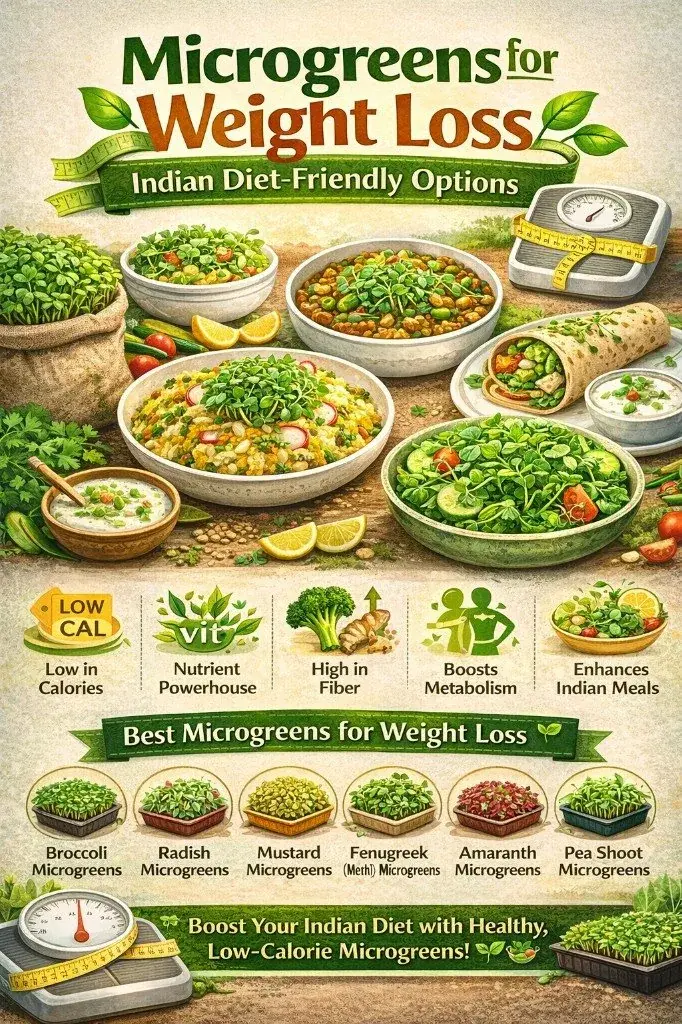
Microgreens for Weight Loss: Indian Diet-Friendly Options
Weight loss is a major concern for many in India, with busy schedules and easy access to calorie-dense foods. Microgreens are low-calorie, nutrient-dense superfoods that can support your goals without drastic diet changes. They fit easily into Indian meals—add them to dal, sabzi, poha, roti, and salads for extra nutrition and fibre with minimal calories. This guide covers the best microgreens for weight loss and how to use them in an Indian diet.
Key Takeaways: Microgreens support weight loss by being very low in calories (15–40 kcal/100g) while being high in fibre, vitamins, and minerals that prevent deficiency-driven cravings. Broccoli microgreens (sulforaphane) target fat cell development. Radish microgreens are very low calorie with high vitamin C. Add 50–100g of microgreens daily to existing meals — dal, sabzi, poha — without changing the rest of your diet.
What Are Microgreens & Why They Help in Weight Loss
High Nutrition, Low Calories
Microgreens pack vitamins, minerals, and antioxidants into very few calories. A small serving (about 20–30 g) often has under 10 calories, so you get nutrients without blowing your daily intake.
High Fibre Content
Fibre keeps you full longer and supports digestion. Microgreens add fibre to meals, which can help control portion sizes and reduce mindless snacking.
Improves Digestion & Metabolism
Including fibre-rich, easy-to-digest greens supports gut health and regular digestion. A healthy gut can support a more active metabolism when combined with a balanced diet and lifestyle.
Controls Hunger & Cravings
The combination of fibre, nutrients, and volume (eating something green and fresh) can help manage hunger and cravings. Adding microgreens to meals makes them more satisfying without many extra calories.
Are Microgreens Suitable for Indian Diets?
Yes. You don’t need to change your eating style. Add a handful of microgreens to roti, dal, sabzi, rice, or salads. They are vegetarian and vegan friendly and work with everyday Indian ingredients. Use them as a garnish, mix into sabzi, or blend into smoothies and chaat.
Best Microgreens for Weight Loss (Indian Friendly)
Broccoli Microgreens
Calories: About 3–5 per 25 g serving. Benefits: Rich in fibre and sulforaphane; supports digestion and may help with satiety. In Indian meals: Top dal or sabzi, add to roti wraps, or mix into a simple salad. Try broccoli microgreens fresh with a squeeze of lemon. Read our complete broccoli microgreens benefits and nutrition guide for sulforaphane research and Indian recipes. Also see our microgreens for kids guide for child-friendly recipes that sneak broccoli microgreens into everyday meals.
Radish Microgreens
Calories: Roughly 2–4 per 25 g. Benefits: Peppery taste, good fibre, and low calorie. In Indian meals: Garnish poha, upma, or chaat; add to raita or sandwiches for crunch.
Mustard Microgreens
Calories: About 3–5 per 25 g. Benefits: Fibre and a sharp flavour that can make simple meals more interesting. In Indian meals: Add to sabzi, dal, or mix into salads and wraps.
Fenugreek (Methi) Microgreens
Calories: Around 4–6 per 25 g. Benefits: Traditionally used for digestion; fibre and mild bitterness may support appetite control. Read our complete methi microgreens growing guide for detailed nutrition research and Indian recipes. In Indian meals: Use in paratha stuffing, over dal, or in curd bowls. Buy fenugreek microgreens or grow from methi seeds.
Amaranth Microgreens
Calories: About 3–5 per 25 g. Benefits: Iron, fibre, and a mild taste. In Indian meals: Top rice, add to raita, or use in chaat and salads. Red varieties add colour and nutrition.
Pea Shoot Microgreens
Calories: Roughly 5–8 per 25 g. Benefits: Slightly higher in protein and fibre; filling and mild. In Indian meals: Add to stir-fried sabzi, poha, or use as a bed under grilled paneer. Try pea shoot microgreens.
Coriander Microgreens
Calories: About 2–4 per 25 g. Benefits: Fresh flavour, fibre, and very low calorie. In Indian meals: Use like fresh coriander—on dal, sabzi, rice, chaat, and curd. Coriander microgreens are easy to add daily.
How to Use Microgreens in Indian Meals
Dal & sabzi: Stir in a handful of microgreens just before serving. They stay fresh and add colour and fibre.
Poha & upma: Top with radish, mustard, or coriander microgreens and a squeeze of lemon for a filling, low-calorie boost.
Roti wraps & sandwiches: Layer microgreens with cooked vegetables or paneer. They add volume and crunch without many calories.
Smoothies & salads: Blend mild varieties (broccoli, pea) into smoothies, or toss any microgreen into salads with lemon and chaat masala.
Chaat & curd bowls: Use microgreens instead of or along with sev and coriander. They add freshness and nutrition to chaat and curd.
Microgreens vs Sprouts for Weight Loss
Nutrition: Microgreens (grown in soil/medium, harvested at first true leaves) typically offer more vitamins and antioxidants per serving than sprouts. Both are low calorie.
Digestibility: Microgreens are usually well tolerated. Sprouts are also easy to digest but must be washed well to reduce contamination risk.
Taste: Microgreens have a wider range of flavours (mild to peppery). Sprouts are often milder and crunchier.
Ease of use: Both are easy to add to meals. Microgreens need minimal prep—rinse and add. Sprouts need thorough washing and are best consumed fresh.
How Much Microgreens Should You Eat for Weight Loss
Daily quantity: A small handful (about 20–40 g) per day is a practical start. You can have them once or split across two meals.
Best time: Any meal works. Adding them to breakfast (poha, upma, smoothie) or lunch (dal, sabzi, salad) helps you feel full and keeps calories in check.
Raw vs cooked: Raw preserves maximum nutrients. Light use in warm dishes (e.g. stirred into hot dal at serving time) is fine and still nutritious.
Can You Lose Weight Only with Microgreens?
Microgreens alone will not cause weight loss. They support a healthy diet by adding nutrients and fibre with few calories. For results, pair them with a balanced Indian diet, portion control, and lifestyle habits: regular walking or activity, good hydration, and enough sleep. Think of microgreens as one helpful part of your routine, not a quick fix.
Frequently Asked Questions
Are microgreens good for belly fat? They are low calorie and high in fibre, so they can support a calorie-controlled diet that may help reduce overall body fat over time. No food targets belly fat alone; consistency in diet and activity matters.
Which microgreens are best for weight loss? Broccoli, radish, mustard, fenugreek, amaranth, pea shoot, and coriander are all low calorie and fibre-rich. Choose ones you enjoy so you’ll eat them regularly.
Can diabetics eat microgreens? Microgreens are low in carbs and calories and high in fibre, so they generally fit well in a diabetic-friendly diet. Read our in-depth guide on microgreens for diabetes management for specific variety research and blood sugar data. Always follow your doctor’s or dietitian’s advice for your individual plan.
Are microgreens safe for daily consumption? Yes, when washed and from a clean source. Start with a small amount and increase as you like. They are food, not medicine—enjoy them as part of a varied diet.
How fast do microgreens show results? They don’t “show results” on their own. As part of a balanced diet and active lifestyle, they can help you feel full and nourished. Weight and health changes depend on your overall habits over weeks and months.
Conclusion
Microgreens are a simple, Indian-diet-friendly way to add nutrition and fibre with very few calories. Use broccoli, radish, methi, coriander, pea shoot, and amaranth in dal, sabzi, poha, salads, and chaat. Combine them with a balanced diet and healthy habits for sustainable support. Ready to try? Shop fresh microgreens and seeds or contact SAGreens for delivery in Pune and across India. You can also grow them at home with our seeds—fresh, affordable, and under your control.
The Science Behind Microgreens and Weight Loss
Understanding why microgreens help with weight loss requires looking beyond the simple calorie equation. While it is true that microgreens are very low in calories (15–40 kcal per 100g), the more important mechanisms are rooted in metabolic biochemistry that Indian diets can uniquely leverage.
Scientific Basis: Microgreens support weight loss through four mechanisms: (1) replacing calorie-dense garnishes with near-zero-calorie alternatives, (2) providing sulforaphane that inhibits fat cell formation, (3) delivering fibre that slows glucose absorption, and (4) supplying concentrated micronutrients that prevent deficiency-driven overeating.
Mechanism 1: Sulforaphane and Fat Cell Development
Broccoli microgreens contain glucoraphanin, which converts to sulforaphane during digestion. Research published in the Journal of Nutritional Biochemistry demonstrated that sulforaphane inhibits the differentiation of pre-adipocytes (fat cell precursors) into mature adipocytes (fat cells). In practical terms: sulforaphane reduces the rate at which your body creates new fat storage capacity.
For Indians following high-carbohydrate diets (rice, roti, dal), where insulin spikes regularly trigger fat storage signalling, sulforaphane from broccoli microgreens provides a daily metabolic counterweight.
Mechanism 2: Radish Microgreens and Liver Detoxification
The liver plays a central role in fat metabolism. It processes fats, produces bile for fat digestion, and regulates lipid storage. Radish microgreens contain anthocyanins and isothiocyanates that support hepatic detoxification pathways. A healthier, less toxic-burdened liver metabolises dietary fats more efficiently.
For Indians who consume significant quantities of refined cooking oils, processed foods, and alcohol (all of which burden liver function), adding radish microgreens daily provides gentle hepatic support without the cost or side effects of supplemental liver support products.
Mechanism 3: Fenugreek Microgreens and Insulin Resistance
Insulin resistance is the underlying mechanism in the most common type of weight-resistant obesity among Indians, particularly in individuals with PCOS, Type 2 diabetes family history, or metabolic syndrome. When cells resist insulin signals, blood sugar remains elevated, insulin stays high, and fat storage is continuously stimulated.
Fenugreek microgreens contain 4-hydroxyisoleucine, a unique amino acid that directly stimulates insulin-independent glucose uptake in muscle cells. This reduces the insulin demand needed to manage blood sugar after meals — lowering the insulin-driven fat storage signal that keeps many Indians stuck at the same weight despite caloric restriction.
Indian Diet-Specific Weight Loss Challenges
The Ghee Problem
Ghee is not inherently bad for weight loss — its short-chain and medium-chain fatty acids are metabolised differently from long-chain fats. But the quantities used in typical Indian cooking (2–4 tbsp per dal serving, heavy use in paratha preparation) create a significant caloric surplus. Microgreens cannot neutralise this entirely, but their fibre content slows the absorption of ghee's fats, reducing the rate of lipid conversion to storage.
Rice and Roti as Weight Challenges
High glycaemic index carbohydrates (white rice, refined-flour roti) cause rapid blood sugar spikes followed by crashes that trigger hunger. Adding microgreens to rice dishes and roti meals does three things: (1) slows glucose absorption through added fibre, (2) provides chromium (found in broccoli and sunflower microgreens) that improves insulin sensitivity, and (3) reduces the portion size of the rice/roti needed to feel full by adding volume with near-zero calories.
Caloric Density Comparison Table
| Food (100g) | Calories | Fibre (g) | Protein (g) | Satiety index |
|---|---|---|---|---|
| White rice (cooked) | 130 | 0.4 | 2.7 | Low |
| Whole wheat roti | 264 | 3.6 | 8.5 | Medium |
| Radish microgreens | 16 | 1.8 | 2.2 | High (volume) |
| Broccoli microgreens | 36 | 2.6 | 3.8 | High |
| Sunflower microgreens | 214 | 2.1 | 21 | Very high (protein) |
| Fenugreek microgreens | 45 | 3.1 | 4.8 | High |
| Pea shoot microgreens | 42 | 1.9 | 3.5 | Medium-high |
| Mustard microgreens | 27 | 2.4 | 2.8 | High (volume) |
7-Day Indian Microgreen Meal Plan
Day 1
- Breakfast: Poha (1 cup cooked) + 30g radish microgreens folded in after cooking + 1 cup green tea
- Lunch: 2 roti + dal (1 cup) + 25g broccoli microgreens as garnish + cucumber raita
- Dinner: Brown rice (3/4 cup cooked) + sabzi + 30g sunflower microgreens on top
Day 2
- Breakfast: Smoothie: 200ml milk + 1 banana + 40g pea shoot microgreens + 1 tsp flaxseed (blend)
- Lunch: 2 roti + rajma (3/4 cup) + mixed microgreen salad (40g)
- Dinner: Khichdi (1 cup cooked) + 25g mustard microgreens + buttermilk
Day 3
- Breakfast: 2 eggs scrambled (or paneer bhurji) + 30g broccoli microgreens wilted in at the end + 1 roti
- Lunch: Salad bowl: cucumber, tomato, onion, 50g sunflower microgreens, 30g chickpeas, lemon dressing
- Dinner: Dal (1 cup) + 1 roti + 25g fenugreek microgreens garnish
Day 4
- Breakfast: Upma (1 cup cooked) + 30g pea shoots folded in after cooking + 1 cup buttermilk
- Lunch: 2 thepla + curd + 40g microgreen salad
- Dinner: Palak paneer (moderate portion) + 1 roti + 25g radish microgreens on side
Day 5
- Breakfast: Overnight oats with 200ml curd, 1 tbsp chia seeds, 20g pea shoot microgreens (raw on top)
- Lunch: Chole (1/2 cup) + 1 roti + raita with 30g radish microgreens
- Dinner: Light moong dal soup (2 cups) + 30g broccoli microgreens + 1 small roti
Day 6
- Breakfast: Dosa (2 small) + coconut chutney + 25g broccoli microgreens in potato filling
- Lunch: Brown rice (3/4 cup) + sambar (1.5 cups) + 30g sunflower microgreens on top
- Dinner: Vegetable stir-fry in minimal oil + 40g mixed microgreens + 1 small roti
Day 7
- Breakfast: Moong dal chilla (2 pieces) + 30g fenugreek microgreens + 1 cup green tea
- Lunch: Full thali — reduced portions of rice and roti, generous microgreen salad (60g total)
- Dinner: Light soup (tomato or lentil, 2 cups) + 30g pea shoots + 1 slice whole grain bread
Total daily microgreen consumption target: 80–120g per day across all meals.
Microgreens vs Indian Weight Loss Foods: A Comparison
| Food | Mechanism | Daily dose | Cost (Pune, 2025) | Microgreen advantage |
|---|---|---|---|---|
| Jeera water | Digestion stimulation | 1 glass morning | ₹5/day | Microgreens also improve digestion + add nutrients |
| Methi water (fenugreek soak) | Blood sugar management | 1 glass morning | ₹3/day | Fenugreek microgreens deliver same compound + fibre + vitamins |
| Raw turmeric | Anti-inflammation | 1-inch piece | ₹8/day | Microgreens also anti-inflammatory + higher nutrient density |
| Aloe vera juice | Digestion, blood sugar | 30ml morning | ₹15/day | Microgreens provide more diverse nutritional benefit |
| Wheatgrass shots | Detox, alkalinity | 30ml morning | ₹20–30/day | Microgreens provide equivalent chlorophyll + more flavour options |
Microgreens are not superior to every traditional weight loss food in every way — jeera water is simpler and cheaper. But as a daily food addition (rather than a supplement or drink), microgreens deliver a broader range of benefits than any single functional food listed above.
Exercise and Microgreens: Synergistic Combinations
Pre-workout (45–60 minutes before exercise):
- Sunflower microgreens: high in arginine, which stimulates nitric oxide production, improving blood flow and endurance
- Pea shoots: B vitamins support energy metabolism
- Recommended: 30g sunflower + 20g pea shoots with a banana or dates
Post-workout (within 45 minutes of exercise):
- Broccoli microgreens: sulforaphane reduces exercise-induced oxidative stress and inflammation
- Fenugreek microgreens: 4-hydroxyisoleucine supports glucose uptake by muscle cells for glycogen replenishment
- Recommended: 30g broccoli + 20g fenugreek in a post-workout smoothie or raita
Thyroid and PCOS Context
Two conditions that make weight loss particularly difficult for Indian women — PCOS and hypothyroidism — both respond specifically to targeted microgreen support.
PCOS: The core hormonal disruption in PCOS is insulin resistance combined with androgen excess. Fenugreek microgreens address insulin resistance directly (as described above). Broccoli microgreens provide DIM (diindolylmethane) precursors through indole-3-carbinol metabolism — DIM supports oestrogen metabolism and has been studied for its role in reducing androgen excess in PCOS. Read our detailed PCOS-focused guide at microgreens for PCOS India.
Hypothyroidism: The thyroid gland's metabolism-regulating role means that hypothyroid individuals gain weight even on controlled diets. Selenium (found in sunflower microgreens) is essential for converting inactive thyroid hormone (T4) to active T3. Selenium deficiency is common in Indian diets that do not include nuts and seeds regularly. Adding sunflower microgreens provides a food-based selenium source that supports thyroid function. Note: individuals on thyroid medication should introduce broccoli-family microgreens (goitrogens) gradually and confirm with their doctor. Our microgreens safety guide covers thyroid conditions and brassica microgreens in more detail.
What to Expect: Success Timeline
Weeks 1–2: Digestive adjustment. Some individuals experience mild bloating as gut bacteria adjust to higher fibre intake. This resolves for most people. Weight change: minimal or none. Main benefit at this stage is improved digestion and reduced post-meal bloating.
Weeks 3–4: Blood sugar stabilisation visible in energy levels — fewer afternoon energy crashes after meals. Some individuals begin to notice reduced hunger between meals. Weight change: 0.5–1.5 kg loss possible if microgreens are replacing higher-calorie garnishes and snacks.
Weeks 5–8: Metabolic benefits accumulating. Insulin sensitivity improvement measurable (visible in HbA1c if diabetic, or simply as reduced carbohydrate cravings). Weight change: 1–3 kg loss over this period, combined with a moderately balanced diet.
Important caveat: Microgreens are a nutritional support, not a weight loss drug. Results require consistent consumption combined with overall caloric awareness and regular activity. They work best as part of an intelligent Indian diet — not as a replacement for dietary discipline.
Practical Serving Sizes for Weight Loss Goals
| Weight loss goal | Daily microgreen quantity | Best varieties | When to eat |
|---|---|---|---|
| Mild (0.5 kg/month) | 50–75g/day | Any variety you enjoy | Split across 2 meals |
| Moderate (1 kg/month) | 75–120g/day | Broccoli + fenugreek + radish | With every main meal |
| Active/rapid (1.5+ kg/month) | 100–150g/day | Broccoli + fenugreek + sunflower | Breakfast + lunch + dinner |
Organic Certification: SAGreens supplies NPOP-certified organic microgreen seeds — untreated, non-GMO, tested at 85%+ germination rate. Available with pan-India delivery from our Pune farm.
Frequently Asked Questions: Weight Loss and Microgreens (Indian Context)
Can microgreens replace my daily salad for weight loss?
A: Yes. 80–100g of mixed microgreens provides more concentrated nutrition than a standard 200g salad of mature leaves. They are particularly more efficient for iron, folate, zinc, and vitamins C and E.
Will eating microgreens cause weight gain if I add them to my existing meals?
A: No. At 16–45 kcal per 100g, even a generous serving of 100g adds only 16–45 calories to a meal. This is nutritionally negligible and far less than the calories in equivalent volumes of other garnishes (coriander chutney, pickle).
Which microgreen is best for belly fat specifically?
A: There is no food that directly targets belly fat — this is a myth. However, broccoli microgreens (sulforaphane), fenugreek microgreens (insulin sensitisation), and radish microgreens (liver support) all address the metabolic processes most linked to visceral (belly) fat accumulation in Indian adults.
How soon will I see changes if I have diabetes and want to lose weight?
A: Read our dedicated guide on microgreens for diabetes in India for detailed protocol and timeline. For diabetics, fenugreek and broccoli microgreens are most relevant and effects on post-meal blood glucose can be seen within 2–3 weeks of consistent use.
Can I give microgreens to my children to help them maintain healthy weight?
A: Yes. Microgreens are safe for children above 1 year. For weight management in children, focus on pea shoots and sunflower microgreens — mild flavour, high protein, and attractive appearance. Avoid large quantities of mustard and radish for children under 5 due to their spicy intensity.
I eat mostly vegetarian food. Is protein in microgreens enough for weight loss?
A: Microgreens alone are not sufficient protein for weight management — you also need dal, paneer, curd, legumes, and nuts. Sunflower microgreens (21g protein/100g) are the highest-protein microgreen and make a meaningful contribution. Think of them as a protein supplement to your meal, not a protein source.
Order fresh broccoli microgreens or fenugreek microgreens for home delivery across Pune, or contact SAGreens for a personalised recommendation based on your specific health goal. Ajay Toradmal and the SAGreens team at Keshav Nagar have worked with hundreds of Pune families on integrating microgreens into targeted health protocols — we are happy to guide yours.
Are microgreens good for belly fat?
They are low calorie and high in fibre, so they can support a calorie-controlled diet that may help reduce overall body fat over time. No food targets belly fat alone; consistency in diet and activity matters.
Which microgreens are best for weight loss?
Broccoli, radish, mustard, fenugreek, amaranth, pea shoot, and coriander are all low calorie and fibre-rich. Choose ones you enjoy so you'll eat them regularly.
Can diabetics eat microgreens?
Microgreens are low in carbs and calories and high in fibre, so they generally fit well in a diabetic-friendly diet. Always follow your doctor's or dietitian's advice for your individual plan.
Are microgreens safe for daily consumption?
Yes, when washed and from a clean source. Start with a small amount and increase as you like. They are food, not medicine—enjoy them as part of a varied diet.
How fast do microgreens show results?
They don't show results on their own. As part of a balanced diet and active lifestyle, they can help you feel full and nourished. Weight and health changes depend on your overall habits over weeks and months.
The Science Behind Microgreens and Weight Loss
*This guide is written by the SAGreens team — Ajay Toradmal and a three-generation farming family in Pune, Maharashtra, with decades of hands-on experience growing microgreens and food crops organically.*
More Microgreens Tips & Recipes
Nutritional Powerhouse: Microgreens Benefits Guide
Discover why microgreens contain up to 40x more nutrients than mature vegetables. Buy certified organic seeds from SAGreens, Pune.
Microgreens in Indian Cuisine: Nutritional Boost
Discover how locally grown microgreens can elevate traditional Indian recipes with better nutrition, flavor and easy Pune home cooking.
Grow Sunflower Microgreens: Seed to Harvest in 10-14 Days
Sunflower microgreens from soak to cut in 10 to 14 days — hull management, blackout weight, watering, and knowing when to harvest. Written for Indian homes.
Fresh Tips & Exclusive Offers
Subscribe for growing tips, seasonal updates, and exclusive offers on fresh organic microgreens in Pune.