How to Grow Red Amaranth Microgreens in 7-16 Days
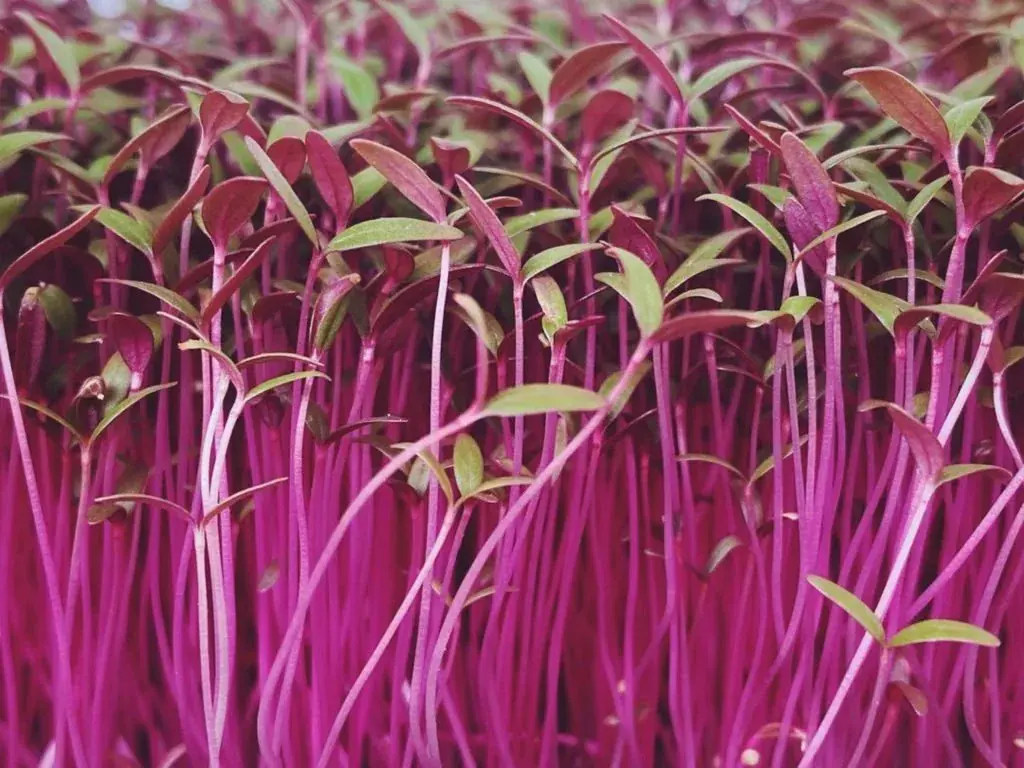
How to Grow Red Amaranth Microgreens at Home | SAGreens
Red amaranth microgreens feature striking deep red stems, tender green leaves, and a nutty, earthy flavor packed with vitamins A, C, E, K, iron, calcium, and antioxidants. These superfoods grow indoors in 7–16 days — vibrant garnishes for salads, smoothies, and Indian dishes. Ideal for beginners.
Key Takeaways: Red amaranth microgreens take 8–12 days to grow and develop their striking red colour with adequate light exposure. Pre-soak seeds 4–6 hours before sowing. The red betacyanin pigment is a powerful antioxidant similar to beetroot. Bright indirect light after blackout is essential for colour development. Rich in vitamins C and K, iron, calcium, and betacyanin antioxidants.
Essential Materials for Growing Red Amaranth
High-quality supplies ensure vigorous growth and bold hues.
Trays and Growing Medium
Shallow 10x20-inch or 8x8-inch trays with drainage holes, using 1–2 inches of moist coco coir, peat, sterile potting mix, or germination pads.
Seeds
7–8g non-GMO red amaranth (Red Garnet or Burgundy) per tray from suppliers with 85%+ germination rate.
Equipment
Red-blue or full-spectrum LED grow lights (6–12 inches above), oscillating fan, spray bottle, sharp scissors, pH 6.0–7.0 water. Optional: vermiculite topcoat and diluted organic fertilizer (4-4-4 NPK).
Step-by-Step Growing Guide
Maintain 21–29°C (70–85°F); use a heat mat in cooler spots.
Step 1: Prepare Tray
Moisten medium until firm (few drops when squeezed), level the surface, and ensure good drainage.
Step 2: Sow Seeds
Broadcast 7g evenly (1–2 seeds per sq cm) by hand or sifter. Press lightly and mist without burying.
Step 3: Germinate (Blackout Phase)
Cover with a dome or inverted tray. Keep in a dark, warm spot for 3–5 days — mist if dry, watch for white hooks emerging.
Step 4: Introduce Light
Uncover and provide 12–18 hours of intense light (200–400 PPFD). Bottom-water 300–400ml every 2–3 days.
Step 5: Grow Out
Maintain 21–24°C day / 18°C night with constant airflow. Add vermiculite if needed. True leaves appear in 5–10 days.
Step 6: Harvest
Harvest at 2–4 inches with 2–4 true leaves (total 7–16 days). Yields 340–510g per tray.
Nutritional Benefits of Red Amaranth Microgreens
Red amaranth microgreens deliver 4x the vitamin C and 2x the iron of mature plants. Betalains fight inflammation and support eye health, blood sugar regulation, bone strength, and immunity. Low-calorie (30 kcal/100g) with high fibre for digestion and heart health.
How to Use Red Amaranth Microgreens
- Salads, grain bowls, sandwiches, and tacos with citrus dressings
- Garnishes for eggs, toast, ramen, soups, and curries
- Smoothies blended with pineapple, spinach, lime, and cucumber
- Stir-fries, pesto, and trail mixes for earthy depth
- Top Indian dishes like raita, poha, or dal for colour and nutrition
Buy fresh red amaranth microgreens from SAGreens — delivered across Pune. Or grow your own with our organic seeds.
Why Red Amaranth Microgreens Are Unlike Any Other
Among all the microgreens available to home growers, red amaranth occupies a unique position. Most microgreens are green — their colour coming from chlorophyll alone. Red amaranth achieves its dramatic crimson stems and deep reddish-purple hues through an entirely different biochemical pathway: the production of betacyanins, a class of pigment compounds belonging to the betalain family.
This colour is not merely decorative. Betacyanins are potent antioxidants with a molecular structure distinct from both chlorophyll-based pigments and anthocyanins (the red pigments in red cabbage and beetroot). They scavenge free radicals through different pathways than chlorophyll or flavonoids, meaning red amaranth microgreens provide antioxidant protection that is genuinely complementary to other greens rather than redundant.
On a plate, red amaranth microgreens are visually spectacular. Against white rice, pale dal, or any lighter Indian dish, the crimson stems and two-tone leaves create a presentation that looks restaurant-quality without any additional effort. Indian home cooking tends toward rich, earthy colours from spices — a scattering of red amaranth microgreens provides striking visual contrast that elevates even a simple home meal.
Pre-Soaking Red Amaranth Seeds: Why Those 4–6 Hours Matter
Unlike mustard seeds (which should never be soaked due to their small size and tendency to clump), red amaranth seeds benefit significantly from pre-soaking — but require careful handling given that they are among the smallest common microgreen seeds.
The science of pre-soaking: Red amaranth seeds are enclosed in a hard, water-resistant seed coat. This coat evolved to protect the seed against harsh conditions and to delay germination until water is continuously available — an adaptation for the dry environments where wild amaranth grows across Africa, Asia, and the Americas. Soaking for 4–6 hours softens this seed coat, allowing water to penetrate to the embryo and triggering the hormonal cascade that initiates germination. This can reduce total germination time from 4–5 days to 2–3 days and improves germination rate from approximately 75–80% to 85–95%.
How to pre-soak amaranth seeds correctly:
- Place seeds in a small bowl or jar and cover with room-temperature water at least 3x the volume of seeds
- Soak for 4–6 hours — no longer; extended soaking depletes oxygen from the water and can begin anaerobic fermentation
- Drain thoroughly using a fine-mesh strainer (amaranth seeds are tiny and will escape through standard kitchen strainers)
- Allow seeds to sit in the strainer for 5–10 minutes to drain surface water before sowing
- Sow immediately — pre-soaked seeds should not be stored or dried before use
Alternative if you lack a fine-mesh strainer: Use a clean muslin cloth or an old dupatta (stole) as a strainer. Pour the soaked seeds and water mixture through the cloth into a bowl, then pick up the cloth by its corners and allow it to drain. Sow directly from the cloth by spreading seeds gently with a wet spoon.
Complete Day-by-Day Growing Guide: Red Amaranth Microgreens
Day 0: Sowing After Pre-Soaking
Fill a tray (10x10 cm or larger) with 1.5–2 cm of pre-moistened cocopeat. Pre-soak your seeds as described above. After draining, scatter the damp seeds as evenly as possible over the cocopeat surface. They are tiny — you are aiming for roughly 1–2 seeds per square centimetre. Because the seeds are wet and small, use a damp fingertip or the back of a small spoon to help spread them.
Mist the surface very lightly with a spray bottle. Cover the tray completely with a second tray or dark lid. Place in a warm spot (24–30 degrees Celsius is ideal — amaranth is a tropical species that loves warmth).
Day 1: Germination Begins
With good seed quality and pre-soaking, you may see the first tiny white radicles (roots) beginning to emerge from seeds. The tray should feel warm and humid inside. Do not uncover. Do not add water unless the cocopeat beneath the cover feels dry to the touch.
Day 2: Radicles Extending and Anchoring
Most seeds have now germinated. White roots 2–4 mm long are visible on the seed surface and beginning to penetrate the cocopeat. The seeds may look like they have tiny white tails. This is perfect — growth is proceeding normally. Check moisture once by briefly lifting a corner of the cover. If cocopeat is moist, replace the cover without watering.
Day 3: Seedlings Beginning to Push Up
The pale seedling shoot is now visible pushing upward from the seed coat. Under the cover, seedlings are pale yellow-white, reaching for the dark above them (etiolation driven by auxin — the hormone that elongates cells in low-light conditions). This is normal and desirable during the blackout phase. The stems will green dramatically once light is introduced. Keep covered.
Day 4–5: Continue Blackout Phase
Red amaranth benefits from a longer blackout phase than some other varieties — 4–5 days total rather than the 2–3 days typical for mustard or radish. This extended dark period results in longer, stronger stems. Check daily. Add a small amount of water to the bottom tray only if cocopeat has dried out.
Day 5–6: Uncover and Introduce Light
Remove the cover when the majority of seedlings are 2–4 cm tall and standing upright. They will be pale, nearly white at this stage. Move the tray immediately to your brightest light source — an east or south-facing window with good morning sun, or under a full-spectrum LED grow light.
This moment is critical for colour development. Light exposure triggers betacyanin synthesis in the seedling tissue. Within 8–12 hours of light exposure, you will see the stems begin to flush from pale yellow-white toward pink, then orange-red, then the deep crimson that gives red amaranth microgreens their name. The transformation is visually dramatic and occurs quickly under good light.
Begin bottom watering: add 100–150 ml to the outer tray. Allow the cocopeat to absorb what it needs. Drain any standing water after 30 minutes.
Day 7–8: Colour Deepening
Under good light (at least 6–8 hours of direct or intense indirect light), the stems are now clearly pink to red. The two cotyledon leaves (seed leaves) are a contrasting deep green, creating the signature two-tone appearance that makes red amaranth visually spectacular. Continue bottom watering every 1–2 days. Ensure airflow to prevent surface mold.
Day 9–10: Approaching Harvest
The microgreens are now 5–8 cm tall, with vivid red-to-crimson stems and green-to-reddish cotyledon leaves. The colour is at its deepest at this stage. This is also when betacyanin concentration is highest — the antioxidant content peaks alongside the colour. Taste a microgreen — it should have a mild, earthy, slightly beet-like flavour with no bitterness.
Day 10–12: Harvest Window
Harvest when microgreens are 5–10 cm tall with fully expanded cotyledon leaves and the first pair of true leaves just beginning to emerge (not yet fully developed). Use clean, sharp scissors and cut just above the soil line in one smooth motion. Harvest the entire tray at once for best shelf life, or harvest in sections over 2–3 days.
Expected yield: 200–400 g per 10x20 cm tray, depending on seeding density and growing conditions.
Light Management for Red Colour Development: The Science Explained
The vivid red colour of red amaranth microgreens is directly tied to light intensity and duration. Understanding the biochemistry helps you make better growing decisions:
Betacyanin synthesis is light-triggered. Betacyanins are not pre-formed in the seed — they are synthesised by the seedling in response to light exposure. The synthesis pathway requires photoactivated enzymes that are only expressed when photoreceptors in the plant detect light. In simple terms: no light, no red colour.
Light intensity matters. Under dim light (cloudy days, north-facing windows with limited direct sun), betacyanin synthesis is limited and stems remain pale pink or even greenish. Under bright light (2,000+ lux), synthesis is maximised and the characteristic deep crimson develops fully. In Pune's climate, an east-facing window provides excellent morning light (typically 5,000–20,000 lux on clear mornings) that is ideal for red amaranth colour development.
UV light enhances colour. Natural sunlight contains UV-A and UV-B radiation that indoor grow lights typically lack. UV exposure is a known trigger for secondary metabolite production in plants, including betalain pigments. This is one reason microgreens grown on a sunny windowsill often develop deeper, richer colours than those grown exclusively under artificial lights.
Light Tip: After the 4-5 day blackout phase, move red amaranth to your brightest location immediately. The deep crimson colour develops within 8-12 hours of strong light exposure. An east-facing window with direct morning sun in Pune gives the best results — aim for 14-16 hours of light daily for maximum betacyanin synthesis and colour intensity.
Practical recommendation: After the blackout phase, place red amaranth in the brightest position available. If using artificial lights, choose a full-spectrum LED that includes some UV output (described as "full-spectrum with UV" on the packaging) and position 15–20 cm above the trays. Run lights for 14–16 hours per day for maximum betacyanin synthesis.
Nutritional Profile: What Makes Red Amaranth Microgreens a Functional Food
Red amaranth microgreens combine an impressive general nutrient profile with the distinctive betalain pigment compounds that give them specific health advantages:
Betacyanins: Red amaranth contains approximately 400–600 mg of total betalains per 100 g fresh weight — a concentration comparable to or exceeding beetroot juice, which has become famous in clinical sports nutrition for its betalain content. Research published in the Journal of Functional Foods and other peer-reviewed journals has demonstrated that betalains have anti-inflammatory, antioxidant, hepatoprotective (liver-protecting), and potential anti-tumour properties.
Vitamin C: Approximately 61 mg per 100 g — near the full adult daily requirement in 100 g.
Vitamin K: Up to 374 mcg per 100 g in some studies — among the highest of all microgreen varieties. Critical for blood clotting, bone mineralisation, and vascular health.
Iron: 3.8–4.2 mg per 100 g — exceptional for a plant food. Amaranth (both mature and as a microgreen) has long been valued in Indian traditional medicine as a blood-building food. Consuming red amaranth microgreens with a squeeze of lime (vitamin C boosts non-haem iron absorption) is a practical nutritional strategy.
Calcium: 215 mg per 100 g — meaningful for bone health, especially in vegetarian diets.
Protein: 3.5–4.0 g per 100 g — higher than most vegetables, reflecting amaranth's status as one of the few plants with a nearly complete essential amino acid profile.
Nutritional Highlight: Red amaranth microgreens contain 3.8-4.2 mg iron per 100 g — among the highest of any microgreen. For Indian vegetarian diets where iron deficiency is common, pair red amaranth with a squeeze of lime: vitamin C from the lime boosts absorption of plant-based (non-haem) iron by up to 6x. A 50 g daily serving delivers approximately 50% of the DRV for vitamin C and significant bone-building vitamin K.
Betacyanins vs Anthocyanins: Understanding the Pigment Difference
Red amaranth and beetroot microgreens are often grouped together as "red microgreens," but their red pigments are biochemically distinct from the red pigments in red cabbage microgreens. Understanding this difference explains why diversifying your microgreen colours is nutritionally valuable:
Betalains (betacyanins + betaxanthins): Found exclusively in plants of the order Caryophyllales — including amaranth, beetroot, and cacti. Chemically, betalains are nitrogen-containing alkaloid pigments derived from tyrosine amino acid. They are water-soluble and highly effective at scavenging reactive oxygen species (ROS). Betalains are relatively rare in the plant kingdom, which is why beetroot and amaranth are nutritionally distinct.
Anthocyanins: Found in red cabbage, red onion, blueberries, pomegranate, and many other plants. Chemically, anthocyanins are flavonoid pigments — structurally and metabolically different from betalains. They are also powerful antioxidants but work through different enzyme pathways.
Why this matters: Because betalains and anthocyanins neutralise free radicals through different mechanisms and bind to different cellular receptors, consuming both types of pigment provides broader antioxidant coverage than consuming either alone. A daily salad or dal garnish that includes red amaranth microgreens (betacyanins) alongside some red cabbage microgreens (anthocyanins) provides more comprehensive antioxidant protection than either alone.
Betalains vs Anthocyanins — Quick Comparison:
| Feature | Betalains (Red Amaranth) | Anthocyanins (Red Cabbage) |
|---|---|---|
| Plant Family | Caryophyllales only | Wide range of plants |
| Biochemistry | Tyrosine-derived alkaloids | Flavonoid polyphenols |
| pH Sensitivity | Stable across wider pH range | Change colour with pH |
| Heat Stability | Moderate | Good |
| Key Benefit | Anti-inflammatory, liver protective | Cardiovascular, brain health |
| Found With | Beetroot, cactus fruits | Berries, grapes, cabbage |
Using Red Amaranth in Indian Cooking: 8 Ideas
Red amaranth microgreens are as versatile in Indian cooking as they are visually distinctive. The key is to use them off-heat to preserve both colour and nutrients:
1. Dal and Sambar Garnish: The deep crimson of red amaranth stems creates a striking contrast against golden or brown dal. Scatter 15–20 g over a bowl of moong dal or sambar just before serving. The nutty, earthy flavour of the microgreens complements the lentil base without competing.
2. Biryani and Pulao Topping: Restaurant biryani often uses fried onions and fresh mint as a garnish. Red amaranth microgreens offer a more nutritious alternative with equally dramatic visual effect. Scatter over the top of the serving dish after cooking is complete.
3. Raita Enhancement: Stir into plain curd raita with cumin powder and a pinch of chaat masala. The beet-like earthy note of red amaranth pairs naturally with cumin.
4. Poha and Upma Finish: Add 20–25 g to breakfast dishes after cooking, just before serving. The colours stand out beautifully against the pale yellow of poha or upma.
5. Salad Base and Garnish: For those who eat salads, red amaranth as a base or mix-in provides a flavour and visual profile more interesting than plain lettuce or cucumber. Pairs well with a simple lime-olive oil dressing and any Indian-spiced protein.
6. Stuffed Paratha Filling: Finely chop and mix into aloo or paneer filling. The microgreens cook lightly in the paratha without losing their colour entirely if the cooking time is brief.
7. Fresh Chutneys: Blend 30–40 g of red amaranth with mint, coriander, green chilli, ginger, lime juice, and salt for a bright red-green chutney that is as nutritious as it is attractive. Serve with pakoras, samosas, or as a sandwich spread.
8. Smoothies and Juices: Red amaranth blends smoothly with banana, dates, beetroot, and coconut water for a deeply nutritious morning drink. The betalains from red amaranth and actual beetroot provide synergistic antioxidant benefit. Add a squeeze of lime to keep the colour vibrant.
Troubleshooting: Why Your Red Amaranth Stems Are Green, Not Red
The most common disappointment with red amaranth microgreens is harvesting greens that are mostly green rather than the expected crimson. Here is why this happens and how to prevent it:
Problem: Insufficient light. This is by far the most common cause. If stems are pale green rather than red, the growing location does not provide enough light intensity to trigger maximum betacyanin synthesis.
Solution: Move to a brighter position — a south-facing window, a sunny balcony with shade from harsh afternoon sun, or a full-spectrum grow light running 14–16 hours per day. You will see colour develop within 24–48 hours of improved light exposure.
Problem: Harvested too early. Red amaranth needs the full light exposure phase to develop maximum colour — harvesting at day 7 rather than day 10–12 means less accumulated light-driven betacyanin synthesis.
Solution: Allow an additional 2–3 days of bright light exposure before harvesting. Peak colour correlates well with peak betacyanin content.
Problem: Germination problems (patchy, uneven sprouting). Very small seeds like amaranth can be challenging to spread evenly, especially when damp. Uneven distribution causes some areas to be overcrowded (poor germination, mold) while others are sparse.
Solution: Pre-soak seeds as described, then use a small folded piece of stiff paper as a seed spreader — hold it in one hand and tap gently with the other to release seeds in a controlled thin stream across the tray surface. Alternatively, mix damp seeds with an equal volume of dry cocopeat before sowing — this dilutes the seeds and helps distribute them more evenly.
Indian Seasonal Growing Guide for Red Amaranth
Summer (March–June): Amaranth is a tropical species that genuinely thrives in warm conditions. Summer is actually ideal for germination (rapid and nearly 100% in warmth above 28 degrees Celsius). Colour development may be affected if trays receive too much harsh direct sun — use an east window and shade after 11 AM. Harvest faster (8–10 days) to catch peak colour before heat-related stress.
Monsoon (June–September): Germination is excellent. The main challenge is mold — red amaranth is not more susceptible than other varieties, but the high humidity of Indian monsoon requires strict airflow management. Run a fan continuously after uncovering. Bottom water only. Expect 9–11 day harvest timeline.
Post-Monsoon / Autumn (October–November): Best overall season for red amaranth in most of India, including Pune. Warm temperatures, lower humidity, and excellent light clarity. Standard 10–12 day timeline. Colour is reliably vivid.
Winter (December–February): Germination slows when indoor temperatures drop below 20 degrees Celsius. Use a seedling heat mat during the blackout phase. Once uncovered, growth continues at a slower pace but quality is excellent. Expect 12–14 days to harvest. Winter microgreens often have the most intense flavour and colour because cool temperatures slow growth but allow nutrients and pigments to concentrate.
Red Amaranth vs Beetroot Microgreens: A Comparison
Both red amaranth and beetroot microgreens are prized for their betacyanin content and dramatic red colouration. For Pune home growers choosing between them:
| Feature | Red Amaranth | Beetroot |
|---|---|---|
| Germination | 2–4 days (with soak) | 3–5 days (pre-soaking recommended) |
| Days to Harvest | 10–12 days | 12–16 days |
| Flavour | Mild, earthy, slightly nutty | Distinctly earthy, beet-forward |
| Betacyanin Content | High (400–600 mg/100g) | Very High (600–900 mg/100g) |
| Vitamin K | Very High (374 mcg/100g) | High (280 mcg/100g) |
| Iron Content | High (3.8 mg/100g) | Moderate (2.4 mg/100g) |
| Growing Difficulty | Moderate (small seeds) | Moderate (slow germination) |
| Colour Intensity | Deep crimson stems, green leaves | Red-pink stems, deep green leaves |
Both are excellent choices and can be grown together for visual contrast and complementary nutrition. If you are choosing one to start with, red amaranth is slightly faster and provides more iron and vitamin K per gram, while beetroot microgreens offer a stronger betalain concentration and more classic "beet" flavour. For a step-by-step home growing guide for beetroot, see our beetroot microgreens growing guide.
For fresh, ready-to-use red amaranth microgreens delivered across Pune, order from SAGreens. To deepen your understanding of why microgreen nutrition is superior to mature vegetables, read our nutritional powerhouse guide. For your complete home growing setup, visit our microgreens growing guide. Ready to start your own tray? Contact SAGreens for personalised advice on seeds, supplies, and growing conditions for your specific home environment in Pune.
Why Red Amaranth Microgreens Are Unlike Any Other
Both are excellent choices and can be grown together for visual contrast and complementary nutrition. If you are choosing one to start with, red amaranth is slightly faster and provides more iron and vitamin K per gram, while beetroot microgreens offer a stronger betalain concentration and more classic "beet" flavour.
Organic Certification: SAGreens supplies NPOP-certified organic microgreen seeds — untreated, non-GMO, tested at 85%+ germination rate. Available with pan-India delivery from our Pune farm.
Frequently Asked Questions: Red Amaranth Microgreens
Why are my red amaranth microgreens coming out green instead of red?
Insufficient light is the most common cause. Red amaranth's crimson colour comes from betacyanin pigments that are only synthesised in response to light exposure. If stems are pale green or pink rather than deep red, move trays to a brighter position — an east-facing window with direct morning sun, a sunny balcony (shaded after 11 AM in peak summer), or a full-spectrum LED grow light running 14-16 hours per day. You will see colour deepen within 24-48 hours of improved light.
Can I eat red amaranth microgreens raw, or do they need to be cooked?
Red amaranth microgreens are excellent raw and are at their nutritional peak when consumed uncooked. Heat above 70 degrees Celsius destroys vitamin C and degrades betacyanin pigments (the red colour and primary antioxidant). Use as a raw garnish added after cooking, not during. The mild, earthy, slightly beet-like flavour works beautifully raw on dal, rice, raita, and salads.
How do red amaranth microgreens compare to beetroot microgreens?
Both are in the Caryophyllales plant order and produce betacyanin pigments. Beetroot microgreens have a stronger betalain concentration and more pronounced earthy-beet flavour. Red amaranth microgreens have higher vitamin K (374 mcg vs 280 mcg per 100 g) and iron (3.8 mg vs 2.4 mg per 100 g), and are slightly faster to harvest (10-12 days vs 12-16 days). Both are excellent — growing them together gives complementary nutrition and stunning visual contrast.
My red amaranth seeds are so tiny I cannot spread them evenly. Any tips?
Mix pre-soaked, drained amaranth seeds with a small amount of dry cocopeat before sowing — the cocopeat dilutes the seeds and makes even distribution easier. Alternatively, fold a small piece of stiff paper into a V-shape, place seeds inside, and tap gently to release them in a controlled thin stream across the tray. A damp fingertip can help reposition clumped seeds before the cover goes on.
Are red amaranth microgreens safe to eat every day?
How much do microgreens cost from SAGreens in Pune?
Fresh microgreens delivered across Pune in 50g punnets — ₹100 for mustard and sunflower, ₹150 for radish and pea shoots, ₹200 for broccoli. Seed packets for home growing start at ₹50 per 100g. All varieties are organically grown, farm-fresh, and delivered same-day. WhatsApp SAGreens or browse the full microgreens range.
*This guide is written by the SAGreens team — Ajay Toradmal and a three-generation farming family in Pune, Maharashtra, with decades of hands-on experience growing microgreens and food crops organically.*
Yes, they are safe for daily consumption for most people. The main caution is for individuals on warfarin (anticoagulant medication) — red amaranth microgreens have very high vitamin K (374 mcg per 100 g), and sudden large increases in vitamin K intake can affect INR levels. If you are on warfarin, introduce amaranth microgreens gradually and monitor your INR with your doctor. For everyone else, daily consumption of 25-50 g provides exceptional antioxidant, iron, and bone-health support.
How long do red amaranth microgreens take to grow?
Red amaranth microgreens take approximately 8–12 days from sowing to harvest — slightly longer than radish or mustard. They benefit from pre-soaking for 4–6 hours before sowing.
Are red amaranth microgreens edible raw?
Yes. Red amaranth microgreens have a mild, slightly earthy flavour and are excellent eaten raw in salads, on sandwiches, or as a colourful garnish on any dish. Their vibrant colour adds striking visual appeal.
What nutrients do red amaranth microgreens contain?
Red amaranth microgreens are high in vitamins C and K, iron, calcium, and betacyanin — the antioxidant pigment that gives them their characteristic red colour. Betacyanin has documented anti-inflammatory and antioxidant properties similar to beetroot.
Are amaranth microgreens good for Indian cooking?
Yes. Red amaranth (lal math or chaulai) is a well-known leafy vegetable across India, particularly in Maharashtra, Gujarat, and Bengal. Amaranth microgreens have the same mild, earthy flavour profile and work well in salads, rice dishes, and as a fresh garnish on Indian meals.
How do I get the deepest red colour in amaranth microgreens?
For maximum colour development, provide 4–6 hours of bright indirect sunlight daily after the blackout phase. The betacyanin red pigment intensifies with light exposure. Avoid direct harsh midday sun which can bleach the colour.
More Microgreens Tips & Recipes
Nutritional Powerhouse: Microgreens Benefits Guide
Discover why microgreens contain up to 40x more nutrients than mature vegetables. Buy certified organic seeds from SAGreens, Pune.
Microgreens in Indian Cuisine: Nutritional Boost
Discover how locally grown microgreens can elevate traditional Indian recipes with better nutrition, flavor and easy Pune home cooking.
Grow Sunflower Microgreens: Seed to Harvest in 10-14 Days
Sunflower microgreens from soak to cut in 10 to 14 days — hull management, blackout weight, watering, and knowing when to harvest. Written for Indian homes.
Fresh Tips & Exclusive Offers
Subscribe for growing tips, seasonal updates, and exclusive offers on fresh organic microgreens in Pune.