Microgreens for Gut Health: Fibre, Enzymes and IBS
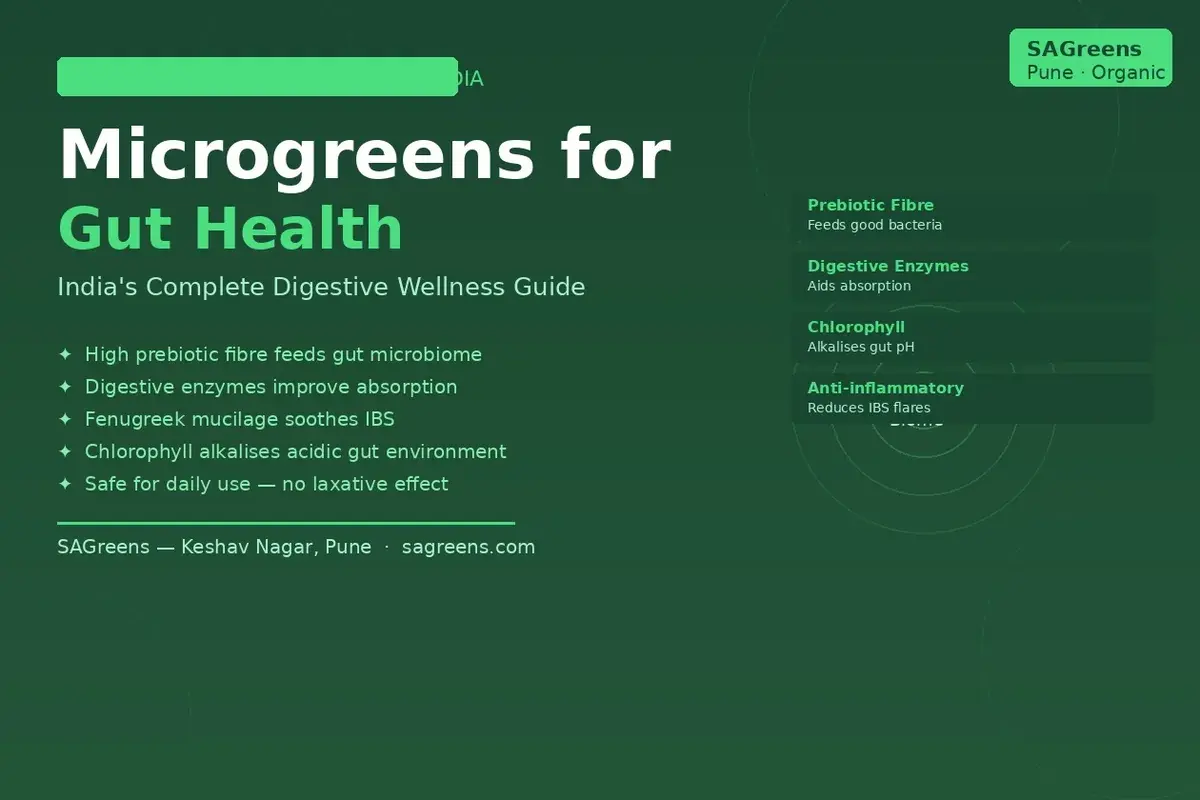
Key Takeaways: Microgreens support gut health through prebiotic fibre (feeding beneficial bacteria), digestive enzymes (improving nutrient absorption), chlorophyll (alkalising the gut environment), and sulforaphane (reducing intestinal inflammation). Fenugreek microgreens are particularly valuable for Indian gut conditions — their mucilage soothes IBS and their soluble fibre feeds beneficial bacteria. India has one of the highest rates of functional digestive disorders globally, and microgreens offer a food-first intervention that integrates naturally with the Indian diet.
India's gut health burden is significant and underappreciated. Irritable bowel syndrome (IBS) affects an estimated 12-22% of the Indian population — higher than global averages — with functional constipation, acid reflux (GERD), and inflammatory bowel conditions adding substantially to the total digestive disease burden. Causes include the combination of a fibre-rich but often low-diversity diet, high stress from urban living, antibiotic overuse (India accounts for a disproportionate share of global antibiotic consumption), and a shift toward processed foods that lack prebiotic compounds.
The gut microbiome — the community of approximately 100 trillion bacteria, fungi, and archaea residing primarily in the large intestine — is the central mediator of gut health. A diverse, balanced microbiome supports digestion, produces essential vitamins (K2, B12, biotin), regulates inflammation, and communicates bidirectionally with the brain through the gut-brain axis. A disrupted microbiome (dysbiosis) is implicated in IBS, obesity, autoimmune conditions, anxiety, and depression.
Microgreens address gut health through multiple pathways simultaneously — not as medicine, but as high-density functional food that provides what modern Indian diets increasingly lack. This guide covers the mechanisms, the best varieties for gut health, and a practical India-specific protocol. For the broader nutritional picture of microgreens, see our microgreens nutritional powerhouse guide.
How Microgreens Support the Gut
Prebiotic Fibre: Feeding Your Good Bacteria
Prebiotic fibre is dietary fibre that selectively feeds beneficial gut bacteria (primarily Bifidobacterium and Lactobacillus species) rather than being absorbed by the host. Not all fibre is prebiotic — the distinction matters because prebiotic fibre produces short-chain fatty acids (SCFAs) like butyrate during bacterial fermentation, and butyrate is the primary fuel source for colonocytes (the cells lining the colon). Adequate butyrate production is associated with a healthy colon epithelium, lower colorectal cancer risk, and reduced intestinal permeability ("leaky gut").
Microgreens are rich in multiple types of prebiotic fibre:
- Inulin: Present in fenugreek microgreens — one of the best-documented prebiotic fibres, selectively feeds Bifidobacterium
- Pectin: Present in pea shoot and sunflower microgreens — forms a gel in the gut that slows digestion and feeds bacteria
- Mucilage: The characteristic gel-coat of fenugreek (methi) seeds releases into the gut environment, soothing irritated mucosa and providing a prebiotic substrate
- Cellulose and hemicellulose: Present in all microgreens — bulk fibre that promotes regular transit and reduces constipation
Digestive Enzymes: Better Absorption
Live microgreens harvested fresh contain active digestive enzymes — amylases, proteases, and lipases — that survive in the stomach acid to a limited degree and assist in the early stages of carbohydrate, protein, and fat digestion. The enzyme content is highest in freshly cut, raw microgreens and decreases with cooking, refrigeration, and time.
This is why raw consumption matters: microgreens eaten as a raw garnish over cooked dal or rice contribute active enzymes to a meal that is otherwise depleted of them by cooking. For people with low stomach acid (common with age, stress, or antacid use), the enzyme boost from raw microgreens provides meaningful digestive support.
Chlorophyll: The Alkalising Factor
All green microgreens contain chlorophyll, the photosynthetic pigment that gives them their colour. Chlorophyll acts as a natural alkalising agent in the gut, buffering stomach acid overflow into the oesophagus and reducing the acidic environment in the upper digestive tract.
Chlorophyll also binds to and accelerates the elimination of certain environmental toxins (heterocyclic amines from grilled/charred meat, aflatoxins from stored grains) — compounds that are particularly relevant in India's climate where grain storage mould is common.
Additionally, chlorophyll has documented antimicrobial properties against certain pathogenic bacteria while sparing beneficial bacteria — a selectivity that few pharmaceutical agents can match.
Sulforaphane: Reducing Intestinal Inflammation
Broccoli microgreens' sulforaphane is increasingly recognised as a gut-specific anti-inflammatory compound. Research published in the journal Molecular Nutrition and Food Research has shown that sulforaphane reduces NF-κB activation in intestinal epithelial cells — the primary inflammatory signalling pathway that drives IBD-associated intestinal damage.
A 2021 pilot study in patients with active Crohn's disease found that high-glucoraphanin broccoli sprout extract significantly reduced inflammatory markers after 4 weeks. While this is not a clinical recommendation, it supports the mechanistic case for broccoli microgreens in gut inflammation management as part of a balanced anti-inflammatory diet.
Best Microgreens for Gut Health
| Microgreen | Primary Gut Benefit | Active Compounds | Best Use |
|---|---|---|---|
| Fenugreek | IBS, constipation, microbiome | Mucilage, galactomannan, inulin | Cooked (in dal/sabzi) or raw |
| Broccoli | IBD inflammation, gut lining | Sulforaphane, glucosinolates | Raw — preserves myrosinase |
| Pea shoots | Microbiome diversity, transit | Pectin, fibre, folate | Raw or briefly cooked |
| Radish | Liver-gut axis, bile production | Glucosinolates, enzymes | Raw garnish |
| Sunflower | Gut motility, inflammation | Vitamin E, fibre, magnesium | Raw or lightly wilted |
| Amaranth | IBS, gut lining integrity | Betacyanins, peptides, fibre | Raw or in smoothie |
Fenugreek (Methi) Microgreens: India's Gut-Health Champion
For Indian gut health specifically, fenugreek microgreens deserve special attention. Fenugreek has been used as a digestive remedy in Ayurveda for centuries, and modern research is beginning to confirm the mechanisms:
- Galactomannan: A soluble fibre that forms a viscous gel in the gut, slowing carbohydrate absorption, reducing post-meal glucose spikes, and creating a prebiotic matrix that feeds Bifidobacterium
- 4-hydroxyisoleucine: An amino acid that directly stimulates pancreatic insulin secretion — relevant for the insulin-gut axis in Indian patients with metabolic syndrome
- Mucilage: The characteristic slimy coating of fenugreek seeds, which soothes irritated intestinal mucosa in IBS and reduces symptoms like bloating, cramping, and urgency
- Saponins: Anti-inflammatory compounds that reduce intestinal wall permeability
For IBS sufferers specifically, fenugreek microgreens provide soothing without the harsh laxative effect of common Indian remedies (psyllium husk / isabgol can worsen bloating in some IBS subtypes). The SAGreens fenugreek microgreens are available fresh for home delivery in Pune.
The Gut-Brain Axis: Why Gut Health Affects Mood
One of the most significant shifts in gut health research in the past decade is the recognition of the bidirectional gut-brain axis — the communication pathway between the enteric nervous system (often called the "second brain") and the central nervous system, mediated by the vagus nerve, immune signalling, and microbial metabolites.
The practical implications for India are significant: stress is one of the most common IBS triggers in the Indian population (documented in multiple studies across Mumbai, Bangalore, and Pune outpatient gastroenterology clinics), and dysbiosis directly amplifies stress response through altered cortisol regulation.
Microgreens address this axis from both directions. The prebiotic fibre feeds bacteria that produce GABA precursors and serotonin metabolites (90% of the body's serotonin is produced in the gut). The sulforaphane reduces intestinal inflammation that, when chronic, signals distress to the brain through the vagal pathway.
This does not mean microgreens treat anxiety or depression. It means that a gut supported by diverse, prebiotic-rich, anti-inflammatory foods is a gut that contributes less dysregulatory signalling to the brain — and that is within the reach of dietary change.
The IBS Note: IBS is a diagnosis of exclusion, made after ruling out organic disease. The low-FODMAP diet is the most evidence-based dietary intervention for IBS-D (diarrhoea-predominant) and IBS-M (mixed). Some microgreens — particularly those high in fructans (e.g. fenugreek in large quantities) — may provoke symptoms in certain IBS subtypes during the elimination phase. If you are on a formal low-FODMAP protocol, introduce microgreens gradually and monitor symptoms. Most microgreen varieties are low-FODMAP at normal serving sizes.
Practical India-Specific Gut Protocol
Daily Integration
Morning: Add 30 g of pea shoot microgreens to breakfast — on poha, upma, or in a smoothie. The folate and fibre start the digestive day with prebiotic substrate.
Lunch: Scatter 20-30 g of radish or broccoli microgreens raw over dal or sabzi just before serving. The raw enzyme content supports the digestion of the cooked meal.
Dinner: Add 20-30 g of fenugreek microgreens to dal, sabzi, or khichdi — either cooked in (for 2-3 minutes only, to preserve galactomannan) or scattered raw over the finished dish. The mucilage soothes the gut overnight.
Total daily intake: 70-90 g across three meals. This is a realistic, practical target that does not require recipe modifications.
For Constipation
Emphasise fenugreek microgreens (mucilage + fibre for softer stools) and pea shoots (bulk fibre for peristalsis). Increase water intake alongside microgreen consumption — soluble fibre works by absorbing water in the gut.
For IBS Bloating
Start with small amounts (20-30 g per day) and increase gradually over 2 weeks. Begin with pea shoots and sunflower microgreens (lower fermentable fibre) before introducing fenugreek (higher prebiotic load). Avoid raw cruciferous microgreens in large quantities during an IBS flare.
For Acid Reflux (GERD)
Chlorophyll-rich microgreens (all green varieties) help alkalise the oesophageal environment. Avoid high quantities of radish or mustard microgreens during a reflux flare (their glucosinolates can irritate an inflamed oesophagus). Pea shoots and sunflower microgreens are the safest choices during active reflux.
What to Avoid
- Eating microgreens cooked at high heat: Destroys enzymes, reduces chlorophyll content, and loses sulforaphane (in broccoli). Add raw or at the very end of cooking.
- Eating microgreens from a non-fresh source: Microgreens that have been cut and stored for more than 5 days have significantly reduced enzyme activity.
- Very large quantities during a gut flare: 150+ g per day of high-fibre microgreens can worsen bloating and cramping in people with active IBS. Moderate doses (50-80 g) are the right starting point.
Seed Quality & Pricing: All SAGreens microgreen seeds are NPOP-certified organic — untreated, non-GMO, germination tested before dispatch. Seeds start at ₹50/100g (wheatgrass), ₹124/100g (sunflower, mustard) and ₹120/100g (radish). Delivery charged at checkout, by city and weight. Browse microgreen seeds or contact us for bulk pricing.
Frequently Asked Questions
Which microgreen is best for gut health in India?
Fenugreek (methi) microgreens are the most gut-relevant variety for Indian dietary patterns — their mucilage soothes IBS, their galactomannan feeds beneficial bacteria, and their flavour integrates naturally into Indian cooking. Broccoli microgreens are the best choice for reducing intestinal inflammation (sulforaphane). For a comprehensive approach, combine both.
Can microgreens help with IBS?
Microgreens cannot cure IBS, which has multiple subtypes and underlying mechanisms. However, the prebiotic fibre, gut-soothing mucilage (fenugreek), and anti-inflammatory sulforaphane (broccoli) in microgreens directly address several IBS-relevant biological pathways. Most IBS patients tolerate microgreens well at moderate serving sizes (30-60 g per day). Introduce gradually and monitor symptoms.
Do microgreens help with constipation?
Yes. Fenugreek and pea shoot microgreens are the most effective for constipation — the soluble fibre softens stools, the mucilage lubricates the intestinal wall, and the bulk fibre increases peristaltic activity. Drink adequate water (2.5-3 litres per day) alongside microgreen consumption for best effect.
Are microgreens a probiotic?
No. Microgreens are prebiotic — they feed existing beneficial bacteria rather than introducing new bacteria. Probiotics (like curd/yoghurt) introduce live beneficial bacteria. Prebiotics and probiotics work synergistically. Eating microgreens with curd at the same meal provides both prebiotic substrate and live bacterial cultures — a combination known as a synbiotic.
Can microgreens help with GERD or acid reflux?
Chlorophyll in all green microgreens has mild alkalising properties that may reduce oesophageal irritation. This is supportive rather than curative. Avoid eating very large quantities of raw radish or mustard microgreens if you have active reflux. For GERD management, dietary changes should be discussed with a gastroenterologist.
How long before I notice gut health improvements from microgreens?
Fibre-related improvements (reduced constipation, reduced bloating) can be noticed within 1-2 weeks of consistent microgreen consumption. Microbiome diversity changes, documented in research, typically take 4-8 weeks to become measurable. Anti-inflammatory effects from sulforaphane (reduced intestinal inflammation markers) are documented in 2-4 week intervention studies.
Which microgreens are best for bloating specifically?
Fenugreek microgreens are the most targeted for bloating — the mucilaginous galactomannan soothes the intestinal wall and the bitter compounds stimulate bile flow and digestive enzyme production that reduce fermentative bloating. Start with 20-30 g per day and increase gradually. Avoid very large quantities of raw cruciferous microgreens (broccoli, radish, mustard) initially if you are prone to cruciferous bloating — these varieties are worth introducing gradually over 2-3 weeks as your gut adapts.
Can microgreens help with Helicobacter pylori infection?
Broccoli sulforaphane has demonstrated inhibitory activity against H. pylori in laboratory and clinical studies. A 2002 study published in the Proceedings of the National Academy of Sciences showed sulforaphane killed H. pylori including antibiotic-resistant strains in vitro. Eating 40-70 g of broccoli microgreens daily alongside prescribed antibiotic treatment may support H. pylori eradication, though this should be discussed with your gastroenterologist. Microgreens are not a substitute for antibiotic treatment.
Are raw microgreens better for gut health than cooked?
Yes, for most gut health benefits. Raw microgreens preserve digestive enzymes (heat-sensitive proteins denatured at 60°C+), myrosinase activity (needed for sulforaphane formation), and vitamin C. The fibre content is similar raw or cooked. For people with very sensitive guts or active IBS flares, slightly wilted microgreens (immersed in water at 45-50°C for 30 seconds) reduce the rawness while preserving most fibre and mineral content — a useful entry approach before transitioning to fully raw.
Can microgreens help with leaky gut?
Yes. Sulforaphane from broccoli microgreens has been shown in in-vitro and animal studies to strengthen tight junction proteins (claudin-1, occludin) that maintain intestinal barrier integrity — the core failure in leaky gut. Prebiotic fibre from pea shoots and fenugreek feeds bacteria that produce butyrate, a short-chain fatty acid that is the primary fuel for enterocytes (intestinal lining cells) and critical for barrier maintenance. The combination of daily broccoli and pea shoot microgreens directly targets the two main mechanisms of intestinal permeability.
What is the best way to introduce microgreens for gut health without causing discomfort?
Start with 20-30 g per day of mild varieties (sunflower or pea shoots) for the first week. Add fenugreek microgreens in week two. Introduce broccoli and radish microgreens in weeks three and four. Drink adequate water (2.5-3 litres daily) — increased fibre without adequate hydration can temporarily worsen constipation. Eat microgreens as part of a meal (with dal, curd, or rice) rather than on an empty stomach for the first 2 weeks if you have a sensitive gut.
How do microgreens improve gut microbiome diversity?
Microgreens contain prebiotic fibres — galactomannan in fenugreek and galactooligosaccharides in pea shoots — that selectively feed beneficial Lactobacillus and Bifidobacterium species. They also contain polyphenols that act as secondary prebiotics and inhibit pathogenic gram-negative bacteria populations that drive gut dysbiosis.
Are microgreens safe for people with constipation?
Yes. Microgreens provide both soluble fibre (which softens stools) and insoluble fibre (which adds bulk and stimulates peristalsis). Pea shoots and fenugreek microgreens are particularly effective for constipation. Drink 2.5-3 litres of water daily when increasing fibre intake — fibre without adequate hydration can temporarily worsen constipation.
Are microgreens a probiotic or prebiotic?
Microgreens are prebiotic — they feed existing beneficial bacteria rather than introducing new bacteria. Eating microgreens with curd at the same meal provides both prebiotic substrate (microgreens) and live bacterial cultures (curd) — a combination known as a synbiotic, which is more effective than either alone.
India's Gut Health Crisis: The Numbers
India has one of the highest rates of irritable bowel syndrome in the world — estimates suggest 4-22% of the population depending on diagnostic criteria. Functional gastrointestinal disorders affect an estimated 20-30% of Indian adults. India is also the world's largest consumer of antibiotics, and each course of antibiotics eliminates 30-70% of gut bacterial diversity that can take 6-12 months to partially recover.
| Factor | India's Situation | Gut Health Impact |
|---|---|---|
| Antibiotic overuse | Highest global consumption | Repeated dysbiosis; slow recovery |
| Ultra-processed food | 13% CAGR growth in processed food market | Reduces microbiome diversity |
| Urban stress | Chronic stress in metro populations | Raises cortisol; disrupts gut motility |
| Low fibre intake | Urban adults average 12-15 g/day vs 25-38 g recommended | Reduces prebiotic substrate |
| Fermented food decline | Traditional curd, pickle, idli consumption declining | Loss of probiotic input |
The good news: the Indian gut evolved with a high-fibre, fermented-food dietary heritage. This heritage means the microbiome responds relatively quickly to re-introduction of prebiotic fibre — within 2-4 weeks of consistent microgreen consumption, measurable shifts in beneficial bacteria populations are documented in short-term dietary intervention studies.
The Synbiotic Advantage: Pairing Microgreens with Indian Fermented Foods
A synbiotic combines prebiotics and probiotics so that the prebiotic feeds the probiotic bacteria, amplifying the effect of both. Traditional Indian food already contains natural synbiotic combinations (curd rice, lassi with methi seeds, chaas with vegetables) — and adding microgreens to these meals creates one of the most effective natural synbiotic combinations available.
Practical synbiotic meals for gut health:
- Dahi-pea shoot bowl: Mix 50 g pea shoot microgreens into full-fat curd with black salt and roasted cumin. The galactooligosaccharides in pea shoots feed Lactobacillus cultures in the curd.
- Fenugreek microgreen raita: 30 g methi microgreens stirred into thick curd with grated cucumber. The galactomannan in fenugreek microgreens is ideal substrate for Bifidobacterium.
- Broccoli-chaas: Blend 20 g broccoli microgreens into chaas with ginger and coriander. Sulforaphane reduces gut inflammation while chaas bacteria repopulate the microbiome.
These meals take 5-10 minutes to prepare. For IBS patients starting with microgreens, the synbiotic approach is gentler than microgreens alone — the probiotics in curd help modulate the microbiome response to new prebiotic fibre.
Browse SAGreens' fresh range including fenugreek microgreens and pea shoot microgreens for delivery across Pune.
Conclusion
India's gut health epidemic — driven by dysbiosis, antibiotic overuse, processed food consumption, and chronic stress — has multiple drivers that diet alone cannot fully address. But microgreens offer a concentrated, food-first contribution to the nutritional foundations of gut health: prebiotic fibre for microbiome diversity, mucilage for IBS symptom relief, enzymes for absorption, chlorophyll for alkalising and antimicrobial effects, and sulforaphane for intestinal inflammation reduction.
Start with 30-40 g of fenugreek and pea shoot microgreens daily. Add broccoli microgreens for the anti-inflammatory sulforaphane. Eat raw where possible — cooking destroys enzymes. Build to 70-90 g per day across three meals over 2-3 weeks, monitoring symptoms as you go.
Browse the SAGreens microgreens range for fresh fenugreek, pea shots, and broccoli microgreens delivered in Pune. For questions about gut-specific microgreen protocols, contact the SAGreens team. Read our microgreens for diabetes India guide for the closely related blood sugar management perspective — gut health and glucose regulation are deeply connected through the gut microbiome.
The Gut Insight: The Indian gut has evolved with a traditionally fibre-rich, fermented-food diet — curd, pickle, idli, dosa, dal — that modern urban eating is rapidly eroding. Microgreens are not a replacement for this dietary heritage. They are a practical modern addition that concentrates the prebiotic, enzyme-rich, and anti-inflammatory compounds that traditional whole-food diets provided in abundance and that processed food patterns have removed.
How much do microgreens cost from SAGreens in Pune?
Fresh microgreens delivered across Pune in 50g punnets — ₹100 for mustard and sunflower, ₹150 for radish and pea shoots, ₹200 for broccoli. Seed packets for home growing start at ₹50 per 100g. All varieties are organically grown, farm-fresh, and delivered same-day. WhatsApp SAGreens or browse the full microgreens range.
*This guide is written by the SAGreens team, led by Ajay Toradmal — a three-generation farming family from Pune, Maharashtra. We grow organic microgreens year-round, including fenugreek, pea shoots, broccoli, and radish. For fresh microgreens delivered across Pune, or growing advice specific to your gut health goals, contact SAGreens directly.*
Related Reading
Fresh Tips & Exclusive Offers
Subscribe for growing tips, seasonal updates, and exclusive offers on fresh organic microgreens in Pune.