How to Grow Mustard Microgreens in Mumbai: Complete Guide
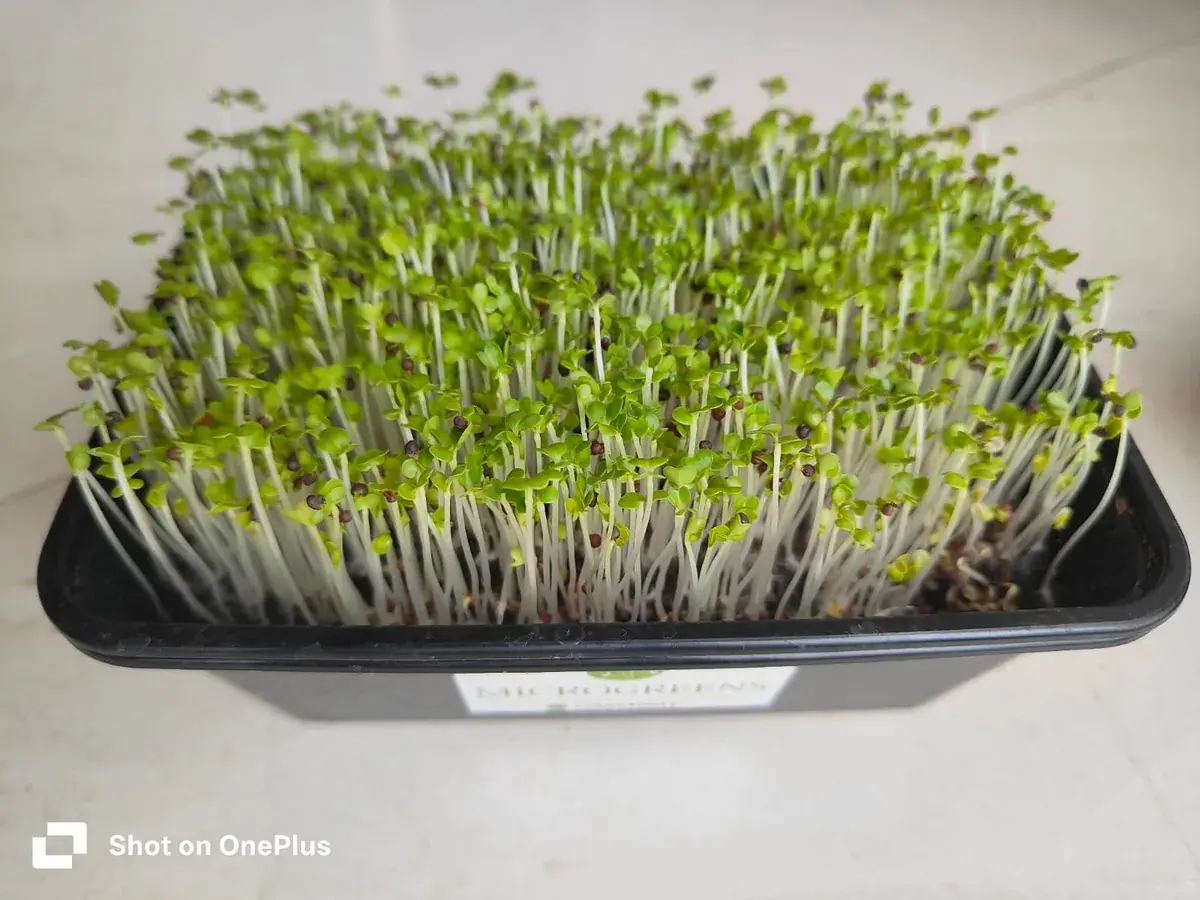
Key Takeaways: Mustard microgreens are the easiest variety to grow in Mumbai — ready in 6–8 days, no soaking needed, tolerant of Mumbai's humidity. Key monsoon challenge: mold — ensure airflow and do not overwater. Sow dry on moist cocopeat, blackout 2–3 days, then bright indirect light. Mumbai apartment balconies work well all seasons except peak July–August monsoon.
Why Mumbai Is a Great City to Grow Mustard Microgreens
Mumbai. The city that never sleeps. Over 12 million people living in flats across Bandra, Andheri, Dadar, Mulund, Borivali, and Thane — most with barely a windowsill to their name. Yet right here, in this concrete jungle, one of the easiest and most nutritious crops in the world is quietly growing in kitchens and on balconies across the city.
That crop is mustard microgreens — or *rai ke ankur*.
If you have never grown food at home before, mustard microgreens are the single best variety to start with. They germinate fast, grow vigorously, handle Mumbai's heat and humidity better than most varieties, and taste absolutely incredible — peppery, punchy, and alive. You do not need a farm, a garden, or even much sunlight.
This guide will show you exactly how to grow mustard microgreens in Mumbai from seed to harvest — with tips specifically tailored to Mumbai's unique climate, flat sizes, and monsoon season.
What Are Mustard Microgreens?
Mustard microgreens are the young seedlings of the mustard plant (*Brassica juncea*), harvested just 6–8 days after germination — right after their first pair of true leaves appear. In India, the seeds are commonly known as rai or sarson and are a staple in every kitchen.
When grown as microgreens, the same humble seeds that go into your tadka transform into something extraordinary: vibrant green shoots with a distinctive peppery, spicy bite and a nutritional density that makes mature mustard greens look ordinary.
They belong to the Brassica family, alongside broccoli, radish, and cabbage — one of the most researched plant groups in microgreen nutrition science.
Nutritional Benefits of Mustard Microgreens
Before getting into the growing guide, here is why mustard microgreens deserve a place in your daily diet:
- Glucosinolates: Powerful anti-cancer compounds found in Brassica plants, highly concentrated at the seedling stage
- Vitamin A (Beta-Carotene): Critical for eye health and immune function
- Vitamin C: Mustard microgreens contain significantly more Vitamin C than the mature plant — excellent for immunity in Mumbai's polluted air
- Vitamin K: Essential for bone health and blood clotting
- Folate (Vitamin B9): Vital for pregnant women and healthy cell repair
- Iron and Calcium: Key minerals for energy and bone strength
- Allyl isothiocyanate: The compound that gives mustard its signature spice — also a potent antimicrobial agent
Research published in the *Journal of Agricultural and Food Chemistry* found that microgreens can contain 4 to 40 times more nutrients by weight than their mature counterparts. For mustard specifically, levels of Vitamin C and glucosinolates are dramatically higher at the microgreen stage.
Mustard Microgreen Varieties Available in India
| Mustard Variety | Flavour | Days to Harvest | Seed Cost |
|---|---|---|---|
| Yellow mustard | Mild, slightly sweet | 7-8 days | ₹124/100g |
| Brown mustard (sarson) | Peppery, robust | 8-10 days | ₹124/100g |
| Black mustard | Intense, hot | 8-10 days | ₹124/100g |
Mumbai's Climate and What It Means for Your Mustard Microgreens
Mumbai has a tropical climate — hot, humid, and with a heavy monsoon. At first glance this sounds difficult. In reality, it is more nuanced — and mostly good news for growing mustard.
Monsoon Season (June–September)
Relative humidity in Mumbai during monsoon can exceed 85–90%. This accelerates seed germination and keeps the growing medium moist. The key challenge is mold and fungus — you must ensure good airflow. Mustard handles this season well if ventilation is maintained. Keep trays near a window, use a small fan on low if needed.
Summer (March–May)
Temperatures in Mumbai during summer hover between 33–38°C with persistent humidity. Mustard microgreens are warm-weather crops and thrive in these conditions. Germination is fast — 48–60 hours — and growth vigorous. The main risk is the growing medium drying out. Check moisture twice daily.
Winter (November–February)
This is the best time to grow mustard microgreens in Mumbai. Temperatures drop to 18–26°C with lower humidity. Growth is consistent, flavours develop more fully, and mold risk is at its lowest. A great time to experiment with staggered batches.
Post-Monsoon / October
Transitional weather — both temperature and humidity moderate. An excellent time to start your very first grow.
What You Need to Grow Mustard Microgreens at Home in Mumbai
You do not need expensive equipment. Here is everything:
Seeds
Use untreated, food-grade mustard seeds (rai or sarson). Available at any kirana store, D-Mart, Big Basket, or online. For best results use seeds from the current season — older seeds lose viability. Organic mustard seeds give you cleaner, pesticide-free microgreens. You can order certified organic mustard seeds from SAGreens — tested for germination rate and purity.
Growing Tray
Any shallow tray works: a plastic food container, an old baking dish, or a dedicated microgreens tray. A depth of 2–3 cm is sufficient. A small drainage hole in the base makes bottom-watering easy and reduces mold risk.
Growing Medium
Coco peat (coconut coir) is the best choice for Mumbai. It is widely available, retains moisture without becoming waterlogged, and has natural resistance to fungal growth. A light mix with compost is optional. Avoid dense garden soil that compacts and suffocates roots.
Water
Mumbai tap water is generally fine for microgreens. Let it stand in a container for an hour if you are concerned about chlorine. A simple spray bottle for misting is essential.
Light
Mustard microgreens need 4–6 hours of bright indirect light after the germination phase. An east-facing window (morning sun) or a well-lit balcony in Bandra, Dadar, Borivali, Andheri, or Thane works perfectly. Grow lights are not needed unless your flat is very dark.
Cover for Germination
A second upturned tray, a dark cloth, or even newspaper to block light during the first 2–3 days.
Step-by-Step Guide: Growing Mustard Microgreens in Mumbai
Step 1: Measure Your Seeds
For a standard tray (roughly 20 cm × 30 cm), use 2–3 tablespoons of mustard seeds. You want a single dense layer — not a pile. Over-seeding is the most common beginner mistake: packed seeds block airflow and invite mold. Less is more.
Step 2: Pre-Soak the Seeds (Optional but Recommended)
Soak mustard seeds in cool water for 4–6 hours. This softens the seed coat and jumpstarts germination. During Mumbai's monsoon you can skip soaking entirely — ambient humidity does the work. In dry winter months soaking significantly speeds things up.
After soaking, drain well and let the seeds air-dry for 15–20 minutes before spreading.
Step 3: Prepare Your Growing Medium
Fill your tray with 2–3 cm of moistened coco peat. It should feel damp — like a well wrung-out sponge — not dripping wet. Level the surface evenly.
During Mumbai's monsoon, use slightly less water in the medium to compensate for the high ambient humidity.
Step 4: Spread the Seeds
Scatter the soaked seeds evenly over the surface. Aim for a single layer with seeds touching but not piling on top of each other. Press them gently into the medium with your palm — good seed-to-soil contact improves germination rates significantly.
Step 5: The Blackout Phase (Days 1–3)
Cover the tray with your second tray or a dark cloth to block out all light. This simulates the darkness seeds experience underground and encourages strong downward root growth and vigorous upward shoot development.
During Mumbai's monsoon: Prop the cover slightly using chopsticks or pencils to allow airflow beneath — this is critical to preventing mold in high humidity conditions.
In dry winter months: You can press the cover flat. Check once daily and mist lightly if seeds appear dry.
By Day 2–3 you will see tiny white roots and pale yellow shoots pushing upward. This is exactly what you want.
Step 6: The Light Phase (Days 3–7)
Remove the cover and move your tray to a bright position with indirect sunlight — an east-facing window is ideal. Direct afternoon sun during Mumbai's summer can scorch delicate young microgreens, so keep them out of harsh midday light.
Watering frequency depends on Mumbai's season:
- Monsoon: Once daily, morning only — let the surface dry slightly by evening
- Summer: Twice daily, morning and evening — check if coco peat feels dry to the touch
- Winter: Once daily, or every 1.5 days when conditions are cool and less evaporative
Within 12–24 hours of light exposure the pale shoots will green up as chlorophyll develops. You will literally watch them turn green.
Step 7: Harvest (Day 6–8)
Your mustard microgreens are ready to harvest when they are 5–8 cm tall with their first true leaves fully open — recognisable by their characteristic spiky mustard leaf shape.
How to harvest: Use clean, sharp kitchen scissors. Cut 1–2 cm above the soil line. Harvest the whole tray at once or take what you need, leaving the rest to grow for another day.
Mumbai heat tip: Harvest in the early morning before temperatures climb. The greens will be at their crispest and most flavourful.
Rinse gently under cool water, pat dry or spin dry, and use immediately for maximum nutrition. Same-day consumption gives you the highest nutrient density.
Managing Mumbai's Specific Growing Challenges
Mold Prevention During Monsoon Season
The number-one problem Mumbai growers face. Prevention beats cure every time:
- Always allow airflow during the blackout phase by propping the cover
- Never over-water — soggy growing medium is an open invitation to fungal growth
- Space multiple trays apart — never cluster them tightly
- Use a small fan on the lowest setting near your trays on very humid days
- Root hairs look like fine white fuzz close to the soil — this is normal. Actual mold sits higher up on the shoots, is grey or green, and smells musty. If mold appears, remove affected sections immediately and increase airflow
Heat Management in April and May
- Move trays away from windows between 11am and 4pm when Mumbai heat is at its peak
- Water more frequently but in smaller amounts to maintain moisture without over-saturating
- Consider growing in an air-conditioned room during the hottest weeks
Hard Water in Some Mumbai Areas
Some areas of Mumbai have harder municipal water. If you notice slow germination or brown leaf tips, switch to filtered water or let tap water stand overnight before using.
How to Store Harvested Mustard Microgreens
- Store in an airtight container lined with a paper towel
- Keep refrigerated at 4–7°C
- Consume within 3–5 days for best nutrition and flavour
- Do not wash before storing — rinse only just before use
How to Use Mustard Microgreens in a Mumbai Kitchen
The peppery heat of mustard microgreens pairs beautifully with Indian food. Here are easy ways to use them every day:
Raw (Highest Nutritional Value)
- Vada pav upgrade: A small handful tucked under the vada adds crunch and genuine nutrition to Mumbai's most beloved snack
- On morning poha: Scatter over your breakfast poha just before eating — takes 2 seconds and adds real flavour
- Raita boost: Stir into fresh dahi raita for a spicy herbal note
- Toast with aamchur: Butter toast topped with mustard microgreens and a sprinkle of aamchur — a quick nutritious breakfast
Lightly Cooked
- Dal tadka: Add a generous handful to your dal just before serving — the residual heat wilts them beautifully while preserving nutrients
- Stir-fries: Add at the very last moment of cooking so they retain their bite and colour
- Mumbai-style chaat salads: Combine with puffed rice, chaat masala, pomegranate, and mustard microgreens for a fusion that works brilliantly
How Much Space Do You Need in a Mumbai Flat?
This is the question
Even a small balcony, a sunny kitchen corner, or a windowsill is enough. Mustard microgreens need just a standard seeding tray (about 10×20 inches), grow lights or a south-facing window, and 7–10 days to reach harvest size.
Grow your own or order fresh from SAGreens — see microgreens in Mumbai for what we deliver there.
Three Varieties of Mustard: Which Is Right for You?
Not all mustard seeds are the same. When it comes to growing mustard microgreens in Mumbai, the variety you choose affects the flavour, heat level, and growing characteristics.
Yellow mustard (Sinapis alba): The mildest of the three. Produces light green shoots with a pleasant, gentle peppery flavour. Best for beginners and for use in mild dishes or for children. Germinates reliably in Mumbai's climate.
Brown mustard (Brassica juncea) — traditional rai: The standard variety most commonly found in Indian kitchens. Produces darker green, slightly more pungent microgreens with a classic mustard flavour. This is what most Mumbai growers start with — familiar flavour, easy germination.
Black mustard (Brassica nigra): The most intensely flavoured. Produces a sharper, more fiery peppery bite. If you love the heat of rai ke daane in your tadka, black mustard microgreens will resonate immediately. Slightly smaller leaves, slightly faster to germinate.
Mumbai growing tip: Start with brown mustard (rai) — it is the most reliable in Mumbai's variable humidity and the most familiar flavour for Indian cooking. Explore yellow for milder dishes and black for intense garnishing once you are comfortable.
Mumbai Apartment Setup: Kitchen Counter vs Balcony
Mumbai's apartments are notoriously space-constrained. Here is how to decide where to grow.
Kitchen Counter
Best for: Year-round growing, especially monsoon season (June–September)
Light: Supplement with a clip-on LED grow light if the counter is far from windows
Airflow: Open kitchen windows during growing; run exhaust fan occasionally
Temperature: Mumbai kitchens stay warm (26–32°C), which is good for germination
What to watch: Water splashes — keep trays away from the gas stove and sink
Balcony
Best for: October–May, when Mumbai's weather is cooperative
Light: 4–6 hours of indirect light is ideal. Avoid direct afternoon sun on the west-facing balconies common in Mumbai — it is intense and will scorch young seedlings
Airflow: Natural airflow on balconies is an advantage — excellent for mold prevention
What to watch: Monsoon rain — move trays inside during June–September or use a covered portion of the balcony
The ideal Mumbai setup: Grow on the balcony from October to May. Move to the kitchen counter with a grow light during June–September monsoon.
Monsoon Mustard Growing Tips for Mumbai
June through September in Mumbai is the most challenging time for microgreen growing anywhere in India. Humidity regularly hits 90–95%, and the reduced sunlight compounds the challenge. Here is how to keep your mustard microgreens producing through the rains.
Use a small desk fan: This is the single most important adjustment. Position a small fan to create gentle airflow across your trays. Even one hour of fan-assisted air circulation per day dramatically reduces the mold risk that kills mustard microgreens in Mumbai's monsoon.
Do not top-water during monsoon: In high humidity, the growing medium stays moist far longer. Check the cocopeat with your fingertip before every watering. If it feels even slightly damp at 1 cm depth, skip that day entirely. Top-watering in Mumbai's monsoon is the fastest route to seed rot and white fuzzy mold.
Reduce seed density: Sow mustard seeds at 70% of your usual density during monsoon. This improves airflow between seedlings and reduces the chance of mold taking hold in dense clusters.
Shorten the blackout phase: During monsoon, limit the blackout phase to 2 days (instead of 3). Get seedlings to light and airflow sooner.
Use fresh cocopeat for every batch: Reusing cocopeat from previous batches during monsoon significantly increases mold risk. Fresh cocopeat is worth the ₹30–₹50 cost per batch during the rainy season.
Mumbai Water Quality: What You Need to Know
Mumbai's municipal water supply (BMC water) is generally of acceptable quality for growing microgreens — it is treated and free of most harmful bacteria. However, there are two considerations.
Chlorine: Mumbai's tap water contains chlorine as a disinfectant. Chlorine at typical municipal concentrations does not significantly harm microgreen germination, but if you notice sluggish germination, letting the water sit in an open container for 30–60 minutes before using it allows chlorine to dissipate naturally.
Filtered water: If your home has an RO filter, using filtered water is fine but not essential for mustard microgreens. Municipal water at normal quality levels is sufficient. The more important factor is water temperature — use room-temperature water, not cold water from the fridge filter.
Rainy season consideration: During heavy monsoon, if there are reports of turbidity in Mumbai's supply, use filtered water for your microgreen trays as a precaution.
Buying Mustard Seeds in Mumbai vs Ordering from SAGreens
Local Mumbai sources:
- Crawford Market and the surrounding spice lanes in South Mumbai have bulk mustard seeds available — cheap but not always tested for microgreen germination rates
- Organic stores in Bandra, Juhu, and Matunga sometimes stock sprouting seeds that work for microgreens
- Nurseries in Borivali, Thane, and Mulund occasionally carry microgreen seeds
Ordering from SAGreens:
- We ship organic, germination-tested mustard microgreen seeds to Mumbai within 2–3 days
- Seeds are specifically selected for high germination rates under Indian home growing conditions
- No bulk buying required — order a small packet to start and scale up as you grow
- Customer support for growing questions included
For Mumbai home growers, ordering from SAGreens is often simpler than hunting for the right mustard seeds locally — especially if you want variety-specific options (yellow, brown, or black mustard). WhatsApp us to order.
Using Mustard Microgreens in Mumbai's Iconic Dishes
Mustard microgreens have a peppery punch that integrates naturally into Mumbai's bold street food flavours.
Misal pav: Mumbai's spicy sprout curry with pav already contains multiple textures and heat sources. A small handful of brown mustard microgreens added at the table, on top of the farsan, adds a fresh peppery bite that deepens the heat profile without changing the dish. Works beautifully with Kolhapuri-style misal.
Pav bhaji garnish: The standard garnish — butter, lemon, chopped onion, coriander — gets a nutritious upgrade. Scatter mustard microgreens alongside the coriander garnish for added peppery freshness and a visual lift.
Vada pav topping: Mumbai's signature street food. A pinch of mustard or radish microgreens tucked under the vada alongside the dry garlic chutney and green chutney adds a fresh, living element that transforms the classic combination. This is increasingly appearing at upscale vada pav counters in Andheri and Lower Parel.
Bhel puri: The tangy, sweet, spicy Mumbai street mix benefits from a handful of mustard microgreens stirred in at serving. Their peppery bite plays against the tamarind and adds a fresh, nutritious element to what is already a complex mix.
Organic Certification: SAGreens supplies NPOP-certified organic microgreen seeds — untreated, non-GMO, tested at 85%+ germination rate. Available with pan-India delivery from our Pune farm.
Frequently Asked Questions: Mustard Microgreens in Mumbai
Can I grow mustard microgreens during Mumbai's peak monsoon (July–August)?
Yes, but indoors only. The combination of 90%+ humidity and minimal sunlight during peak Mumbai monsoon makes balcony growing impractical. Move your trays inside, use a small desk fan, and if possible add a grow light. Brown mustard is the most mold-resistant variety and is the one to choose during July–August.
How long do mustard microgreens last after harvest in Mumbai?
In Mumbai's humidity, freshly harvested mustard microgreens last 4–5 days in an airtight container in the refrigerator. Harvest dry (do not water the night before), let them drain and air-dry slightly, then refrigerate unwashed. Wash just before eating.
My mustard seeds are not germinating in monsoon — what went wrong?
Most likely cause: the medium is too wet. In Mumbai's humidity, cocopeat can hold enough moisture without any additional watering during the germination phase. Check the cocopeat — if it feels damp to the touch, do not mist further. Also ensure the blackout cover is not airtight — air should be able to circulate slightly.
Where can I buy mustard microgreens ready to eat in Mumbai?
SAGreens supplies mustard microgreens — check our current delivery availability for Mumbai. For home growing in the meantime, explore our complete growing guide and contact us for seed orders with 2–3 day delivery to Mumbai.
Can I grow mustard microgreens in a Mumbai flat without a balcony?
Yes. A bright east or south-facing window ledge provides enough light. If your flat is very dark, a simple LED grow light running 12–14 hours per day works well.
How do I prevent mold when growing microgreens during Mumbai's monsoon?
Ensure airflow during the blackout phase by propping the cover slightly, water less frequently, and keep a small fan on low nearby. Mold prevention is 90% about airflow and not over-watering.
Which mustard seeds should I use — yellow or black?
Both work. Black mustard (rai) produces a stronger, spicier microgreen and is more common in Indian cooking. Yellow mustard (peeli sarson) is milder. Both germinate readily in Mumbai's warm conditions.
Where can I buy organic mustard microgreen seeds in Mumbai?
Any kirana store or D-Mart carries food-grade rai seeds. For certified organic mustard seeds with verified germination rates, SAGreens ships across Maharashtra including Mumbai, Thane, and Navi Mumbai.
How many trays do I need for fresh mustard microgreens daily in Mumbai?
Stagger 3–4 small trays starting a new one every 2–3 days. Since mustard takes 6–8 days, a 3-tray rotation gives you fresh microgreens almost daily. Each tray produces approximately 100–150g and occupies 20x30 cm of counter space.
Do mustard microgreens need fertiliser during growing?
No. Microgreens are harvested before they exhaust their seed's stored nutrients. The seed itself contains all the energy and minerals needed for the 6–8 day growing cycle. Adding fertiliser is counterproductive and can burn delicate seedlings.
Three Varieties of Mustard: Which Is Right for You?
Where can I buy mustard microgreens ready to eat in Mumbai?
SAGreens supplies mustard microgreens and organic mustard seeds. We ship seeds to all Mumbai pin codes (Bandra, Andheri, Thane, Navi Mumbai, Borivali) in 2–3 days via express courier. WhatsApp us with your pin code for exact delivery timelines.
How many trays should I grow to have fresh mustard microgreens every day in Mumbai?
Stagger 3–4 small trays (20x30 cm each), starting a new tray every 2–3 days. Since mustard takes 6–8 days from sowing to harvest, a 3-tray rotation gives you fresh microgreens almost daily. Each tray produces approximately 100–150g. This occupies about 60x30 cm of counter space — manageable even in Mumbai's compact kitchens.
Is it safe to eat raw mustard microgreens in Mumbai?
Yes. Mustard microgreens grown in cocopeat at home are safe to eat raw for healthy adults. Rinse briefly under clean tap water just before eating. Unlike sprouts grown in water, cocopeat-grown microgreens have significantly lower bacterial contamination risk. Mumbai tap water (BMC supply) is adequate for rinsing.
Which season produces the best tasting mustard microgreens in Mumbai?
October to February (Mumbai's mild winter) produces the most flavourful mustard microgreens. Cooler temperatures allow glucosinolate compounds to develop fully, creating the sharp peppery bite mustard is known for. During summer (March–May), the rapid growth in heat dilutes flavour compounds slightly. Monsoon-grown mustard is slightly milder due to lower light intensity.
Do I need to add fertiliser when growing mustard microgreens?
No. Microgreens are harvested before they exhaust their seed's stored nutrients. The seed itself contains all the energy and minerals the seedling needs for its 6–8 day growing cycle. No fertiliser is needed — in fact, adding fertiliser is counterproductive and can introduce unwanted compounds or burn the delicate seedlings. Fresh cocopeat provides the neutral, sterile base they need.
Can I grow mustard microgreens in the monsoon without a fan in Mumbai?
Not recommended. Mumbai's monsoon humidity (85–95% RH) creates ideal mold conditions in the enclosed microclimate of a microgreen tray. Without a fan to move air across the tray surface, white mold appears within 3–4 days in peak monsoon. A basic USB desk fan (₹250–400) is the minimum investment for monsoon growing. Consider it non-negotiable equipment during June–September in Mumbai.
*This guide is written by the SAGreens team — Ajay Toradmal and a three-generation farming family in Pune, Maharashtra, with decades of hands-on experience growing microgreens and food crops organically.*
SAGreens supplies mustard microgreens — check our current delivery availability for Mumbai. For home growing in the meantime, explore our complete growing guide and contact us for seed orders with 2–3 day delivery to Mumbai.
Related Reading
Fresh Tips & Exclusive Offers
Subscribe for growing tips, seasonal updates, and exclusive offers on fresh organic microgreens in Pune.